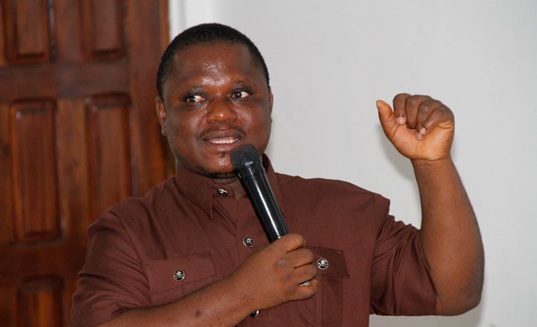
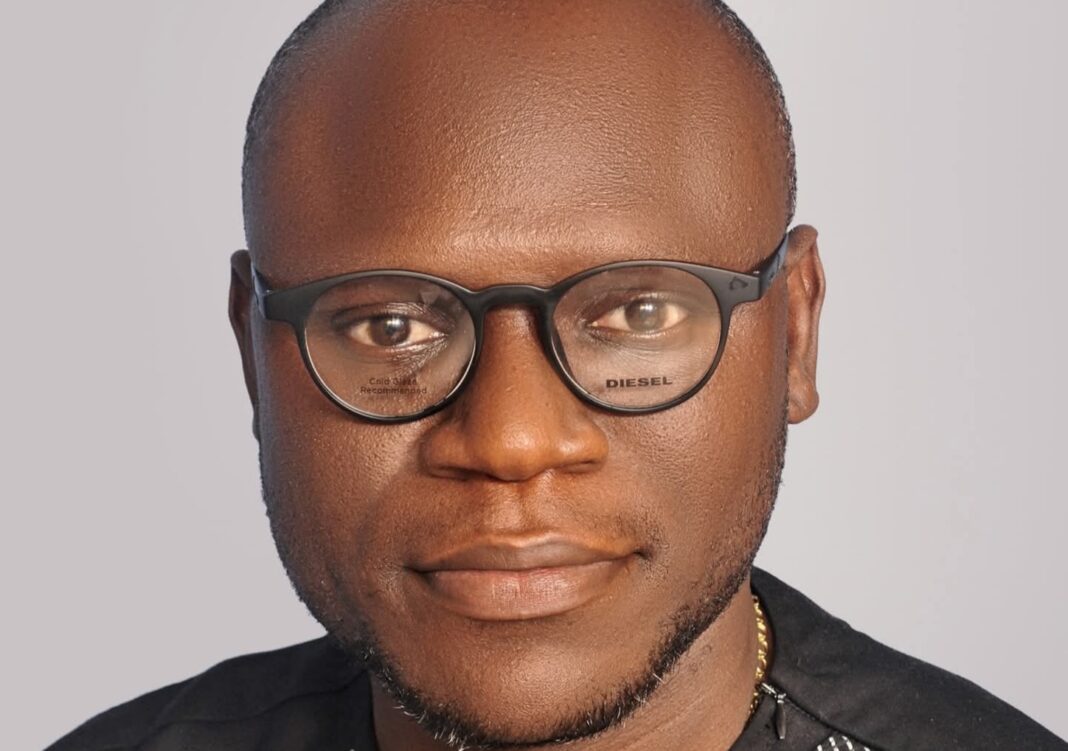
MONROVIA, LIBERIA — Public commentator Jacob Jallah has challenged Liberia’s traditional approach to budgeting, calling for a radical shift toward fewer but more focused national priorities.
As debate over the 2027 National Budget continues, Jallah is proposing that the government concentrate substantial resources on transformative projects, beginning with roads and transportation infrastructure in Monrovia and Montserrado County.
As Liberia’s 2027 National Budget process enters a critical phase, public debate is increasingly turning toward a fundamental question: Should the country continue spreading limited resources across numerous government priorities, or concentrate spending on a few major projects with clearly measurable outcomes?
Jallah has entered the debate with what he describes as a radically different approach to national budgeting. He argues that Liberia’s traditional pattern of allocating resources across multiple sectors has failed to deliver the level of transformation expected after decades of public expenditure.
His criticism comes as the Ministry of Finance and Development Planning conducts the 2027 Executive Budget Hearings, with Finance Minister Augustine Kpehe Ngafuan emphasizing the constraints facing government and the need for spending entities to make difficult choices about priorities.
In a statement circulating publicly, Jallah directly challenged the current approach to budgeting, accusing Ngafuan of continuing what he described as Liberia’s “failed budget and expenditure allocation approach.”
According to Jallah, repeatedly distributing scarce resources across government institutions without concentrating sufficient funding on major infrastructure projects has contributed to Liberia’s continuing development challenges.
“Every year simply reheating the old decadent model and presenting to we the Liberian people,” Jallah wrote, arguing that Liberia needs a fundamental departure from its established budgeting practices.
A US$500 MILLION BET ON ROADS
Jallah’s alternative is built around what he calls “ruthless efficiency”—concentrating government resources on a limited number of major national priorities rather than attempting to finance everything simultaneously.
Under his proposed first-year model, government would cap wages, public administration costs—including the operation of schools and hospitals—and debt obligations at approximately US$800 million, leaving about US$500 million from a hypothetical US$1.3 billion resource envelope for a single major infrastructure program.
His first priority would be roads.
Jallah proposes committing the remaining US$500 million to paving streets and community roads throughout Monrovia and Montserrado County, with the objective of transforming the capital and surrounding communities into a modern, accessible urban center within one year.
He likened the scale of his proposed transformation to Dubai, while pointing to Accra as an example of how improved transportation infrastructure could contribute to growth in ride-hailing, transportation and real-estate activities.
The proposal comes as Liberia’s fiscal authorities prepare for a potentially constrained 2027 budget environment. Ngafuan has warned that the government faces the loss of approximately US$200 million in one-time revenue associated with the mining sector, making prioritization increasingly important.
‘NO NEW CARS, NO GOVERNMENT TRAVEL’
Jallah’s proposal would require significant restraint across government.
He says that during the first year, Liberia should avoid building new schools and hospitals, purchasing new government vehicles and funding official travel. He also proposes no increase in the Legislature’s budget, maintaining a restrained Executive Mansion budget and substantially reducing spending on the National Security Agency.
His argument is that government should temporarily limit expansion in several areas in order to concentrate resources on a major infrastructure project capable, in his view, of producing broader economic benefits.
“We will live like Buddhist monks for one year and we will not die,” Jallah wrote.
The proposal, however, raises difficult questions about implementation.
A government cannot simply eliminate or sharply reduce essential expenditure without considering statutory obligations, public-service requirements, debt commitments and the potential consequences for citizens who depend on public schools, hospitals and other government services.
It also raises questions about whether US$500 million could realistically pave every street and community road in Monrovia and Montserrado within one year, given procurement procedures, engineering requirements, drainage needs, contractor capacity and the existing condition of the road network.
FIVE PRIORITIES FOR FIVE YEARS
Jallah’s proposal extends beyond roads.
He suggests that a presidential administration should concentrate on approximately five major national priorities during a five-year term rather than attempting to pursue numerous projects simultaneously.
Under his proposed sequence:
Year One: Roads and transportation infrastructure in Monrovia and Montserrado.
Year Two: Agricultural transformation.
Year Three: Water infrastructure.
Year Four: Health-care transformation, including major referral hospitals, the John F. Kennedy Medical Center and primary health-care facilities.
Year Five: Education.
Jallah argues that such sequencing would allow government to devote substantial resources to clearly defined national objectives and give citizens measurable results.
His proposal comes at a time when Liberia’s fiscal authorities are also emphasizing prioritization and stronger public-investment management. The International Monetary Fund has noted reforms aimed at improving the selection, planning and monitoring of public-investment projects.
The government has likewise emphasized fiscal discipline in preparing the 2027 budget. At the launch of the FY2027 budget process, Ngafuan called for resources to be aligned with national development priorities and warned against allowing new initiatives to overwhelm existing commitments.
THE BIGGER QUESTION
Jallah’s intervention therefore goes beyond criticism of Finance Minister Ngafuan. It raises a larger question about how Liberia should use increasingly scarce public resources.
Liberia’s domestic revenue performance has improved, with President Joseph Nyuma Boakai recently announcing that government had surpassed US$1 billion in revenue during the first nine months of 2026 and was targeting approximately US$1.3 billion by year-end.
But a larger budget does not automatically translate into development.
The central challenge is whether additional revenue can be converted into infrastructure, jobs, improved public services and measurable economic growth without creating unsustainable recurrent costs.
Jallah’s argument is that Liberia should stop attempting to do everything at once and instead select a small number of transformative priorities, fund them heavily, complete them and then move to the next national challenge.
Whether such an approach would produce the transformation he envisions remains a matter for economic, technical and public-policy debate.
But his proposal has injected a provocative question into the 2027 budget udiscussion:
Should Liberia continue spreading limited resources across numerous competing demands, or concentrate national resources on a handful of projects capable of producing measurable and lasting transformation?
That question is likely to remain central as the 2027 budget moves from hearings to legislative consideration.