
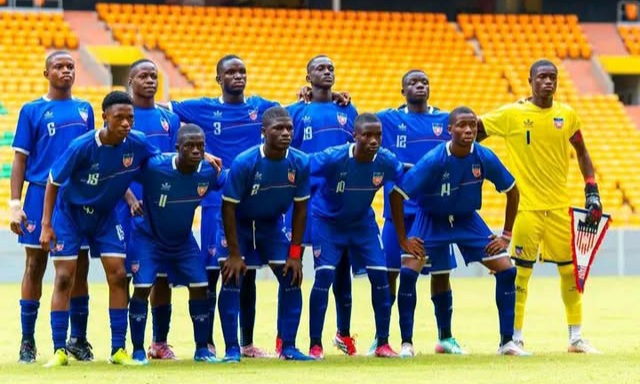
There is something painfully familiar about what happened to Liberia’s U-17 team in Dakar.
The Young Lone Stars entered the WAFU Zone A U-17 championship with a feeling that Liberian football fans have learned to hold onto with caution: hope.
They managed to draw with Mali, secured a 2–1 victory over Guinea, and held Guinea-Bissau to a scoreless draw. They reached the semifinals without a loss, and for a nation used to watching continental football from afar, the prospect of Morocco 2027 suddenly felt within reach.
However, then came The Gambia. A 2–1 defeat in the semifinals sent Liberia to the third-place playoff, where one last AFCON ticket was at stake. Guinea stood in the way of the young Liberians and their dreams of Morocco, and ultimately, Guinea emerged victorious.
The 2–0 loss on Sunday did more than just conclude a youth tournament; it served as yet another uncomfortable reminder of a narrative that Liberian football has been repeating for years: we can get close, but crossing the finish line remains a challenge. This is where the experience of the Young Lone Stars starts to mirror the journey of their senior brothers—the Lone Star.
Liberia’s senior men’s football team has only qualified for the Africa Cup of Nations twice, in 1996 and 2002. It’s been twenty-four years since their last appearance, and CAF notes that Liberia is among the nations still hoping to return to the continent’s premier football event.
The statistics reveal a challenging narrative. Over the 12 AFCON qualifying campaigns since their last participation, Liberia has played 68 competitive matches, securing just 17 wins, 14 draws, and suffering 37 losses. The Lone Star managed to score 57 goals but conceded 123. The most recent AFCON qualifying effort added another chapter to this story.
In the Morocco 2025 qualifiers, Liberia finished third in their group, trailing Algeria and Equatorial Guinea, with only one win, one draw, and four losses. They scored four goals while allowing 12. While the U-17 team and the senior team have not performed the same, the Young Lone Stars went unbeaten in the group stage and reached the semifinals.
In contrast, the senior Lone Star’s AFCON journey ended much sooner, with their qualification hopes dashed early. The key comparison lies in the transition from potential to achievement. For the U-17s, crucial moments followed a promising group stage. However, the senior team has struggled to maintain competitiveness throughout an entire qualification campaign.
This highlights the gap between being part of the discussion and actually receiving an invitation. Liberia has no doubt frustratingly been a part of that discussion for many years.
There have been unforgettable victories. There have been generations full of talent. There have been times when fans dared to hope that the long wait might finally come to an end. Yet, the wait continues.
This is why the U-17 loss in Dakar should not be brushed off as just another result in another youth tournament. The Young Lone Stars were not disgraced. They didn’t fall apart during a poor group-stage performance. They fought hard, earning five points from three group matches and even defeating Guinea—the same team that eventually knocked them out of the qualification race.
That paradox is perhaps the most quintessentially Liberian aspect of the story. We beat them when it mattered for the group standings. They beat us when it mattered for the ticket to the next stage.
This is where the lesson lies. Success in football isn’t just about promising performances; it’s about surviving the decisive moments.
The senior Lone Star has dedicated over twenty years to finding that elusive ability. Now, the Young Lone Stars are imparting a similar painful lesson to a new generation. The real danger isn’t just losing in the semifinals; it’s the risk of normalizing that loss. It’s about becoming a football nation that celebrates merely reaching the brink of success while other countries stride confidently through the gate.
Take Guinea, for example. Their U-17 team faced defeat against Liberia in the group stage. Yet, when it came down to securing the final AFCON spot, Guinea triumphed over Liberia with a 2–0 victory, earning their place in the continental championship in Morocco.
This illustrates the harsh realities of football. The pressing question for Liberian football isn’t whether the country has talented players—it’s clear that it does. The real question is whether Liberia is developing teams that can turn that talent into actual qualifications.
This goes beyond just gathering players before tournaments. It necessitates a solid development pathway, consistent high-level competition, robust coaching frameworks, effective scouting, investment in youth football, and continuity from the U-17 level to the senior national team.
Today’s Young Lone Stars are destined to become tomorrow’s Lone Star. If the same players who experienced defeat in crucial U-17 matches are expected to lead Liberia to AFCON qualification, the country risks repeating the same cycle with just younger faces.
Howbeit, there’s another perspective to consider regarding Dakar. Perhaps this defeat isn’t the conclusion of a narrative but the start of a genuine dialogue.
Liberia came so close to securing an AFCON spot, and the senior team is still eager to end a 24-year wait for a return to the continental finals.
The gap between these two realities should be a concern for everyone in Liberian football. The younger generation is eager to make their mark, while the older generation has been trying for 24 years.
But at some point, Liberia must stop measuring progress by how loudly the knocking sounds and start asking why the door keeps refusing to open.