A total of 285 pieces of heavy equipment have been unveiled, alongside promises to connect rural communities, support farmers, and transform Liberia’s road network. Yet beyond the engine noise, presidential declarations, and county-by-county roll calls, a more consequential question remains: Can this administration turn a high-profile equipment launch into lasting development, or will the Yellow Machines become another emblem of Liberia’s unfulfilled promises?
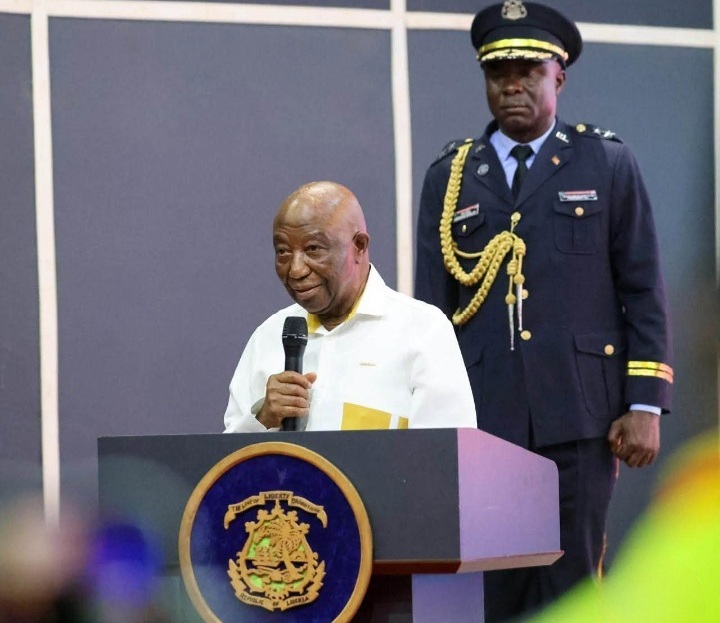
President Joseph Boakai has launched one of his administration’s most prominent infrastructure initiatives, commissioning 285 pieces of earthmoving and support equipment for use across Liberia’s 15 counties.
The ceremony took place on Monday, November 16, 2026, at the Liberia Broadcasting System in Paynesville. It featured presidential optimism and patriotic statements, as well as a clear message: the government is prepared to bring development to the doorsteps of ordinary Liberians.
The Yellow Machines may inspire hope, but Liberia has heard promises of development before. The country’s history has repeatedly taught its leaders one important lesson: launching a project is far easier than sustaining it.
The true measure of President Boakai’s Yellow Machines Project will not be the volume of the engines on commissioning day, the number of counties answering the President’s ceremonial call, or the striking appearance of the equipment on display. It will be whether, months and years from now, farmers in rural Liberia can get their produce to market without being trapped by impassable roads. That is where the government’s credibility will ultimately be judged.
President Boakai’s assessment of Liberia’s infrastructure challenges is widely accepted. The poor condition of rural roads remains one of the greatest barriers to agricultural productivity, commerce, healthcare delivery, and access to education.
For generations, rural communities have borne the costs of government neglect. Farmers grow food they cannot transport efficiently. Pregnant women face difficulties reaching healthcare facilities. Children travel across challenging terrain to get to school. Traders pay higher transportation costs, and agricultural goods spoil before reaching prospective markets.
In many communities, the rainy season brings more than water; it brings economic paralysis. Investment in road construction and maintenance, therefore, is not a luxury but a national necessity.
If managed effectively, deploying 285 machines across 19 operational hubs could rank among the Boakai administration’s most consequential infrastructure initiatives. The crucial qualification, however, is “if managed effectively.”
Liberia has no shortage of government projects launched with great enthusiasm but ultimately ending in disappointment. The country has seen ambitious announcements, elaborate launch ceremonies, and promises of nationwide transformation. Yet implementation has often been undermined by inadequate oversight, weak institutional capacity, political interference, and a lack of consistent funding. The Yellow Machines must not become another entry in that troubling record.
One of the most important dissimilarities Liberians must recognize is that acquiring heavy equipment does not, by itself, create a functional road network. The President has announced the distribution of 285 pieces of equipment across 19 operational hubs. This represents a substantial investment, but the government owes the public more than impressive figures.
Where will these machines operate? Which roads will be prioritized? How many kilometers of feeder roads will be rehabilitated each year? What are the estimated operating costs? Who will oversee deployment, and what safeguards will prevent misuse? These are not hostile questions. In a democracy, they are legitimate demands—especially when public resources are at stake.
The government should publish a clear operational framework specifying priority roads, allocations by county, deployment schedules, performance targets, and the institutions responsible for implementation.
Without measurable targets, the Yellow Machines could become an expensive political display, with accomplishments celebrated in photographs rather than demonstrated through improved infrastructure. Liberians need roads, not road-show ceremonies.
Notably, President Boakai appeared to recognize one of the project’s greatest risks: maintenance. In an unusually forceful section of his address, he repeated the word three times: “Maintenance! Maintenance!! maintenance!!!”
That repetition may have been the most significant part of his entire speech. Liberia has a long record of acquiring public assets without creating the financial and institutional systems needed to maintain them.
Government vehicles deteriorate, public facilities fall into disrepair, and costly equipment can become unusable when spare parts, qualified technicians, and maintenance funding are unavailable.
The Yellow Machines could meet the same fate. Heavy-duty machinery requires fuel, lubricants, spare parts, skilled operators, trained mechanics, secure storage, and regular servicing. These are ongoing costs, not one-time expenses.
The President’s emphasis on maintenance is therefore commendable. But even a strongly delivered presidential directive is not, by itself, a maintenance system. The Ministry of Public Works, the Yellow Machines Board of Authority, and the Special Presidential Project Coordinating Committee (SPPCC) must show how the directive will be implemented in daily operations.
How much funding has been allocated for maintenance? Is there a dedicated budget? Are spare parts readily available? Will the government issue regular reports stating how many machines are operational, undergoing repairs, or out of service? These questions require answers now, not after the equipment starts breaking down.
The President also indicated that counties with strong maintenance records might be rewarded in the future. This is a welcome proposal, but any incentives must be based on transparent, independently verifiable performance standards. Otherwise, a program designed to encourage accountability could become another channel for political favoritism.
Perhaps the initiative’s greatest threat is not mechanical breakdown but political interference. Liberia’s public institutions have long faced patronage, favoritism, and the tendency of political leaders to use state resources for personal or partisan advantage.
In practice, the Yellow Machines must belong to the people of Liberia, not just in presidential statements. Their deployment must not favor anyone on the basis of political allegiance, personal connections, or the electoral interests of influential officials. Farmers in opposition strongholds must have the same opportunity to benefit from improved roads as farmers in counties viewed as supportive of the ruling establishment. Development must remain above party politics. The machines should be assigned according to economic needs, population requirements, agricultural potential, and the condition of existing roads.
The government must also put safeguards in place to prevent unauthorized use, private gain, fuel theft, equipment diversion, and inflated maintenance contracts. Because these machines are purchased with public funds, their operations must be open to public scrutiny.
President Boakai expressly tasked the Ministry of Public Works, the Yellow Machines Board of Authority, the SPPCC, and other relevant institutions with upholding accountability, efficiency, and operational discipline. That is an important commitment. Howbeit, Liberians should not have to wait five years to find out whether it has been fulfilled.
The President himself recognized that the country’s road conditions five years from now would provide the clearest measure of success. Although this is a reasonable long-term benchmark, it must not serve as a reason to delay accountability. The public deserves quarterly or annual reports on the project’s performance. These should state how many machines have been deployed, how many are operational, which roads have been rehabilitated, how many kilometers have been completed, what expenditures have been incurred, and which communities have been reached.
An independent process must also be established to verify the government’s claims. A project involving 285 pieces of heavy equipment and nationwide deployment cannot rely solely on administrative assurances and political declarations. The Liberian people must be able to see the outcomes, scrutinize the spending, and hold officials responsible when commitments are not met.
President Boakai’s decision to make rural infrastructure central to this initiative carries significant political weight. For a President elected on pledges of development, agricultural transformation, and better living conditions, the Yellow Machines Project provides a chance to show that his administration can turn policy commitments into concrete results.
Yet the project also carries substantial political risk. If the machines operate effectively, roads improve, and farmers pay less to transport their goods, the initiative could become a defining achievement of his presidency. But if the equipment sits unused, falls into disrepair, or is allocated for political reasons, it could instead serve as a costly reminder of the gap between presidential promises and public expectations.
The President’s county-by-county declaration, repeatedly asking whether each county was ready, created a memorable ceremonial moment. The more consequential question, however, is whether the government is prepared to provide the resources, discipline, and institutional oversight needed to keep the machines operational.
Liberians are weary of ceremonies that inspire excitement today but produce little visible progress tomorrow. They want to know when the machines will reach their communities and which roads will be rehabilitated first. They want their children to get to school without wading through mud, their farmers to transport produce without losing money, and their sick relatives to reach hospitals without risking their lives on neglected roads. That is the development they voted for.
President Boakai deserves credit for launching a program aimed at tackling one of Liberia’s most enduring development challenges. The purchase and nationwide deployment of 285 pieces of heavy equipment present a significant opportunity—one that should not be dismissed simply because previous administrations failed to fulfill comparable promises.
Yet the government should not expect praise merely for commissioning the equipment. The Yellow Machines have not yet delivered development; they represent an investment accompanied by substantial public responsibility. Their true worth will be measured by the roads they repair, the communities they connect, the farmers they support, and the economic opportunities they generate.
If President Boakai is sincere in declaring that these machines belong to Liberia, his administration must recognize that the public has every right to demand transparency about their use. The government must guard against turning the Yellow Machines into political trophies. It must protect them from corruption, institutional neglect, and partisan interference.
Most importantly, Liberia does not need 285 machines that make a strong impression at a commissioning ceremony. It needs 285 machines that operate reliably, efficiently, and transparently in the public interest.
President Boakai has started the engines. The country is now waiting for the roads. History will judge this administration not by how many machines it commissioned on November 16, 2026, but by how many Liberian communities it connected and how many lives it improved.
Ultimately, the Yellow Machines must be more than promises painted yellow. They must become working instruments of national development.