
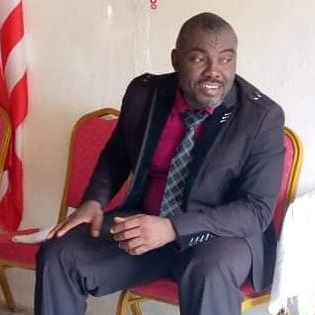
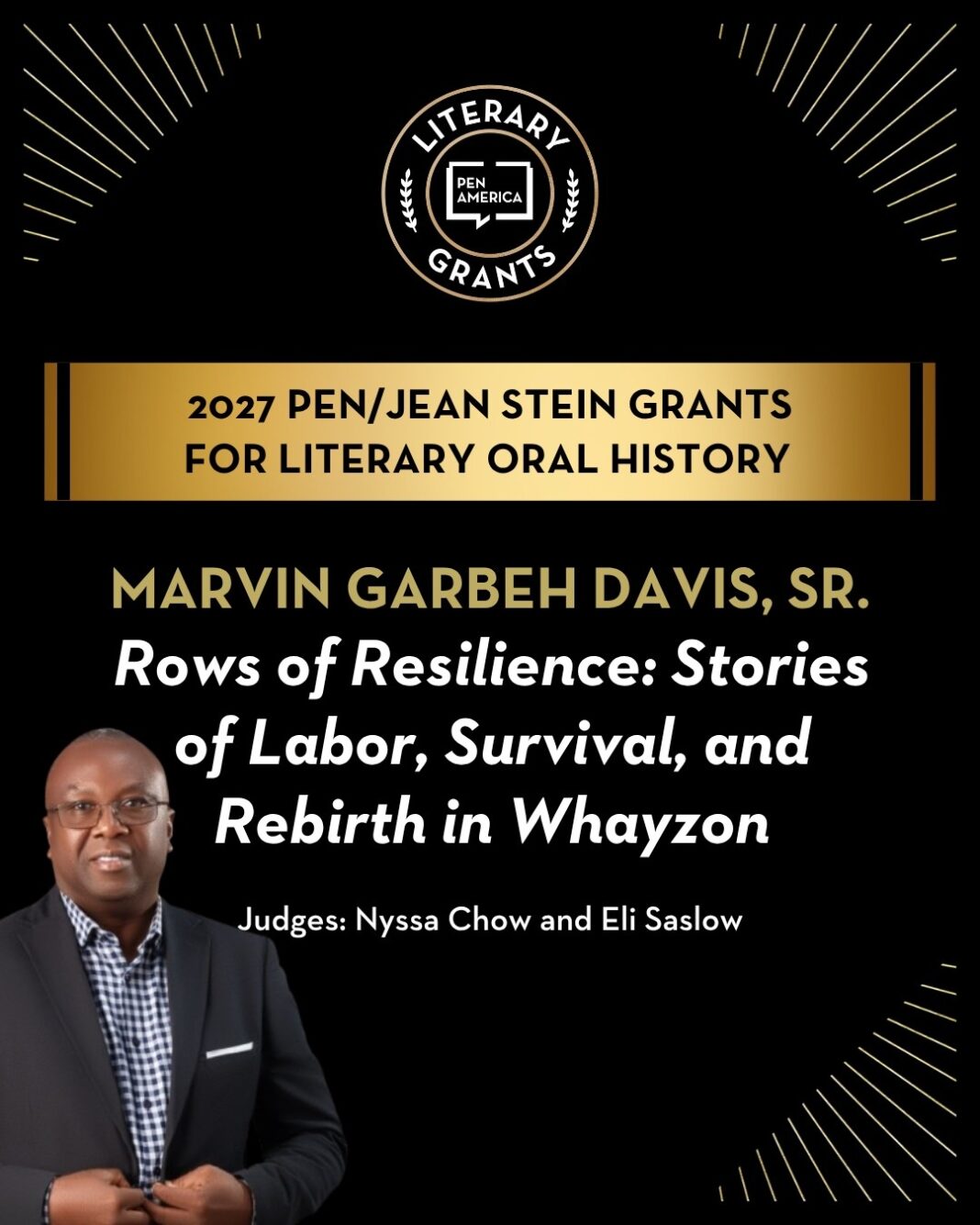
Winning the esteemed PEN/Jean Stein Grant for Literary Oral History, Liberian writer Marvin Garbeh Davis, Sr. has successfully brought the narratives of everyday Liberians to the forefront of the international literary scene.
The PEN/Jean Stein Grants for Literary Oral History offer $15,000 to support nonfiction literary works that utilize oral history to shed light on significant events, individuals, places, or movements.
These grants are funded by a generous donation from Jean Stein, an American author and editor known for her pioneering contributions to the field of literary oral history.
Since their inception in 2021, PEN America has awarded two grants, each accompanied by a cash prize of $15,000.
There are times when the success of one individual becomes a source of collective pride for an entire nation. Moments arise when a single voice, emerging from a small community, transcends national boundaries to gain global recognition.
For Liberia, Marvin Garbeh Davis, Sr.’s acknowledgment by PEN America marks such a pivotal moment. Davis, who is not only a writer and poet but also a pastor, has been honored with the PEN/Jean Stein Grant for Literary Oral History for his project, Rows of Resilience: Stories of Labor, Survival, and Rebirth in Whayzon.
The award, announced on October 28, 2026, includes a $15,000 grant aimed at supporting the development of his literary endeavors.
This achievement is far from ordinary. It stands as a strong testament to Liberian creativity, the significance of our national history, and the lasting impact of stories shared by individuals whose contributions often go unnoticed.
As Liberia continues to seek greater international recognition in the arts and literature, Davis has provided the nation with a reason to hold its head a bit higher. His success illustrates that the stories originating from our villages, plantations, and communities can indeed capture the attention of the world’s most esteemed literary circles. What makes this recognition even more intriguing is the story behind the award.
Davis isn’t just recounting tales from a distant community or an obscure historical period. His award-winning project focuses on the lives of rubber plantation workers in Grand Bassa County, people who toiled for years under harsh conditions, their lives intricately linked to the cycles of plantation work.
The essence of his work lies in their experiences, sacrifices, and their relentless efforts to reconstruct their lives.
His book narrates a tale that transcends rubber trees and corporate documents. It delves into themes of human dignity, economic struggle, family bonds, community ties, and the unwavering spirit to endure when life becomes overwhelming.
At the heart of this story is Whayzon, a community formed by former plantation workers who combined their severance pay to create their own town.
From the loss of their jobs arose a remarkable story of collective resolve and independence. This story resonates deeply with the Liberian spirit. It highlights the tenacity of people who, in the face of challenges, refuse to give up on their future. It honors those who don’t passively wait for help but instead muster the bravery to rebuild their lives with whatever resources they have.
Davis’s efforts to weave these experiences into a literary work truly merit national recognition. He is safeguarding memories that could easily fade away as older generations pass on. By doing this, he assigns historical importance to lives that traditional narratives of economic growth often reduce to mere statistics, production numbers, and corporate records.
In this way, he highlights that a nation’s history isn’t solely crafted by presidents, ministers, business leaders, or renowned public figures. It is also shaped by the farmer who toils before dawn, the laborer who sacrifices his health for his family, the mother who keeps the household running, and the community that emerges from the ashes of economic hardship. These are the people who infuse history with its human essence.
Davis’s personal ties to the plantation story make his project even more extraordinary. His own childhood memories of watching his father rise early for work add a deeply personal layer to his examination of plantation life and the people who supported it.
Thus, this grant-winning initiative transcends mere literary skill; it serves as an act of remembrance—a commitment to ensuring that the experiences of workers and their families are not forgotten simply because their names and stories have been overlooked in official accounts.
The recognition of this endeavor by an international literary organization is a noteworthy accomplishment. PEN America is well-regarded for its advocacy of writers, literature, and freedom of expression. Its PEN/Jean Stein Grant for Literary Oral History funds nonfiction projects that utilize oral histories to preserve and highlight significant human experiences.
The grant is more than just a ceremonial accolade; the $15,000 award offers tangible support for a writer working on a major literary project.
For Davis, this recognition brings not only financial help but also a chance to showcase a uniquely Liberian story to a broader international audience.
For Liberia, it provides something equally important: visibility. Our nation is rich with stories that deserve to be documented, published, and shared beyond our borders. Unfortunately, many of these stories remain locked away in family memories, village discussions, and the fading recollections of our elders.
Too often, those who have lived through crucial moments in our national history pass away without their stories being recorded for future generations.
Therefore, Davis’s recognition should serve as a wake-up call for Liberia to take its literary heritage seriously.
We need to encourage our writers, support our poets, bolster our libraries, invest in literary institutions, and create avenues for young people to tell the stories of their communities.
Additionally, we must acknowledge that preserving history is not a privilege of affluent nations; it is a vital duty for any society that aims to comprehend its past and prepare for its future.
The international acknowledgment of a Liberian writer should not be the sole moment we celebrate literary achievement. Our writers deserve support throughout their journeys—during research, while grappling with manuscript completion, and in their search for publishers—not just after they receive recognition from foreign entities.
Nonetheless, there is ample reason to take pride in Davis’s accomplishment. His success illustrates that a powerful story can gain international acclaim without needing to emerge from a major global city.
A story set in a Liberian plantation community can carry profound depth, humanity, and literary significance that resonates well beyond the borders of Liberia.
It also delivers an uplifting message to aspiring Liberian writers—our experiences are valuable, our communities are important, and the narratives we hold deserve to be shared with dedication, bravery, and creativity.
The next step is to transform this acknowledgment into a launchpad for even greater achievements. Davis’s manuscript needs to move towards completion, the history of Whayzon should be meticulously recorded, and the individuals whose lives inspired this project must remain central to its narrative.
This moment should also serve as a catalyst to highlight the broader spectrum of Liberian literature and the gifted writers who persist in their craft, often facing limited institutional backing, to safeguard our shared history.
For Marvin Garbeh Davis, Sr., receiving the PEN/Jean Stein Grant is a well-deserved recognition. For Liberia, it represents a chance to honor a son whose literary contributions have brought a significant aspect of the nation’s lived experiences into the global dialogue.
His achievement serves as a reminder that true national greatness isn’t just about economic size, strong political institutions, or well-known public figures. It’s also about how well a society can preserve its memories, share its stories, and make meaningful contributions to the world’s intellectual and cultural landscape.
Davis has taken a narrative deeply rooted in Liberia and brought it to the global stage. This is an accomplishment that deserves recognition.
As Liberia commemorates this literary achievement, one message should resonate: our stories hold value, our writers possess talent, and our voices should be heard around the globe.
Marvin Garbeh Davis, Sr. has given Liberia yet another reason to trust in the power of its own stories. May this international acknowledgment motivate a new wave of Liberian writers to document our past, honor our people, and elevate the country’s literary voice to new heights.
