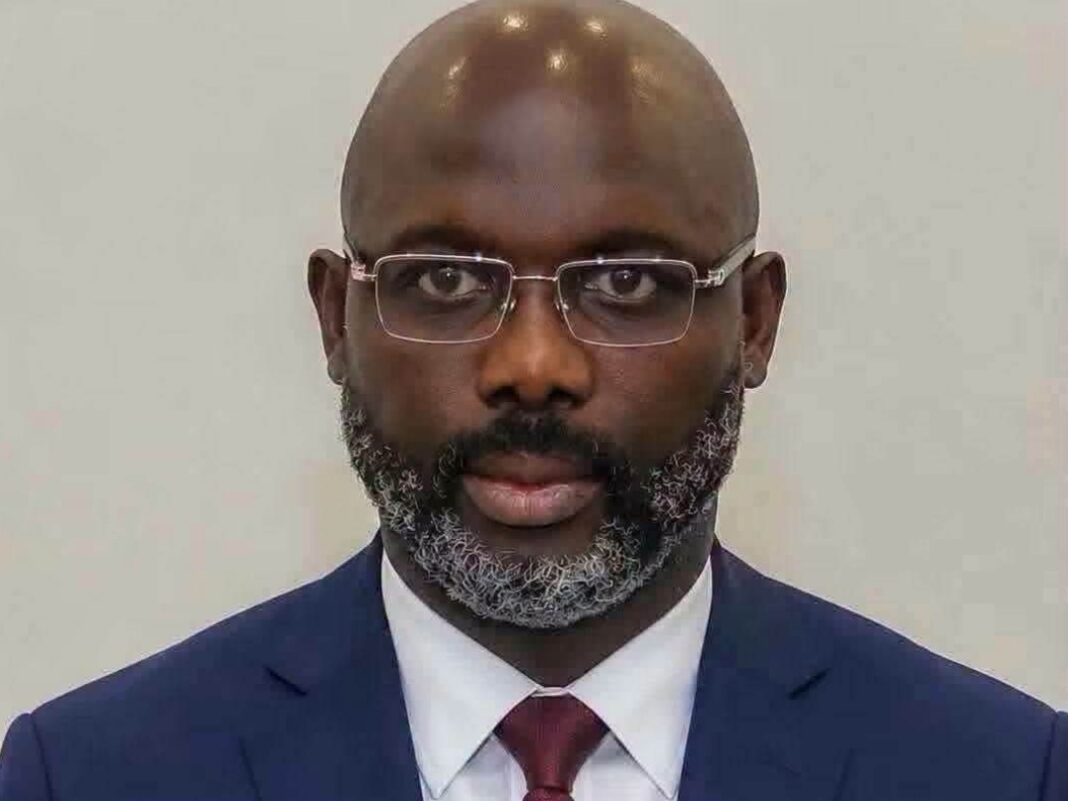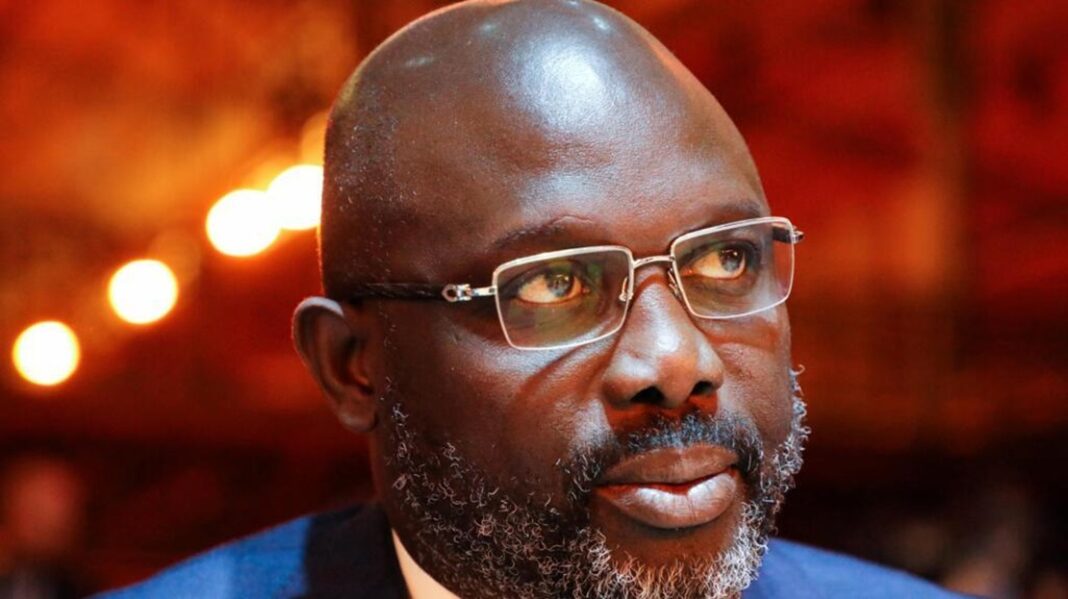
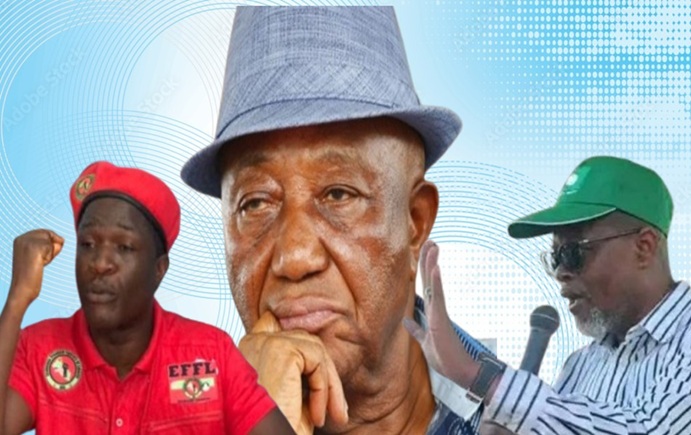
BUCHANAN, GRAND BASSA COUNTY — Senator Abraham Darius Dillon from Montserrado County has issued a “No Helping Verb” warning, alongside EFFL Emmanuel Gonquoi’s message for 2029 and ongoing grievances from the Unity Party Alliance, putting new pressure on the coalition.
What was meant to be a celebration of the Liberty Party’s political resurgence in Buchanan on Saturday turned out to convey a message of greater significance than just a party rebranding.
Addressing Liberty Party supporters, Senator Dillon’s remarks felt less like a speech focused on party renewal and more like a proclamation of political independence.
The message was clear: the Liberty Party does not plan to remain a subordinate partner in Liberia’s governance.
“I am not one of the persons who always talks about 2029 politics. It’s too soon for me,” Dillon stated to LP supporters and partisans.
Howbeit, he followed up with a warning: “This party was not established to be endorsing every year! The time is coming when this party will govern this country and change it.”
More pointedly, Dillon emphasized: “I want to re-echo as Vice Chair for Political Affairs, this party is no helping verb… this party is no helping verb. In 2029, we all together will give direction for our party and country.”
These statements inevitably raise a pressing question that has lingered over President Joseph Nyuma Boakai’s political establishment throughout much of his presidency: Is the Unity Party Alliance—the coalition that supported Boakai’s rise to power in 2023—starting to fall apart?
While there is no concrete proof that the alliance has officially fallen apart, there are increasing signs that the political partnership is facing challenges.
Dillon’s comments, made by a leading figure in the Liberty Party, bring a significant new perspective to the worries that have been consistently expressed by various parties and politicians who supported Boakai in his victory over the CDC in 2023.
From Partners, to “Helping Verbs?”
The relationship between the Liberty Party and the Unity Party has been complex from the start.
The LP was a key player in the coalition supporting Boakai during the 2023 presidential runoff. Initially, this alliance included the Unity Party, the Movement for Democracy and Reconstruction (MDR), the Nyonblee Karnga-Lawrence faction of the Liberty Party, the Economic Freedom Fighters of Liberia (EFFL), and the Movement for One Liberia.
Over time, sixteen more political parties joined, expanding the coalition to a total of 21 parties.
However, just weeks after Boakai’s victory, tensions began to surface.
In January and February 2024, reports indicated significant dissatisfaction among coalition partners, who felt sidelined by the new administration.
Complaints included a lack of consultation regarding government appointments, failure to acknowledge their contributions to the campaign, and the exclusion of certain parties from the vetting process.
At one point, 18 out of the 21 parties expressed discontent with how the new government was managing its political relationships, with some even choosing to boycott President Boakai’s Annual Message.
The issues at hand were not just about job placements; they revolved around the need for political recognition, a theme that would resurface time and again.
LP’s Old Wound
By December 2025, the frustration within the Liberty Party had reached a boiling point. The party turned down an invitation to the Unity Party’s homecoming celebration, with its leaders pointing to long-standing grievances and demanding “equity and respect” in the governing alliance.
Reports from that time indicated that LP leaders affirmed their support for President Boakai but refused to be treated as a mere extension of the Unity Party.
Among their complaints was a perceived neglect of LP Political Leader Nyonblee Karnga-Lawrence in key coalition decisions.
Even more shocking was the claim that alliance partners had been labeled by UP Chairman Rev. Dr. Luther Tarpeh as “helping verbs”—a term that resonated with Dillon’s declaration that “this party is no helping verb.”
This context adds weight to Dillon’s remarks on Saturday, as he was not just urging LP supporters to gear up for another election; he was firmly rejecting the notion that the party exists solely to funnel votes to another political entity.
Gonquoi: “We Will Never Guarantee Anybody’s Second Term”
If Dillon represented the Liberty Party, Emmanuel Gonquoi has been issuing a similar warning from the EFFL side.
In August 2026, Gonquoi accused the Unity Party-led government of neglecting the political forces that played a crucial role in its rise to power.
His message was straightforward: the formal channels that were in place during the campaign had vanished after their victory.
“During the campaign, we had official platforms and channels for communicating strategies and engaging and finding solutions. Immediately after the elections, all official platforms vanished,” Gonquoi stated at the time.
He urged for regular discussions between the President and alliance leaders, especially regarding the economy and national security.
But his most consequential warning was about 2029.
“The EFFL will never guarantee anybody’s second term,” Gonquoi asserted, emphasizing that his party operates as an independent political entity.
This was not a declaration of opposition, but it certainly didn’t promise loyalty either.
In September, Gonquoi took it a step further, labeling 2029 as a pivotal year for Liberia and advocating for the “reinvention” of Liberian politics and leadership.
While he didn’t officially declare a presidential run, his comments have sparked increased speculation about his potential independent political ambitions in 2029.
The Gonquoi Problem Began Earlier
Gonquoi’s frustration is not a recent development. Back in October 2024, the EFFL leader accused certain factions within the government of steering the country toward a crisis.
He expressed concerns over what he viewed as biased presidential appointments and deteriorating economic conditions. He noted that his party had backed the Boakai-Koung administration and had even taken steps to avert job-related protests, but he emphasized that they would not forsake their political principles just to shield the government.
By August 2026, his rhetoric had intensified. He claimed that the administration was replacing long-time political allies with “new friends,” while those who had worked to elevate Boakai were being sidelined.
He also pointed out that the alliance had essentially become inactive due to the absence of an official platform for its leaders to engage with the President regularly.
This context makes Dillon’s speech in Buchanan particularly noteworthy. Now, two key factions of the 2023 coalition are articulating a shared political vision: independence, recognition, and the year 2029.
And Then There is MDR
The tensions have extended beyond just LP and EFFL. The MDR, which is the political arm of Vice President Jeremiah Kpan Koung, has also found itself embroiled in political controversy.
The expulsion of Nimba County Senator Samuel G. Kogar in August 2026 revealed deeper issues within the governing coalition.
The MDR’s leadership accused Kogar of publicly opposing a government that the party supported.
In response, Kogar claimed that the administration was using political pressure and police presence to intimidate the MDR and suppress legitimate political expression.
This dispute is particularly sensitive because Nimba is a key political stronghold for the Boakai-Koung alliance.
It highlights that the disagreements within the larger governing family are no longer just about appointments or access to power.
Instead, they increasingly involve issues of party independence, political succession, and control over the coalition’s future.
The Timing Could Not Be More Political
Dillon’s statement comes as Liberia starts to focus on the upcoming 2029 elections.
President Boakai has recently sparked speculation about seeking a second term by telling Liberians at the Diaspora Annual Conference that he believes he is entitled to another term.
Although he hasn’t officially declared his intention to run again, his remarks have heightened political conversations regarding his future plans for 2029.
Meanwhile, the political figures who supported his rise to power are making it clear that their backing cannot be taken for granted.
This is the essence of Dillon’s remark: “This party is no helping verb.” It signifies a refusal to be politically subordinate.
The Liberty Party is asserting its own identity, while the EFFL is indicating that it won’t automatically ensure a second term for Boakai.
Additionally, other political groups that allied with Boakai are increasingly insisting that their contributions as partners be acknowledged, rather than being viewed merely as tools for electoral success.
From Alliance to Battlefield?
The irony is quite evident. The Unity Party Alliance was formed with the goal of defeating George Weah’s CDC, and it achieved that goal.
Howbeit, the very coalition that was strong enough to secure the presidency now faces a familiar challenge in Liberian coalition politics: What comes after victory?
During the election, political parties unite against a common adversary. Once the election is over, the focus shifts to a different set of questions: Who receives what? Who holds power in the government? Who gets appointed to key positions? Who is consulted on decisions? Who shapes policy? Who will be the next presidential candidate? And ultimately, who will dominate the 2029 elections?
A recent analysis by the United Nations on Liberia highlighted the overall fragility of the country’s party system, indicating that alliances are often formed based on political interests and the pursuit of power, rather than being rooted in solid ideological foundations.
This cautionary note looms large over the Boakai coalition.
LP’s Buchanan Moment
In this context, the Liberty Party’s rebranding ceremony in Buchanan carries significant political implications.
The party is striving to move past its years of internal strife and present itself as a revitalized political entity as it looks toward 2029.
After enduring a lengthy internal conflict, the LP began its reconciliation and rebranding efforts in 2024, with leaders openly acknowledging the necessity to rebuild and prepare for the upcoming elections.
Thus, Saturday’s ceremony was not just about adopting a new image; it was about reclaiming its political presence.
Dillon’s message made the party’s ambitions clear: the Liberty Party is determined not to spend another election cycle simply supporting another candidate.
It seeks power, aims to govern, and desires a significant role in shaping the future.
The Alliance Has Not Collapsed – But the Warning Lights Are Flashing
For now, declaring the Unity Party Alliance dead may be premature. President Boakai is still in power, and the Unity Party continues to be the ruling party.
The Liberty Party (LP) is still backing the administration, although they are calling for more acknowledgment.
The EFFL has not positioned itself as an opposition party.
The MDR maintains its political ties with Vice President Koung and the current government.
However, the political discourse has shifted. Previously, the focus was on unity, victory, and saving Liberia.
Now, the emphasis is on independence, respect, consultation, and the year 2029.
This is why Buchanan is matters. Dillon wasn’t signaling the end of the Boakai alliance; rather, he was indicating that the Liberty Party plans to endure beyond it.
Additionally, Gonquoi has already stated that the EFFL will not automatically support Boakai for another term.
If those positions harden, President Boakai might eventually confront a challenging political situation: the coalition that helped him win in 2023 may not be the same one that supports him in 2029.
The Alliance may not yet be crumbling but the cracks are no longer just whispers; they are now being voiced from podiums.
In Buchanan on Saturday, one of Liberia’s leading senators summed up the situation in six straightforward words: “This party is no helping verb.”