
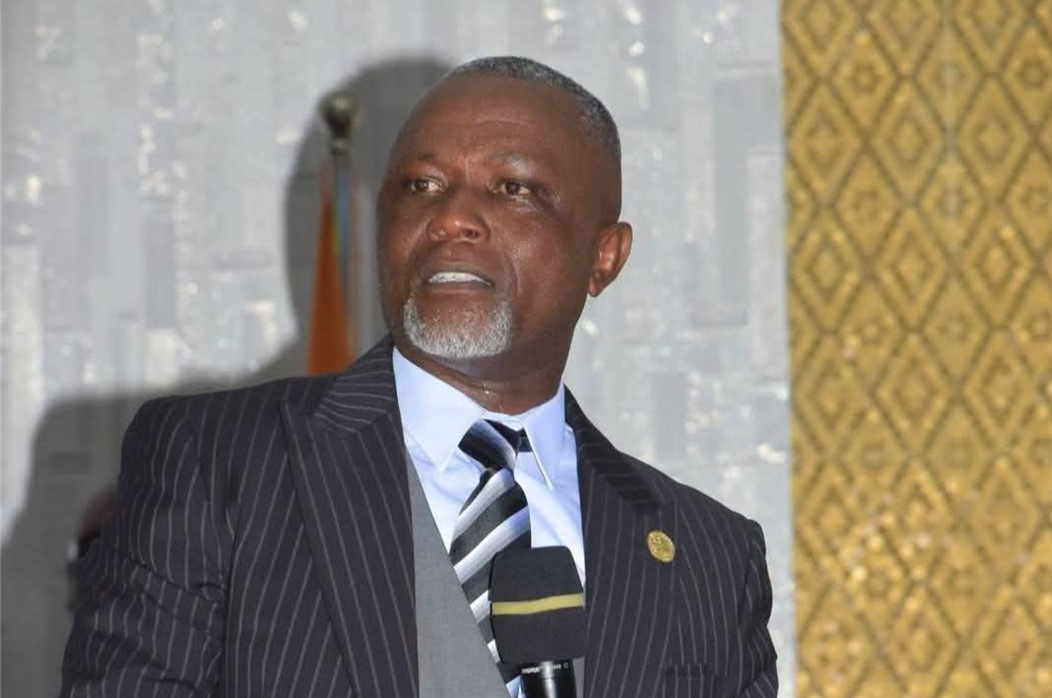
MONROVIA, LIBERIA — Leadership does not end when the sermon is over, and for Bishop J. Allan Klayee, decades of responsibility across ministry, public service, education, media and humanitarian work have provided a front-row view of the pressures carried by people entrusted with leading others.
That experience forms an important foundation for his new book, The Bleeding Leader, a work that explores what happens behind the public face of leadership when responsibility, expectations and personal struggles collide.
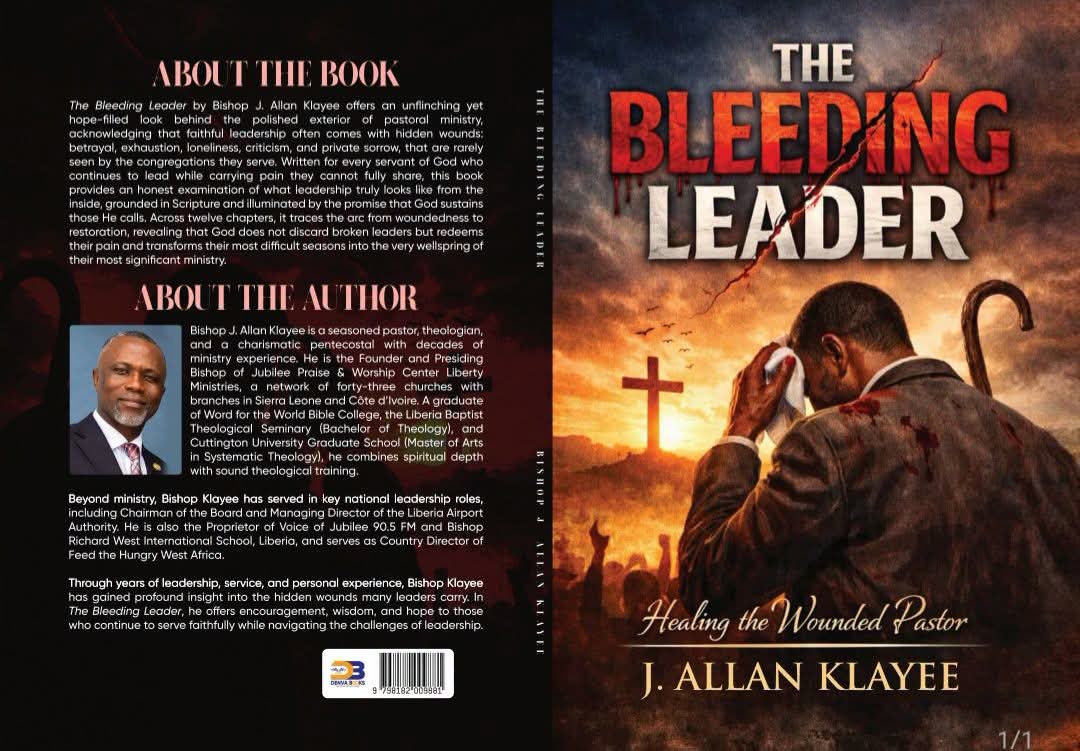
Bishop Klayee, General Overseer of Jubilee Praise and Worship Center in Monrovia, Liberia, is presenting the book as a reflection on the hidden wounds carried by leaders who continue to serve despite betrayal, exhaustion, loneliness, criticism and private sorrow.
While the book is rooted in pastoral ministry, its message reaches beyond the church because the pressures of leadership are not limited to the pulpit.
A leader may be surrounded by people and still experience loneliness. A person may occupy a respected position while privately wrestling with disappointment. Someone entrusted with guiding others may also need encouragement, restoration and healing.
It is this human dimension of leadership that Klayee places at the center of The Bleeding Leader.
The book draws on 12 chapters to trace a movement from woundedness to restoration, offering readers a faith-based understanding of how difficult experiences can be transformed into sources of renewed purpose.
Klayee’s own leadership journey gives additional weight to the book’s message.
He is the Founder and Presiding Bishop of Jubilee Praise & Worship Center Liberty Ministries, which has grown into a network of 43 churches with branches in Sierra Leone and Côte d’Ivoire. His ministry leadership has therefore involved responsibility extending beyond a single congregation and into a wider regional Christian network.
His professional experience also reaches into national institutions and public service. Klayee served as Chairman of the Board and Managing Director of the Liberia Airport Authority, giving him experience in an environment where leadership involves institutional responsibility, decision-making and public expectations.
He has also ventured into media through Voice of Jubilee 90.5 FM and into education through Bishop Richard West International School, Liberia. His humanitarian involvement as Country Director of Feed the Hungry West Africa adds another dimension to his record of service.
Together, these experiences provide a backdrop for a book concerned with the personal reality of leadership.
The central idea is that leaders are people before they are positions.
Titles can create expectations, but they do not remove human emotions. Public recognition does not eliminate exhaustion, and responsibility does not prevent disappointment.
For Christian leaders in particular, the expectation to remain spiritually strong can sometimes make it difficult to acknowledge personal pain. The Bleeding Leader confronts that reality by giving language to wounds that are often carried privately.
Klayee’s theological training also shapes the book’s approach. A graduate of Word for the World Bible College and Liberia Baptist Theological Seminary, where he earned a Bachelor of Theology, he later obtained a Master of Arts in Systematic Theology from Cuttington University Graduate School.
The book consequently combines leadership reflection with a Scripture-based message of endurance and restoration.
Rather than portraying woundedness as the conclusion of a leader’s journey, Klayee presents it as a season through which restoration can take place. The message is that God does not discard leaders because they have experienced pain.
That perspective gives The Bleeding Leader a wider audience among people who lead churches, organizations, institutions, schools, community initiatives and humanitarian programs.
Its appeal rests not only on the position of its author but on the leadership experiences behind the message.
From the church to the Liberia Airport Authority, from broadcasting to education and humanitarian service, Klayee has operated in environments where leadership carries expectations and consequences.
The Bleeding Leader now turns that experience inward, asking readers to consider what happens to the individual who spends years carrying responsibility for others.
The book’s answer is grounded in hope. Difficult seasons can produce pain, but they can also become places of growth, reflection and renewal. Wounds can be acknowledged without abandoning purpose, and leaders can seek restoration without surrendering their calling.
For Bishop J. Allan Klayee, The Bleeding Leader is therefore more than an examination of pastoral hardship. It is a leadership reflection shaped by decades of service and an invitation to recognize the person behind the position.
In presenting the hidden side of leadership, the book opens a conversation about endurance, vulnerability, faith and restoration, reminding leaders that carrying responsibility does not mean they must carry every wound alone.