Questions resurface over 2017 investigation, alleged US$2.45 million petroleum debt, INTERPOL contact and reported Spanish court proceedings
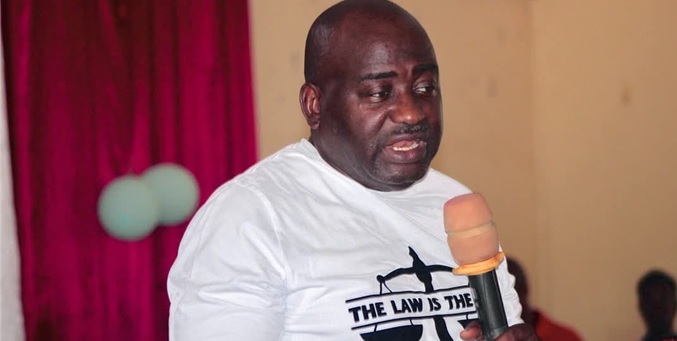
MONROVIA — Nimba County District #7 Representative and Citizens Movement for Change (CMC) political leader Musa Hassan Bility is at the centre of renewed international legal controversy following reports that he appeared before a court in Spain over a longstanding petroleum business dispute involving Nigerian businessman Kunle Roberts.
Although Bility has publicly denied being arrested or jailed, reports from Spain and Liberia have raised questions about the nature of the proceedings, whether Nigeria is seeking his extradition, and how a commercial dispute dating back to 2012 has developed into an international legal matter.
Beyond the reported Spanish proceedings, attention is also turning to the Liberia National Police (LNP), particularly its Inspector General, Gregory O.W. Coleman, who publicly discussed police inquiries into the allegations when they first emerged in 2017.
What did Coleman establish at the time? Was Bility formally cleared? Why has the same dispute resurfaced nearly nine years later? And what role is the Liberian Police playing as international attention turns to the lawmaker?
WHAT IS BILITY FACING IN SPAIN?
A November 17, 2026 report by a local media outlet claims that Bility appeared before a court in Madrid and was temporarily detained pending proceedings relating to an alleged US$2.45 million petroleum debt involving Nigerian businessman Kunle Roberts.
According to the report, the Nigerian government had previously sought Bility’s extradition to Nigeria and requested an INTERPOL Red Notice in connection with the allegations.
The local publication further claims that the extradition request dates back to May 2, 2017, and that the Spanish proceedings could determine whether Bility is surrendered to Nigerian authorities to answer the allegations.
However, the precise Spanish court, case number, judicial order and current status of any extradition request have not been independently established in the public information reviewed for this report.
There is also conflicting information about whether Bility is actually in detention.
On November 17, local media reported that Bility informed a television broadcaster that he was appearing before a court in Spain and could not participate in a scheduled discussion programme. He reportedly did not explain the nature of the proceedings or identify the person pursuing the case.
Bility subsequently posted a video denying that he had been arrested or detained.
“I’m not in jail, as you can see. I’m not being arrested. Don’t listen to these people,” he said, adding that people were turning his travels into an arrest story.
His statement, however, does not explain why he reportedly appeared before a Spanish court or whether the proceedings concern the Nigerian business dispute.
The distinction is important: appearing before a court does not automatically mean that someone has been arrested, charged with a crime or ordered extradited.
THE US$2.45 MILLION PETROLEUM DISPUTE
At the centre of the controversy is a petroleum transaction reportedly concluded in March 2012 between Nigerian businessman Kunle Roberts, through Drake Alliance Oil Trading FZE, and companies associated with Bility, including Nexis Enterprise Inc. and Srimex Oil & Gas Company.
According to information described in a local media investigation as part of the Nigerian legal proceedings, Roberts’ company supplied two shipments of premium motor spirit, or petrol, between March and April 2012. The shipments were reportedly valued at approximately US$12 million and involved more than 9,671 metric tons of fuel.
The Nigerian businessman alleges that US$2.45 million remained outstanding after the deliveries.
The report further claims that Bility agreed to settle the outstanding amount through monthly payments of US$50,000 beginning in January 2015.
According to the same report, two cheques valued at US$250,000 each were allegedly issued in September 2012 but were not honoured.
The allegations reportedly formed the basis of legal action in Nigeria involving claims of criminal breach of trust, cheating and the issuance of dishonoured cheques.
These are allegations advanced by the complainant and reported by local media. They should not be treated as proven criminal wrongdoing.
In a November 18 investigation, another local media outlet examined a document circulating online that appeared to originate from Nigeria’s Attorney General. The publication said it had not independently authenticated the document and could not confirm whether the cheque now being disputed was one of the payments described in the Nigerian claims.
Bility acknowledges having had a legitimate business relationship with Roberts but maintains that the underlying obligation was settled. He also disputes the claim that the cheque currently being discussed was presented to GTBank and returned unpaid.
WHAT DID GREGORY COLEMAN DO IN 2017?
The renewed controversy has placed Inspector General Gregory O.W. Coleman under scrutiny because he was the police chief when the allegations first came before the LNP in 2017.
A local media report published on August 25, 2017, quoted Coleman publicly discussing the investigation into allegations involving Bility and the disputed cheques.
Coleman disclosed that the LNP had received information from INTERPOL Nigeria and was seeking additional details from Nigerian authorities.
He also said the police contacted Guaranty Trust Bank (GTBank), which reportedly indicated that it had no record of the disputed cheques. The police were also seeking verification from the Central Bank of Liberia.
These statements indicate that the LNP undertook investigative steps in its official capacity. Coleman was therefore not simply acting as a private businessman attempting to mediate a commercial disagreement.
However, an important question remains: What was the final outcome of that investigation?
A local media report has claimed that Coleman cleared Bility in August 2017 following an LNP investigation. But the original clearance document or final police report has not been made publicly available in the reporting reviewed for this article.
Without the original document, it remains unclear whether Bility was formally cleared, whether the investigation was closed because of insufficient evidence, or whether the matter was simply considered addressed at the time.
The difference is significant because a police inquiry that fails to establish a criminal connection is not necessarily the same as a formal clearance.
WHY HAS THE CASE RETURNED TO THE LNP IN 2026?
The matter resurfaced in July 2026, when Coleman reportedly invited Bility for further discussions.
In a three-page letter dated September 30, 2026, obtained by a local media outlet, Bility wrote to the Inspector General challenging information that a cheque issued by Srimex Oil & Gas Company had been presented for payment and returned unpaid.
According to Bility’s letter, Coleman informed him that the police had received written confirmation from Global Bank Liberia, now Bloom Bank Africa Liberia, indicating that the disputed cheque had been presented to GTBank and returned unpaid.
Bility said this information conflicted with his understanding of the transaction. He maintained that, to his knowledge, the cheque had never been presented to GTBank and that the underlying obligation had already been satisfied.
He therefore requested copies of the bank’s communication, the complete cheque, GTBank clearing records and correspondence between the police and the financial institutions.
He also asked the LNP to preserve all records relating to the investigation and to confirm in writing if any requested document could not be found.
The letter does not establish whether the police have responded to his request.
The apparent difference between the information Coleman publicly discussed in 2017 and the bank confirmation reportedly cited in 2026 raises questions about whether new evidence has emerged, whether the same cheque is involved, and whether the original investigation reached a definitive conclusion.
INTERPOL’S REPORTED INVOLVEMENT
The controversy has also taken an international dimension following a November 18 local media investigation.
The publication quoted an anonymous source familiar with the matter as saying that INTERPOL contacted the LNP to inform the police that it was looking into the case.
The source further said a report on the matter was being prepared for Justice Minister Bettie Lamin-Blamo, although its contents have not been made public.
It remains unclear what INTERPOL specifically requested from the Liberian authorities or whether its communication is directly connected to the reported proceedings in Spain.
There is also a need to distinguish between an INTERPOL Red Notice and an international arrest warrant.
According to INTERPOL’s official guidance, a Red Notice is a request to locate and provisionally arrest a person pending extradition or similar legal action. It is not an international arrest warrant, and INTERPOL does not itself arrest individuals. Decisions on arrest are made by national authorities under their own laws.
INTERPOL also says it does not handle extradition requests, which are matters between national authorities. Most individual Red Notices are not publicly accessible because they are restricted to law enforcement.
Consequently, the reported existence of a 2017 Red Notice request does not, by itself, establish that an active notice caused Bility’s reported appearance before a Spanish court.
WHAT ROLE DID THE LIBERIAN POLICE PLAY IN THE DEVELOPMENTS IN SPAIN?
One of the central unanswered questions is whether the LNP’s renewed investigation has any direct connection to the legal proceedings involving Bility in Spain.
The available reporting indicates that Coleman reportedly reopened discussions with Bility in July 2026, that Bility subsequently challenged the bank evidence in writing, and that INTERPOL reportedly contacted the LNP.
However, no publicly verified document has established that the Liberian Police requested Bility’s arrest in Spain, initiated the Spanish proceedings or formally recommended his extradition.
The police should therefore clarify whether they are investigating a new complaint, responding to an international request, providing information to foreign authorities or simply reviewing the original 2017 case.
Coleman should also explain whether the LNP has received any official communication from Spanish authorities or the Nigerian government concerning Bility’s current legal situation.
QUESTIONS COLEMAN MUST ANSWER
Given his involvement in the original inquiry and the renewed police discussions, the Inspector General should provide clear answers to several questions.
Did the LNP formally investigate Bility in 2017, and was an official investigation file opened? What was the outcome of that investigation, and does a final report or formal clearance document exist?
Did the police receive an official extradition request or INTERPOL communication from Nigeria in 2017? What did investigators establish after contacting GTBank and the Central Bank of Liberia?
Why does the information reportedly obtained in 2017 appear to differ from the bank confirmation cited in 2026? Is the cheque currently being investigated the same instrument examined during the original inquiry?
Has the LNP received any formal communication from Spanish authorities concerning Bility’s reported court proceedings? What exactly did INTERPOL ask the LNP to do in 2026?
Finally, has the LNP recommended Bility’s extradition, or is the matter still under investigation?
These questions are necessary to establish whether the current developments represent a continuation of the 2017 investigation or a separate legal process based on new evidence.
THE SPANISH COURT AND THE RIGHT TO A FAIR PROCESS
The Spanish authorities are the appropriate source for confirming whether Bility is detained, the precise court handling the matter, the legal basis for his appearance and whether an extraditio seen request is before the court.
If an extradition proceeding is underway, the lawmaker is entitled to the applicable legal protections and an opportunity to challenge the request through the Spanish judicial process.
Likewise, the Nigerian complainant is entitled to pursue any lawful remedy available to him if he believes a financial obligation remains unpaid.
The existence of a commercial dispute, however, does not automatically establish criminal fraud. The nature of the allegations and the evidence supporting them must be determined through the appropriate legal process.
WHAT HAPPENED TO THE 2017 POLICE REPORT?
Nearly nine years after the original allegations emerged, Bility’s reported appearance before a Spanish court has brought the old petroleum dispute back into public attention.
The case now involves questions about the alleged US$2.45 million outstanding balance, disputed cheques, the role of Nigerian authorities, reported INTERPOL contact and the Liberian Police’s handling of the matter.
But perhaps the most important unanswered question remains in Monrovia: What did Gregory Coleman and the LNP conclude in 2017, and where is the report documenting those findings?
If Bility was formally cleared, the police should make the basis of that decision clear. If the investigation remained unresolved, the LNP should explain why and identify the evidence now being considered.
Until the original police records and official Spanish court information become available, claims of a confirmed arrest, active Red Notice or approved extradition should be treated with caution.
The LNP, the Justice Ministry, Bility and the relevant Spanish authorities should provide answers.
This investigation is not about declaring Bility guilty or innocent. It is about establishing the facts, examining the conduct of the institutions involved and ensuring that a case with serious financial and international implications is handled transparently and according to law.