An emotional tribute to a veteran Liberian journalist who faced death and returned with a message for the living.
BY Olando Testimony Zeongar
There are times when life compels even the strongest among us to pause, set aside our tools, and confront the one battle that no one can avoid—the struggle for survival.
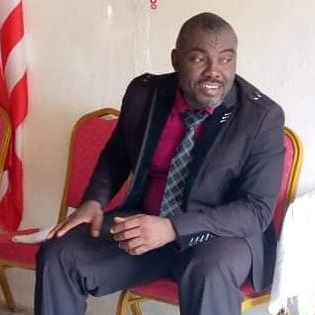
For veteran Liberian journalist Philipbert Semogai Jabba-Wleh Browne, owner of the Hot Pepper newspaper and a prominent figure in Liberia’s media scene, that moment has come with alarming intensity.
The man who dedicated decades to pursuing stories, challenging authority, shaping public discourse, and keeping the nation informed now finds himself at the heart of a narrative far more personal, painful, and profound than any he has ever penned.
This time, the headline is about him. The breaking news concerns his health. The battle is for his life. And the nation that has absorbed his words must now find its own to uplift him.
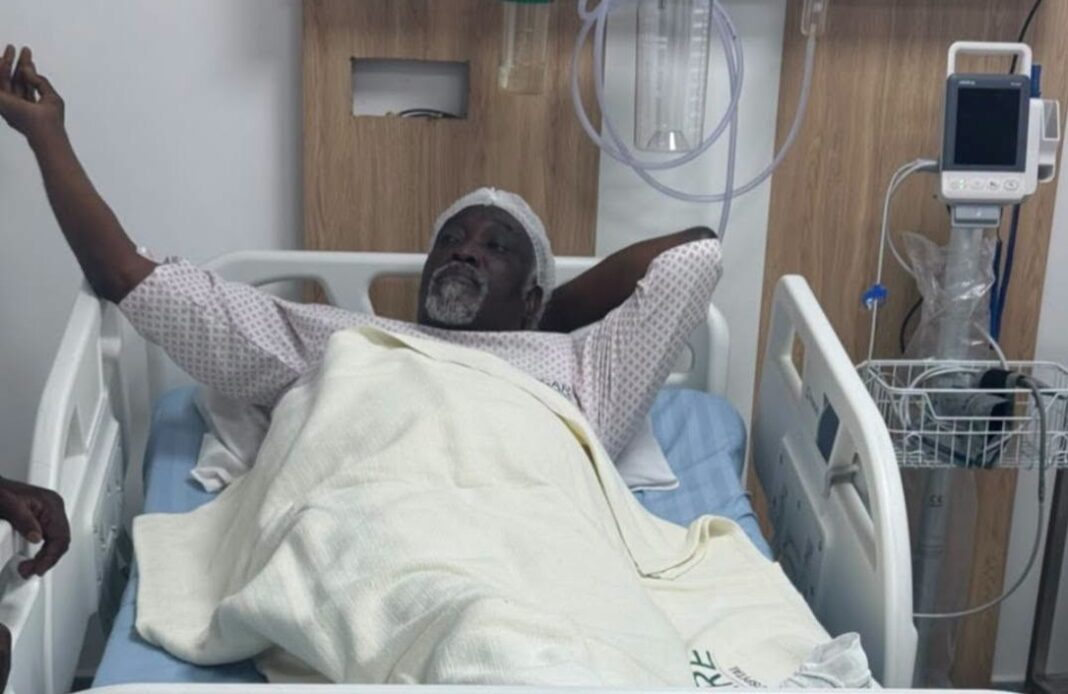
For over 30 days, Browne has been engaged in a struggle that has tested his body, shaken his spirit, and confronted him with the fragility of human life. After living with diabetes for more than 42 years, the veteran journalist faced a severe complication that threatened not just two toes, but his entire foot. Confronted with the terrifying possibility of an amputation below the knee, he endured fear, uncertainty, emergency treatment, and a frantic search for medical help that could save his limb.
In Ghana, following an extraordinary medical effort, hope emerged where despair had loomed large. Specialists worked to restore blood flow to his foot, and ultimately, the two affected toes were removed.
Today, Browne reports that he is out of immediate danger and has begun his journey toward recovery.
Beneath this account of medical intervention lies a much deeper narrative—a narrative filled with courage, family, friendship, compassion, and the sobering truth that even the most vibrant among us are not invincible.
For Browne, this experience has been a painful disruption to a life characterized by relentless work. As a veteran of Liberia’s dynamic and often tumultuous media landscape, he has dedicated years to journalism, including his time with the now-defunct National Chronicles newspaper before establishing himself as the leader of the Hot Pepper.
Throughout shifting political climates, national controversies, and the daily challenges of newspaper publishing, he has remained a constant figure in the public discourse of the country.
Journalism in Liberia is no easy path. It requires persistence in the face of uncertainty, bravery amid controversy, and a commitment to continue working even when fatigue would be a valid reason to stop.
For those who have dedicated their lives to the newsroom, the newspaper transcends mere business; it becomes a mission, an identity, and often an unyielding obligation. Perhaps this explains why Browne kept pushing himself, even as he bore the weight of a chronic illness for over four decades.
Now, from a hospital bed and through the painful ordeal of losing two toes, he has conveyed a message that is more powerful than any editorial, more compelling than any headline, and more lasting than the printed pages of a newspaper.
“MAKE HAY WHILE IT IS YET DAY, BECAUSE THE NIGHT COMETH WHEN NO MAN CAN WORK.”
Those words are more than just a saying in Browne’s narrative; they reflect the experience of a man who has faced the shadows of uncertainty and emerged with a deeper appreciation for the light of life.
Through his suffering, he has come to understand that the body has its limits, that relentless ambition without sufficient rest can take a heavy toll, and that tomorrow is never promised.
He reminds us that the urgent tasks we prioritize will eventually have to wait, that the responsibilities we bear cannot be fulfilled if we neglect the very bodies that support us, and that health is a treasure we often recognize most when it is at risk.
There’s something profoundly touching about a journalist who has dedicated much of his life to documenting the struggles of others now sharing his own story of survival. Howbeit, Browne’s narrative extends beyond illness; it highlights the strength of human kindness. In his time of deep vulnerability, his wife stood by him, his children prayed and fasted, friends came together, colleagues in the media reached out, and those in positions of authority offered help.
His account of support from members of the National Security Council serves as a reminder that compassion can transcend official roles and professional boundaries when someone is in need.
The newsroom may have equipped Browne with the skills to investigate a story, but this challenging chapter has shown him—and all of us—that no one can weather every storm alone. Behind every public figure is a person. Behind every newspaper owner is a family. Behind every driven professional is a body that can be exhausted, a heart that can fear, and a life that deserves safeguarding.
Browne’s public persona harbors a husband, father, friend, and fellow Liberian whose significance is deeply felt by those who care for him.
To his wife, who remained steadfast during the terrifying moments; to his children, whose prayers accompanied him through the unknown; and to every friend, colleague, and supporter who provided encouragement, your love has woven itself into this tale of resilience.
To the medical team that fought to save his foot, your expertise has allowed hope to thrive.
And to Browne himself, there exists a community of readers and fellow journalists who can only wish for his continued healing and brighter days ahead.
For a man dedicated to sustaining the press, it is only right that we now encourage him to prioritize his own life by resting, recuperating, and letting others shoulder the load for a time.
Philipbert, the newspaper can hold off. The deadlines can pause. The next issue can take a backseat. The debates, controversies, tasks, and unfinished work can wait. Your life is more valuable than the next headline. Your health is more crucial than the upcoming edition. And your presence is far more significant than the work still left to be done.
Liberia’s media landscape relies heavily on its veterans, its storytellers, and those who chronicle the essence of national life. More importantly, it needs its people to be alive, healthy, and capable of enjoying the rewards of their hard work over the years.
Your story is a reminder to every journalist who sacrifices sleep for deadlines, every professional who mistakes exhaustion for dedication, every parent who delays seeking medical help to provide for their family, and every Liberian who believes that health issues can always wait until tomorrow.
Let us take a moment to listen. We must learn to prioritize rest before our bodies force us to halt. Seeking medical attention early, taking chronic illnesses seriously, and recognizing that self-care is not a sign of weakness but a vital responsibility is crucial.
While prayers can bring comfort and solidarity, we must also acknowledge that good medical care, timely diagnoses, and consistent treatment are essential allies in the battle against illness.
Browne’s experience serves as a stark reminder that even the most powerful pen cannot transcend the limitations of the hand that wields it.
Yet, perhaps the most extraordinary aspect of this story is that, despite his suffering, he continues to write. His latest message transcends mere politics, personalities, or state affairs; it speaks to the essence of life itself, and this may very well be one of the most significant stories he has ever shared.
Today, we don’t celebrate suffering. We don’t romanticize illness or pretend that survival comes without its scars. Instead, we recognize the bravery it takes to face a daunting diagnosis, endure challenging treatments, accept help from others, and share an experience that might save someone else’s life.
We honor the hope that has arisen from a terrifying journey. We cherish the love that surrounded him during his toughest times. And we pray for strength, healing, and a renewed sense of purpose in the days to come.
Philipbert Semogai Jabba-Wleh Browne, your struggle has shown us that the person behind the newspaper is far more significant than the publication itself. May your healing journey continue. May your strength return. May your family find solace in the progress you achieve. And may the future bring you the peace, health, and new opportunities that years of hard work may have kept from you.
For now, dear veteran, take a break from writing. Allow your body to heal. Let your family care for you. Let your colleagues handle the news. Let the nation remember you not just for the stories you’ve told, but also for the powerful lesson your own journey has imparted.
You have dedicated years to sharing the stories of others. Now, the nation takes a moment to send you a heartfelt message: Keep fighting, Browne. Keep healing. Keep believing. Your journey is far from over.
As you have often reminded us, while there is still daylight, there is much to be done—not just in the newsroom or behind a desk, but in the more vital work of living, loving, healing, and appreciating the gift of another day.
May God bless you with renewed strength, a smooth recovery, and many more years to share the stories that truly matter.
Liberia still has many stories waiting for you to tell, Philipbert. But first, take the time to truly live.