MONROVIA – Criminal networks are increasingly exploiting international trade routes and porous borders across Africa, prompting Customs authorities in West and Central Africa to call for stronger intelligence-sharing, coordinated enforcement and a more unified regional response to smuggling, illicit trafficking and organized crime.
The warning came at the conclusion of a five-day regional meeting in Liberia, where Customs officials examined emerging security threats and called for a fundamental shift in how national administrations share intelligence and respond to criminal activity that increasingly transcends national boundaries.
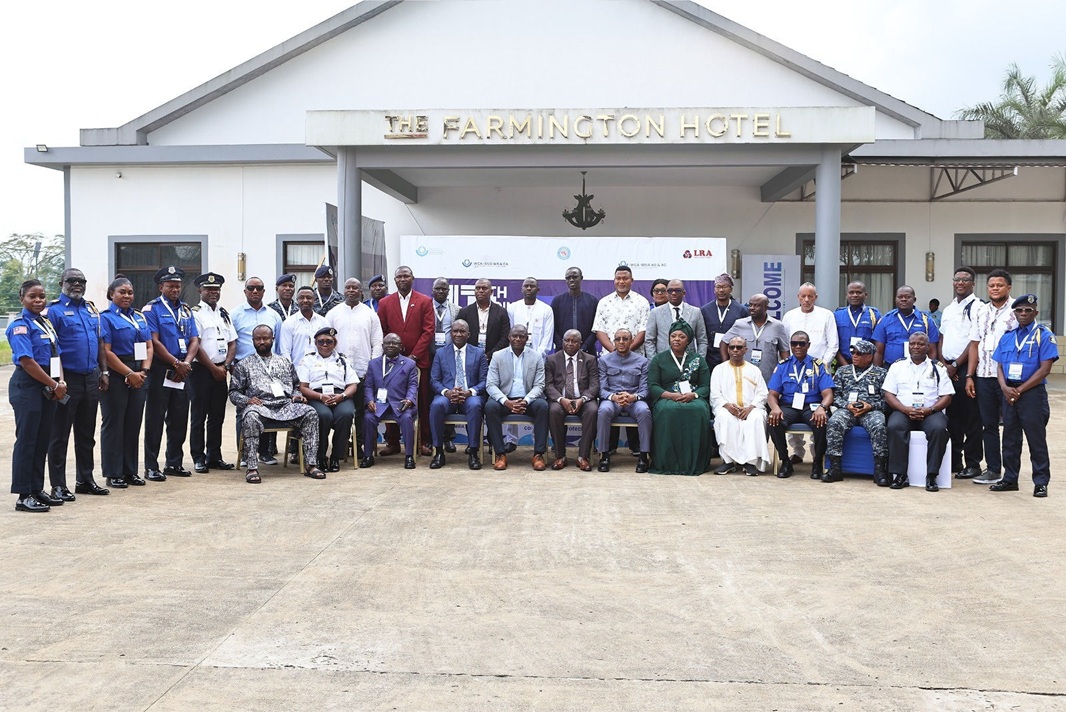
More than 40 delegates representing over 17 countries, alongside regional and international partners, attended the 17th Joint Annual Meeting of National Contact Points (NCPs) of the World Customs Organization’s (WCO) Regional Intelligence Liaison Offices (RILO) for West and Central Africa. The Liberia Revenue Authority (LRA) hosted the November 2–6 gathering at the Farmington Hotel in Margibi County.
The discussions exposed a critical challenge facing Customs administrations across the region including intelligence gathered through national and regional networks can have limited value if it does not lead to timely investigations, coordinated enforcement and measurable results.
Liberia’s Commissioner of Customs, Saa Saamoi, said the growing sophistication of criminal networks and the increasing complexity of global supply chains required Customs administrations to strengthen their operational capabilities and adapt to evolving security threats.
He said Customs authorities faced a difficult but essential balance in facilitating legitimate international trade while protecting national borders, safeguarding society and the environment, and ensuring the effective mobilization of government revenue.
“The intelligence shared but not executed to its logical conclusion is an effective failure of all the efforts that we put in,” Mr. Saamoi said.
His remarks captured the central challenge confronting regional Customs cooperation noting that intelligence must become a tool for action, not simply information exchanged between institutions.
Mr. Saamoi urged participating RILO administrations to strengthen national legal frameworks, invest in specialized professional training and establish effective monitoring mechanisms to ensure that intelligence reports translate into concrete enforcement outcomes.
He also encouraged member administrations to ratify the Nairobi Convention and improve follow-up on intelligence requests, particularly those involving emerging patterns of Customs fraud and illicit trade. Implementation of the meeting’s recommendations, he said, should remain a priority for consideration at the next meeting of Directors General of Customs.
Beyond the question of enforcement, delegates focused on the institutional capacity of National Contact Points, whose responsibilities place them at the center of the WCO’s regional intelligence network.
Amandu Tejan Cisse, Director General of RILO West Africa, said the effectiveness of the network depended on whether National Contact Points could move beyond transmitting information and become active links between national administrations and regional enforcement structures.
He emphasized that these officials needed clearly defined mandates, adequate resources, appropriate working conditions and sustained institutional support to perform their responsibilities effectively.
Mr. Cisse reaffirmed the regional offices’ commitment to working with National Contact Points and the WCO Secretariat to strengthen intelligence exchange, improve operational coordination and expand the region’s capacity to combat Customs-related offenses.
Diya Abezene Portia, RILO National Contact Point for the Central African Republic, called for modernized Customs enforcement systems and stronger regional cooperation to counter smuggling, the trafficking of prohibited goods, money laundering and transnational organized crime.
She highlighted the importance of intelligence in anticipating and detecting Customs violations, strengthening risk-management systems and improving targeting mechanisms so that enforcement resources are directed toward activities presenting the greatest risks.
The meeting concluded with a series of recommendations designed to strengthen the operational effectiveness of the regional intelligence network and move cooperation beyond information exchange toward coordinated enforcement.
Delegates called for stronger National Contact Points, improved communication among national and regional intelligence networks, and more systematic analysis of information gathered through domestic and international operations.
They also recommended expanded professional training in intelligence analysis, risk management, targeting and operational coordination, alongside improved documentation and follow-up of intelligence requests under the Customs Memorandum Plan.
Other priorities included regular assessments of the implementation and effectiveness of adopted recommendations, wider engagement with the global RILO network and closer collaboration with national, regional and international law enforcement agencies.
The recommendations further emphasized stronger national legislation and appropriate sanctions to address illicit trafficking and illicit financial flows.
To support implementation, Customs administrations were urged to provide National Contact Points with adequate resources, recognize their contributions and ensure their active participation in regional anti-fraud initiatives. The officials were also encouraged to strengthen intelligence reporting, submit annual reports in English or French, regularly brief their Directors General on emerging threats and deepen their engagement with the WCO’s Customs Law Enforcement Intelligence and Collaboration (CLIC) platform and other relevant intelligence systems.
The stakes extend well beyond the enforcement of Customs regulations. Smuggling, illicit financial flows and organized trafficking can deprive governments of revenue, undermine legitimate businesses, distort markets and create security vulnerabilities. For countries dependent on international trade, weak border controls can also expose national economies to criminal networks operating across multiple jurisdictions.
For Liberia, hosting the meeting represented an opportunity to strengthen its role in regional Customs cooperation and contribute to a broader agenda of intelligence-led border security. Through the gathering, the Liberia Revenue Authority brought together regional administrations and international partners to exchange experiences, reinforce professional networks and develop a common approach to emerging threats.