MONROVIA, LIBERIA — Political tensions are escalating in Liberia after Paulita C.C. Wie, a prominent Congress for Democratic Change (CDC) partisan, controversially declared that her party would no longer carry Bibles on its chest and would instead “return fire for fire” in the 2029 elections.
The remark has raised concerns about confrontational political rhetoric ahead of the country’s next presidential election.
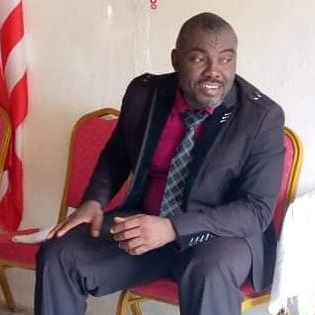
In response, Economic Freedom Fighters of Liberia (EFFL) leader Emmanuel D. Gonquoi issued a forceful warning, indicating that any political party that steers Liberia toward war to gain power should be rejected by the Liberian people and designated a terrorist organization by international partners.
In a strongly worded Facebook post published Sunday, November 8, Gonquoi condemned what he described as the dangerous introduction of war into Liberia’s political discourse.
He stressed that the country’s democratic aspirations must never be used to justify another national tragedy.
“Any political Party like the CDC that pushes War debate becuz of political power should be denied by our people and listed as terrorist organization by our international partners. Our quest for power shouldn’t take us down War path anymore!” Gonquoi wrote.
His response came barely a day after Wie, speaking as keynote address speaker at the CDC’s Martyrs’ Day commemoration in Kinjor, Grand Cape Mount County, warned that the party would not approach the 2029 election with the restraint she said it had shown in the past.
“To the office of President Weah, we are not putting Bibles on our chests anymore comes 2029 and we will return fire for fire,” Wie declared, according to reports of her address.
Her remark has revived an unsettling national debate about whether some Liberian politicians are increasingly using reckless expressions that evoke the country’s bloody past.
For a nation that endured years of devastating civil conflict, talk of returning fire in a contest for political power is not routine campaign rhetoric that can be dismissed as partisan fervor.
Liberians understand the consequences of allowing political grievances to escalate into confrontation, of leaders rallying supporters through anger, and of placing the pursuit of state power above the lives and safety of ordinary citizens.
The country paid an immense price for that history. Thousands died, families were displaced, communities were destroyed, and an entire generation came of age amid the threat of violence.
The scars left by that period make the language of political retaliation especially troubling.
Wie’s declaration is not the first time comments by CDC figures have raised concerns about the possibility of national instability.
In May 2026, CDC National Chairman Atty. Janga A. Kowo cautioned that Liberia was approaching what he termed a “Mogadishu Moment,” evoking Somalia’s prolonged state collapse and conflict.
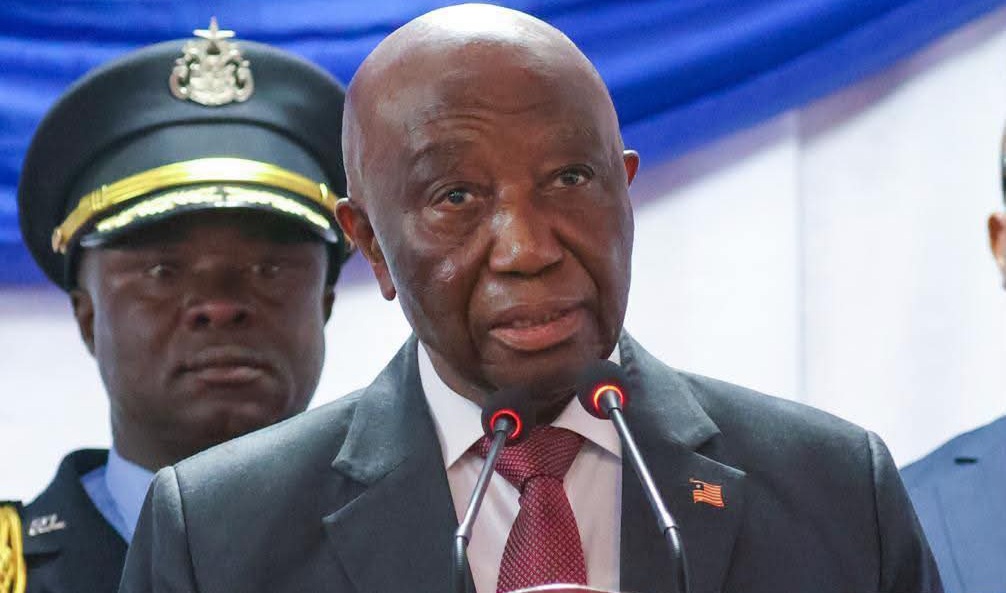
Speaking at a CDC press conference in Monrovia, he depicted the country as moving toward anarchy and the gradual breakdown of the state under President Joseph Boakai’s administration.
Earlier, in March 2026, CDC’s Alvin C. Wesseh warned that Liberia was moving toward what he called premature civil unrest and a possible national crisis, amid tensions over mining activities and reported developments along the Liberia–Guinea border.
While Wesseh presented his remarks as a warning about conflict, not an endorsement of violence, repeated references to civil unrest, war, and state collapse have helped create an increasingly combustible political climate.
Considered alongside Wie’s latest declaration, these remarks raise valid questions about the duty of political leaders to choose their words carefully in a country where peace remains a national treasure.
An opposition party may criticize government failures, challenge alleged corruption, organize protests, and prepare to contest an election.
It is quite another matter to use language that could reasonably be understood as threatening retaliation if political ambitions are thwarted.
No political party has a constitutional entitlement to govern Liberia, and no political leader may suggest that electoral defeat should be met with violence.
Power rests with the Liberian people, and the ballot—not the bullet—must decide who occupies the Executive Mansion.
Interestingly, the latest controversy also reveals a contradiction within the CDC’s own November 7 commemoration.
As Wie issued her warning to “return fire for fire,” Chairman Kowo publicly called on supporters to reject violence, uphold the rule of law, and respect political differences.
He emphasized that no Liberian should lose their life merely for exercising their democratic rights.
That position deserves recognition. Howbeit, it also raises an unavoidable question for the CDC leadership, regarding what concrete steps will the party take to ensure its political messaging aligns with the chairman’s stated commitment to peace.
An appeal for nonviolence carries more weight when party leaders clearly reject threatening language and suggestions of violent retaliation within their organization.
The CDC must therefore clarify whether Wie’s declaration reflects the party’s position or her personal political expression.
If this does not represent the party’s position, its leadership should state that clearly and unequivocally.
If it does reflect the party’s thinking, Liberians deserve an explanation of what “return fire for fire” means in the context of the 2029 elections.
Gonquoi’s appeal to the international community to consider designating any political party that advocates war as a terrorist organization is a remarkably forceful political demand.
Such a designation, however, does not automatically result from controversial political statements. It requires evidence of conduct that satisfies relevant legal standards, as well as action through the appropriate legal processes.
Even so, the underlying concern he has raised merits serious national consideration: political power must never be used to justify violence.
The EFFL leader’s message places a clear responsibility on political organizations to show that their ambitions are pursued through democratic competition, not threats of confrontation.
The CDC, as a major opposition party led politically by a former president, has every right to challenge the Boakai administration, expose alleged misconduct, organize its supporters, and campaign to regain power in 2029.
But those rights carry responsibilities. The party must distinguish between defending its electoral interests and fostering an atmosphere in which supporters might view political disagreement as grounds for confrontation.
Likewise, the Unity Party government must not exploit controversial opposition statements to justify suppressing legitimate political dissent.
Every political organization is constitutionally entitled to participate in peaceful political activity. Liberia cannot afford a selective commitment to democracy.
As the 2029 elections approach, the country needs political leaders who build confidence in the ballot box—not fear of what may follow if their candidates lose.
Gonquoi’s intervention has therefore raised an important question for CDC leaders and the broader political establishment: Is the pursuit of power worth reopening the wounds of a country that has already suffered so much?
For ordinary Liberians, the answer should be clear. No presidency, political party, or electoral victory is worth another war.
No politician should ever make Liberians believe their country must bleed again for someone to occupy the Executive Mansion.