MONROVIA – The National Elections Commission (NEC) has submitted a proposed US$89.54 million budget to finance Liberia’s 2027–2029 electoral operations, outlining an ambitious plan to expand voting infrastructure, strengthen biometric voter verification, improve nationwide internet connectivity, and prepare for the conduct of the 2029 Presidential and Legislative Elections.
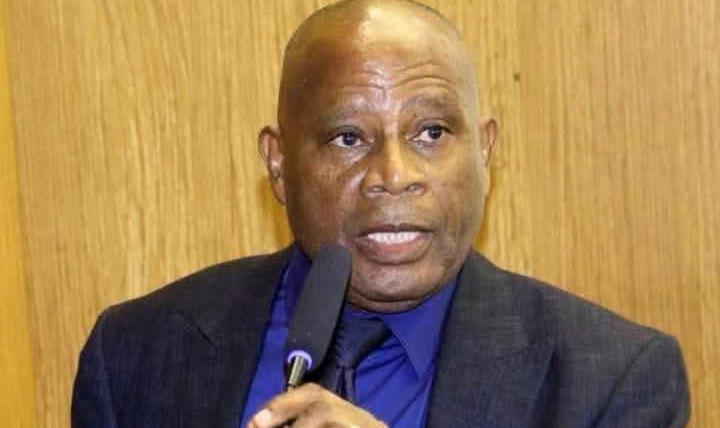
The proposed budget, totaling US$89,545,353.92, was disclosed Monday, November 23, 2026, by NEC Chairman, Hon. Jonathan K. Weedor, during a press conference at the James M. Fromayan Hall at the Commission’s headquarters in Monrovia.
According to Chairman Weedor, the proposed funding represents a 40 percent increase over the cost of the 2023 General Elections, with the adjustment reflecting expanded electoral infrastructure, technological investments, and the operational requirements associated with conducting the next electoral cycle.
The Commission said the proposed three-year allocation has been submitted to the National Legislature and the Ministry of Finance and Development Planning (MFDP) for consideration and is intended to provide the financial foundation necessary for timely preparation and effective administration of the 2029 elections.
A major component of the proposed increase is the expansion of voting precincts nationwide from 2,080 during the previous electoral cycle to a projected 2,500 in 2029, representing an addition of 420 precincts.
The NEC explained that the expansion is intended to accommodate the country’s projected voting population and strengthen access to electoral services across Liberia.
Using an estimated national population of 5,885,979 in its operational planning worksheet, the Commission projects approximately 2.7 million eligible voters for the 2029 electoral process.
To accommodate the projected electorate, the NEC anticipates approximately 10,000 polling places, based on an average of four polling centers per precinct.
The Commission disclosed that voter registration is expected to take place during the first quarter of 2028, making the timely procurement of biometric registration equipment and other essential electoral materials a major priority for the first phase of the proposed budget.
Another significant component of the plan is the proposed introduction of Starlink internet services across the NEC’s operational areas.
The Commission said the investment is intended to improve connectivity between its headquarters and field offices, strengthen communication among electoral personnel, and address internet access challenges that could affect coordination during major electoral operations.
The proposed budget also provides for the procurement of more than 10,000 voter verification devices to support the biometric identification and verification of voters before ballots are cast.
According to Chairman Weedor, the verifiers are expected to strengthen electoral safeguards by preventing individuals from voting more than once and protecting the principle of one person, one vote.
The Commission considers these technological investments essential to strengthening the credibility, efficiency, and integrity of the 2029 electoral process.
The NEC has divided the proposed US$89.54 million electoral budget into three implementation phases covering 2027, 2028, and 2029.
Phase One, covering 2027, is projected at US$32,500,581.58. The amount is intended primarily to support the timely procurement of biometric equipment and other essential materials required for the voter registration exercise. The Commission indicated that the funding should be made available by the end of March 2027 to avoid delays in the procurement process.
Phase Two, covering 2028, is estimated at US$12,903,002.11 and will finance the voter registration exercise, including personnel costs, logistical arrangements, and the deployment and retrieval of electoral workers and materials across the country.
Phase Three, covering 2029, is projected at US$44,141,770.23 and will cover the actual balloting process, associated personnel expenses, logistics, and other operational requirements for the conduct of the General Elections.
The three allocations amount to the full proposed electoral budget of US$89,545,353.92.
Chairman Weedor emphasized that credible elections require extensive preparation and cannot be successfully organized within a short period. He said the Commission must invest in technical readiness, institutional capacity, logistics, and sustained coordination among electoral stakeholders to prevent operational weaknesses and last-minute financial pressures.
Beyond the procurement of voting equipment and the expansion of electoral infrastructure, the proposed budget also provides for communications and public information, geographical information services, civic and voter education, political affairs, stakeholder engagement, institutional operations, and personnel requirements.
The NEC said stronger public information systems would enable it to communicate accurate and timely electoral information to citizens, while investments in geographical information services would support electoral mapping, boundary-related information, spatial data management, and other location-based planning requirements.
The Commission also intends to strengthen civic and voter education to ensure that citizens understand their electoral rights and responsibilities and are adequately prepared to participate in the democratic process.
Particular attention will be given to women and other traditionally underrepresented groups to promote inclusive participation. The NEC further believes that improved voter education could reduce or minimize invalid ballots during elections.
The proposed funding also accommodates sustained engagement with registered political parties, independent candidates, civil society organizations, and other electoral stakeholders, recognizing the importance of confidence-building and cooperation in maintaining a peaceful electoral environment.
In a significant aspect of the proposed electoral financing arrangement, the NEC has made provisions for a possible run-off election in 2029.
The Commission explained that including a run-off component reflects its responsibility to prepare for constitutionally anticipated electoral scenarios and ensure that the necessary financial and operational resources are available should a second round of voting become necessary.
This provision is intended to prevent the Commission from facing unexpected funding pressures in the event that the presidential election proceeds to a run-off.
Separate from the proposed US$89.54 million electoral budget, the Commission has also submitted a proposed 2027 recurrent budget of US$14,374,284.92 to support institutional modernization and improve its operational capacity.
One of the major projects under the proposed recurrent budget is the construction of a modern NEC Data Center intended to strengthen the Commission’s technological infrastructure, data management, storage, processing, and information security capabilities.
The Commission also plans to construct 17 guesthouses across 14 of Liberia’s 15 counties, excluding Montserrado County, to address accommodation challenges experienced by electoral personnel during field assignments, training exercises, and major electoral operations.
The initial four guesthouses are planned for Nimba, Bong, and Grand Bassa Counties.
Additionally, the proposed recurrent budget provides for the relocation of some electoral magisterial offices from less-populated cities to locations with higher population concentrations.
The NEC said the adjustment is intended to reduce distances between areas where voters are concentrated and the locations from which electoral personnel and materials are deployed and retrieved.
Acknowledging the substantial financial commitment involved, Chairman Weedor assured the public that the Commission recognizes its responsibility to manage public resources transparently, prudently, and in accordance with applicable financial and procurement regulations.
He said the NEC would continue engaging relevant government institutions and stakeholders throughout the budgetary process, emphasizing that securing funding is only one aspect of the Commission’s responsibility.
The ultimate objective, he indicated, is to ensure that resources allocated to electoral preparations produce effective operations and improved institutional performance.
The proposed budget now places the financing and logistical requirements of the 2029 elections before the National Legislature and the Ministry of Finance and Development Planning for consideration.
For Liberia, the scale of the NEC’s proposed preparations underscores the importance of early electoral planning, particularly as the country approaches another major constitutional exercise in 2029.
With an estimated 2.7 million eligible voters, 2,500 projected voting precincts, approximately 10,000 polling places, and more than 10,000 planned verification devices, the Commission faces a substantial administrative and technological undertaking.
The NEC says its central objective is to ensure that the next General Elections are conducted credibly, inclusively, transparently, and peacefully, with preparations beginning well ahead of Election Day.