
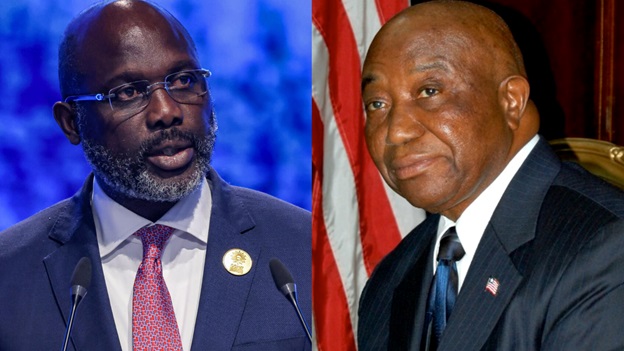
MONROVIA — President Joseph Nyuma Boakai’s administration has proposed US$4.47 million for the Office of the President in the 2027 National Budget, exceeding the US$4.31 million allocated to the same office under former President George Manneh Weah in the 2023 fiscal year.
A comparison of the two administrations’ budget documents shows that Boakai’s proposed allocation of US$4,469,571 is US$157,821 higher than Weah’s US$4,311,750, representing an increase of approximately 3.7 percent.
But beyond the proposed increase, figures contained in the Ministry of Finance and Development Planning’s FY2027 Draft National Budget raise additional questions about spending under the current administration.
According to the budget document, the Office of the President had recorded US$6,179,989 in year-to-date expenditure as of September 30, 2026, despite receiving an approved FY2026 allocation of US$3,319,571.
The reported expenditure is approximately US$2.86 million above the approved allocation.
The budget document, however, does not by itself explain the reasons for the difference or whether supplementary appropriations, reallocations or other authorized adjustments account for the spending. The Ministry of Finance should clarify the figures.
The proposed FY2027 allocation also comes after the Office of the President recorded US$3,915,465 in actual expenditure during FY2025.
Travel and presidential expenditure under scrutiny
The draft budget provides US$220,000 for foreign travel means of transportation and US$180,000 for foreign travel daily subsistence allowances in FY2027.
It also proposes US$510,000 for domestic travel means of transportation, a substantial increase from the US$10,000 approved for that expenditure in FY2026.
The domestic travel allocation deserves particular scrutiny, especially given the government’s repeated commitments to fiscal discipline and responsible management of public resources.
While presidential travel and administrative operations are legitimate government responsibilities, the public has a right to know how these expenditures translate into measurable benefits for the country.
Questions for the Ministry of Finance
The figures raise several important questions:
Why did the Office of the President record US$6.18 million in expenditure by September 30, 2026, when its approved annual allocation was US$3.32 million?
Was additional funding authorized by the Legislature or through another lawful budgetary process?
What accounts for the proposed increase in domestic travel expenditure from US$10,000 in FY2026 to US$510,000 in FY2027?
How much has the Boakai administration spent on presidential travel, fuel, hospitality and other operational expenses since taking office?
And what measurable improvements in public service delivery justify the level of expenditure?
These questions are particularly important as the Legislature begins reviewing the proposed US$1.538 billion FY2027 National Budget.
Accountability beyond political comparisons
The comparison between the Weah and Boakai administrations should not be reduced to which president spent more money.
The more important issue is whether presidential expenditures comply with the law, remain within approved budgetary limits and deliver value for taxpayers.
The Legislature has an opportunity to examine these figures during budget hearings and demand explanations from the Ministry of Finance and the Ministry of State for Presidential Affairs.
For ordinary Liberians struggling with poor roads, unemployment, inadequate healthcare and rising living costs, accountability over presidential spending is not a political argument. It is a public financial management obligation.