By Smart News Liberia
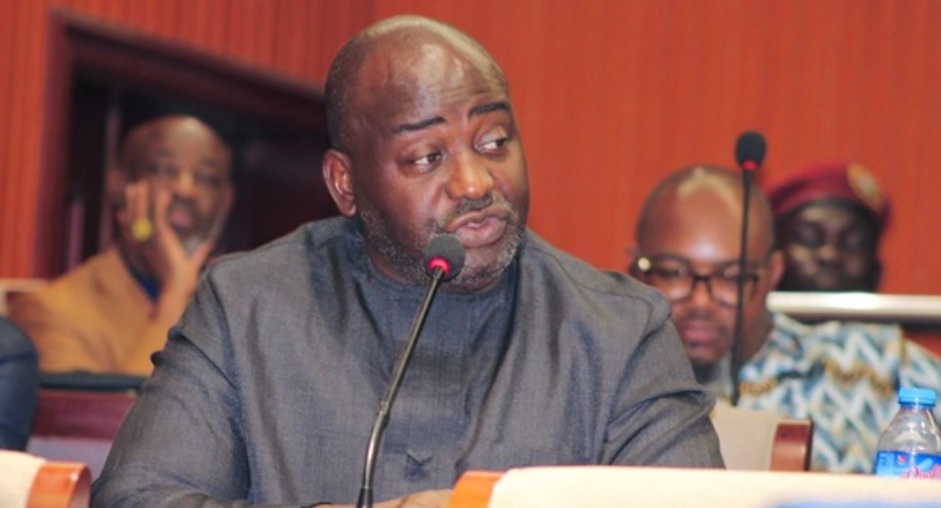
MONROVIA – Nimba County District #7 Representative Musa Hassan Bility has called for a financial audit of both chambers of the National Legislature, warning that Liberia’s anti-corruption drive will lack credibility if lawmakers are excluded from ongoing public accountability efforts.
In an open letter dated Tuesday, July 13, 2026, addressed to the Joint Public Accounts, Expenditure and Audit Committee of the 55th Legislature, Bility welcomed the Committee’s decision to hold public hearings into the Auditor General’s report on government tax revenues collected through transitory bank accounts and the Consolidated Accounts between July 1, 2018, and December 31, 2024.
While describing the hearings as a positive step toward transparency, the lawmaker argued that the process would be incomplete and potentially viewed as selective if it failed to examine the financial management of both the House of Representatives and the Liberian Senate.
“No public accountability process will earn the respect and confidence of the Liberian people if it excludes the Legislature,” Bility declared. “Indeed, such a process should begin with, or at the very least fully include, both the House of Representatives and the Liberian Senate.”
Bility contended that lawmakers cannot demand transparency from government ministries, agencies, the Central Bank of Liberia, the Liberia Revenue Authority, and commercial banks while shielding the Legislature’s own financial activities from similar public scrutiny.
“We cannot credibly hold other institutions accountable while appearing unwilling to submit ourselves to equal scrutiny,” he wrote.
The Nimba County lawmaker grounded his argument in Liberia’s legal framework, noting that Article 34(d) of the Constitution grants the Legislature broad authority over taxation, public revenue, and national appropriations.
According to Bility, that constitutional authority also imposes a duty on lawmakers to fully account for how public funds appropriated to the Legislature are received, managed, and spent.
He further cited Section 2.1.3 of the General Auditing Commission (GAC) Act of 2014, arguing that while the law protects the legislative process itself from audit, it does not exempt the financial management, expenditures, or administrative operations of either legislative chamber.
To strengthen public confidence in the accountability process, Bility urged the Joint Committee to ensure that every transaction involving the House of Representatives or the Senate appearing in the Auditor General’s report is thoroughly examined during the ongoing hearings.
He also called for former and current financial and administrative officials of both chambers to testify whenever legislative transactions are identified in the audit findings.
Beyond the ongoing hearings, Bility proposed what would be one of the most comprehensive financial reviews of Liberia’s Legislature in recent years.
He called for an independent financial, compliance, and performance audit covering the period from July 1, 2018, through December 31, 2024.
According to the lawmaker, such an audit should examine legislative appropriations, allotments, payroll, allowances, procurement, contracts, committee expenditures, travel expenses, operational spending, special funds, bank accounts, advances, and the retirement of those advances.
Bility further urged that the audit’s scope, commencement date, implementation timetable, and final report be made public, with subsequent hearings conducted under the same level of scrutiny currently being applied to Executive Branch officials and financial institutions.
The lawmaker cautioned against relying solely on systems reviews, arguing that they cannot replace a full financial audit capable of determining whether public funds were lawfully received, properly spent, adequately documented, and whether any irregularities warrant recovery actions or legal accountability.
“If the General Auditing Commission continues to avoid a full and publicly available audit of the Legislature, the public will reasonably question whether the institution is truly prepared to pursue accountability without fear or favor,” Bility warned.
He called on the Joint Public Accounts, Expenditure and Audit Committee to use its authority to close what he described as a serious accountability gap within Liberia’s governance system.
Rejecting any suggestion that his proposal was intended to undermine the Legislature, Bility insisted that the initiative would instead strengthen public confidence in the institution.
“This is not an attack on the Legislature. It is a call to protect its credibility,” he wrote. “Accountability cannot be a telescope through which we examine everyone else while refusing to look into the mirror ourselves.”
Bility concluded by again commending the Joint Committee for launching the public hearings but urged lawmakers to demonstrate impartiality by ensuring that the Legislature itself is subjected to the same standards of transparency and financial accountability expected of every other public institution.