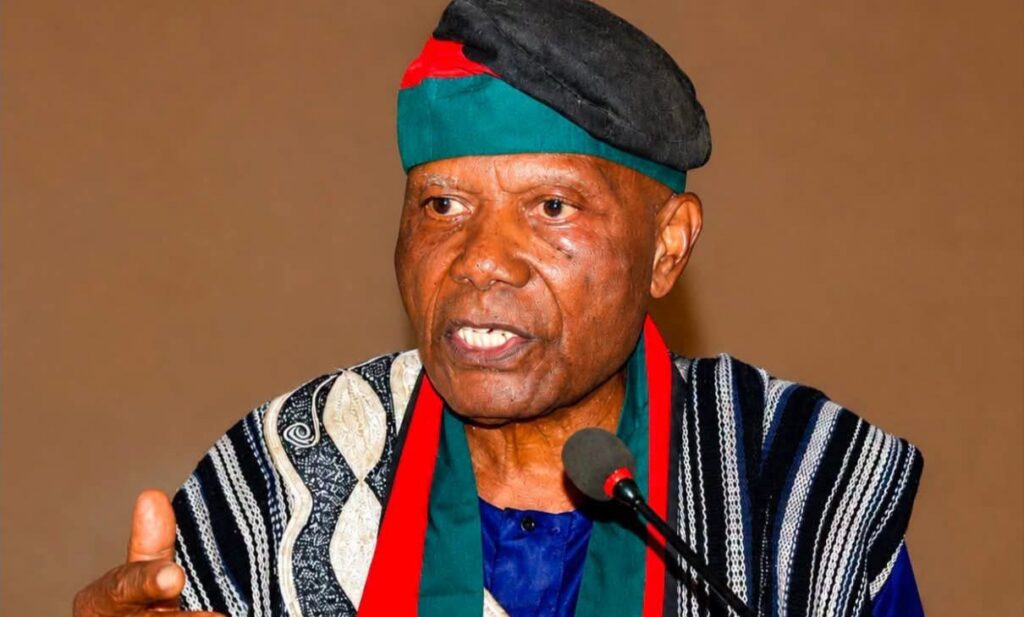
MONROVIA — After nearly a decade of litigation, Liberia’s prominent elder statesman, economist and politician Dr. Togbah Nah Tipoteh has secured a final judgment from the Supreme Court of Liberia, which has ordered the Liberia Bank for Development and Investment (LBDI) to pay him US$50,000 in damages over the bank’s failure to return a land deed used as collateral for a US$10,000 loan.
The case, which originated in 2016 before the Sixth Judicial Circuit Civil Law Court in Montserrado County, remained in the judicial system for nearly ten years before reaching final determination by the Supreme Court during its March Term, A.D. 2026.
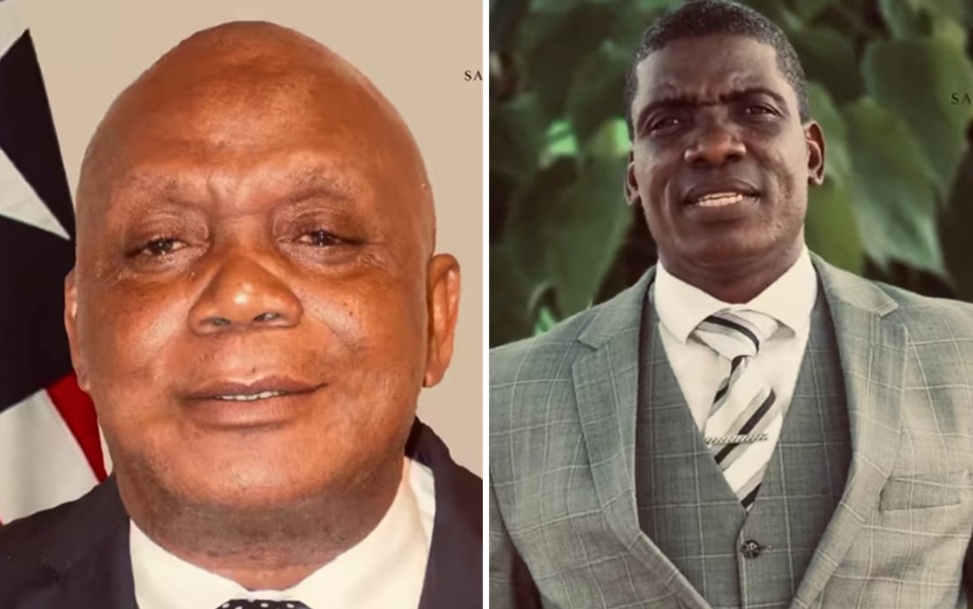
The Supreme Court heard Dr. Tipoteh’s Action of Damages for Wrong on June 1, 2026, and delivered its final judgment on August 28, 2026, before the full bench led by Chief Justice Yamie Quiqui Gbeisay Sr.
The opinion was delivered by Justice Clinton-Johnson, who reviewed the circumstances surrounding the long-running dispute between Dr. Tipoteh and LBDI.
How the Dispute Began
According to the Supreme Court’s opinion, Dr. Tipoteh obtained a US$10,000 loan from LBDI on November 27, 2015, using the deed to a quarter-acre parcel of land situated on Ashmun Street as collateral.
The court said Dr. Tipoteh fully settled his obligation to the bank on March 26, 2016, including the principal, interest and other charges.
After settling the debt, Dr. Tipoteh wrote LBDI requesting the return of his land deed.
According to the Supreme Court’s findings, however, the bank failed to surrender the deed and did not provide an explanation for its continued retention.
That failure ultimately led Dr. Tipoteh to file an Action of Damages for Wrong on November 15, 2016, beginning a legal battle that would continue for almost another decade.
The Consequences Alleged
Dr. Tipoteh argued that LBDI’s failure to return his deed caused him embarrassment, inconvenience, mental distress and economic hardship.
He further maintained that because the deed remained in the bank’s possession, he was unable to use the property as collateral to obtain another loan or pursue other economic opportunities.
He initially sought general damages of not less than US$300,000.
However, the Supreme Court noted that Dr. Tipoteh did not provide sufficient evidence establishing the magnitude of the alleged economic hardship.
Supreme Court Modifies the Award
The lower court had awarded Dr. Tipoteh US$200,000 in damages.
After reviewing the case, however, the Supreme Court modified that judgment and reduced the total award to US$50,000.
The court explained that a party seeking general damages for wrong or injury must provide evidence establishing the magnitude of the injury suffered so that the court can determine an appropriate amount.
Justice Clinton-Johnson cited previous decisions, including Teahjay v. Dweh et al. [2014] LRSC 3 and National Milling Company of Liberia v. Bridgeway Corporation, [1990] LRSC 14; 36 LLR 776, 785, in support of the principle that general damages must be supported by proof.
The Supreme Court also relied on the earlier Intrusco Corporation v. Osseily, 32 LLR 571-572 (1985) decision, which explained damages as monetary compensation awarded for an injury or wrong resulting from either a breach of contractual obligation or a tortious act.
US$35,000 General Damages, US$15,000 Punitive Damages
While reducing the lower court’s US$200,000 award, the Supreme Court nevertheless found sufficient grounds to impose damages against LBDI.
The court ordered the bank to pay:
US$35,000 in general damages and US$15,000 in punitive damages.
The punitive damages were imposed for what the Supreme Court described as LBDI’s “wanton and reckless act” in failing to return Dr. Tipoteh’s deed.
The total judgment therefore stands at US$50,000.
A Decade-Long Journey Through the Courts
The ruling brings to an end a legal dispute that began nearly ten years ago.
For Dr. Tipoteh, a prominent Liberian economist, politician and elder statesman, the case represents a lengthy journey through Liberia’s judicial system over the control and return of his property deed after the underlying loan had already been fully paid.
The Supreme Court’s decision does not uphold the full US$200,000 awarded by the trial court. Instead, it modifies the judgment to US$50,000 based on the court’s assessment of the evidence concerning the injuries and damages established at trial.
The court nevertheless determined that LBDI’s failure to return the collateral deed warranted both general and punitive damages.
Mandate Sent Back to Trial Court
In its final order, the Supreme Court directed the Clerk of Court to issue a Mandate to the Sixth Judicial Circuit Civil Law Court, instructing the trial judge to resume jurisdiction over the matter and give effect to the Supreme Court’s judgment.
The decision therefore marks the conclusion of the appellate proceedings and sends the case back to the trial court for implementation of the Supreme Court’s final judgment.
For Dr. Tipoteh, the nearly decade-long dispute has now reached its final judicial chapter.
After years of litigation over a deed securing a US$10,000 loan that had already been fully repaid, Liberia’s highest court has ultimately determined that the bank’s continued failure to return the property document justified an award of US$50,000 in damages.