MONROVIA – For the second time in less than a year, the Boakai administration is facing a troubling budget shortfall, casting doubt over Liberia’s fiscal management and the credibility of its revenue projections. Despite public assurances of economic recovery and strong performance by the Liberia Revenue Authority (LRA), the numbers tell a starkly different story, one that reveals a deepening disconnect between government optimism and financial reality.
As of December 27, 2024, Liberia was already grappling with a budget deficit of more than US$35 million. That figure alone would have been cause for concern. But now, in the first quarter of Fiscal Year 2025, the nation is staring down a fresh shortfall of nearly US$18 million, according to a revenue performance report presented by the House of Representatives. The government is once again expected to return to the Legislature with a recast budget, a process that not only signals a lack of foresight but also disrupts the implementation of vital public services and development programs.
The House of Representatives Chief Clerk, Madam Mildred Sayon, reading from an official document at plenary on July 9, 2025, highlighted that revenue-generating agencies were required to submit their first quarter reports on all collections and contributions classified as assets. These reports, examined by the Ministry of Finance and Development Planning (MFDP), the LRA, and the legislative budget committee, were analyzed in a logical format, including cross-examinations and clarification sessions to ensure transparency and accountability. Each institution was given time to defend its financial report.
The Ministry of Finance and Development Planning had projected domestic revenue of US$201.66 million for the first quarter of FY2025. However, only US$183.81 million was collected, representing a shortfall of US$17.85 million, or 8.9 percent. The Ministry attributed the gap to delayed tax and non-tax revenue collections. Taxes on international trade, however, performed relatively well, with US$52.3 million collected against a target of US$53.28 million.
According to the LRA, year-to-date collections as of May 31, 2025, amounted to US$336 million, slightly above its projection of US$334 million. Yet, a broader projection of US$343 million still revealed a shortfall of US$6.8 million, underscoring inconsistencies in overall performance. The Bureau of State Enterprises (BSE) reported that out of 20 entities, only 11 submitted reports, and just four met the reporting timeline. The projected revenue from SOEs for the quarter was US$84.1 million, but actual revenue stood at just US$45.2 million.
Of the US$12.37 million expected in contributions from SOEs during the quarter, only five institutions contributed a total of US$8.49 million. These figures reflect deeply rooted structural problems in compliance and operational efficiency among public enterprises.
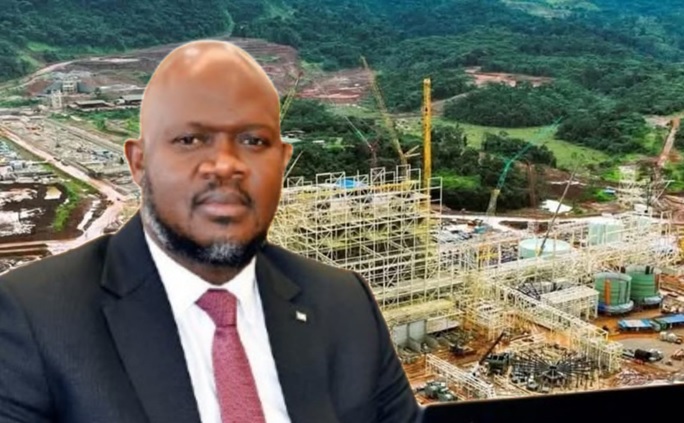
The Ministry of Commerce reported it achieved 91.7 percent of its projected domestic revenue, collecting US$183.81 million against a US$201.66 million target. The LRA’s overall underperformance was attributed not only to external shortfalls but also to noncompliance from major entities, including Bea Mountain, which failed to pay road fund obligations. Other key challenges noted by the Committee include SOEs withholding salaries and wages, and failure to remit internally generated funds to the Consolidated Fund Account as required by law.
Additional observations include the refusal of key agencies such as the Judiciary to report revenue collected from fees to the LRA, with no income tax remitted. The Judiciary, along with entities like the Elections Commission, Ministry of Education, Ministry of Health, and the Ministry of Post and Telecommunications, was cited for noncompliance in submitting reports on internally generated revenues.
The National Road Fund was also flagged, with significant collections not being deposited into the required account, thereby violating the Public Financial Management (PFM) Law. Alarmingly, several agencies continue to ignore legislative hearings without any legitimate justification.
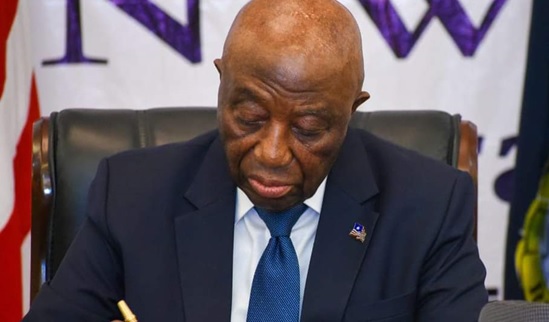
President Joseph Nyuma Boakai, who came to power promising responsible governance and financial discipline, must now confront a reality that contradicts his administration’s message. Two consecutive budget shortfalls, each arising barely months apart, are not simply accounting errors. They reflect systemic weaknesses in revenue mobilization, institutional noncompliance, and a fragile fiscal framework built on overly ambitious projections.
The House Committee on Ways, Means, Finance and Budget has attributed the current shortfall to a combination of factors, including underperformance by Bea Mountain and the chronic noncompliance by SOEs. These issues, however, are not new. SOEs have long functioned as financial black holes, generating little or no returns for the state while operating with limited transparency. That the same excuse was offered for the 2024 deficit signals a worrying trend, one that the administration appears either unwilling or unable to reverse.
To its credit, the Committee has recommended a meeting with President Boakai to address the disappointing revenue performance. But the timing of that conversation raises fundamental questions. Why wasn’t a more rigorous mechanism for compliance and revenue tracking in place at the beginning of FY2025? Why does the government continue to rely on unreliable institutions to drive budget projections, especially when historical data show chronic underperformance?
The LRA, often heralded as a success story for its ability to exceed revenue targets, now finds itself caught in a web of contradictions. How can the authority claim to have surpassed its annual targets while the national budget simultaneously falls short by tens of millions? The disparity suggests that either the data being reported is inconsistent or that the real problem lies in how the funds are being allocated, or worse, mismanaged once collected.
A budget is more than just numbers on paper; it is a statement of national priorities. When those numbers collapse under scrutiny, the people suffer the consequences. Schools are underfunded, hospitals lack basic supplies, and infrastructure projects stall. At the heart of the crisis is a failure of governance, an inability to enforce financial discipline, monitor key revenue-generating entities, and develop a realistic national plan grounded in existing economic realities.
President Boakai must act decisively. A recast budget for the second year in a row sends a damaging signal to investors, donors, and ordinary Liberians alike. It undermines confidence in the administration’s ability to deliver on its promises and threatens to erode the very legitimacy on which it was elected. The time for rhetorical commitments has passed. What Liberia needs now is accountability, beginning with SOEs that fail to submit timely financials and contribute to the national budget, and extending to all branches of government charged with oversight and enforcement.
This is not just a numbers issue. It is a test of leadership. Will President Boakai allow a second budget to collapse under the weight of weak institutions and vague justifications, or will he finally enforce the reforms that Liberia so desperately needs?
The clock is ticking, and so is the public’s patience.