By Staff Writer | Smart News Liberia
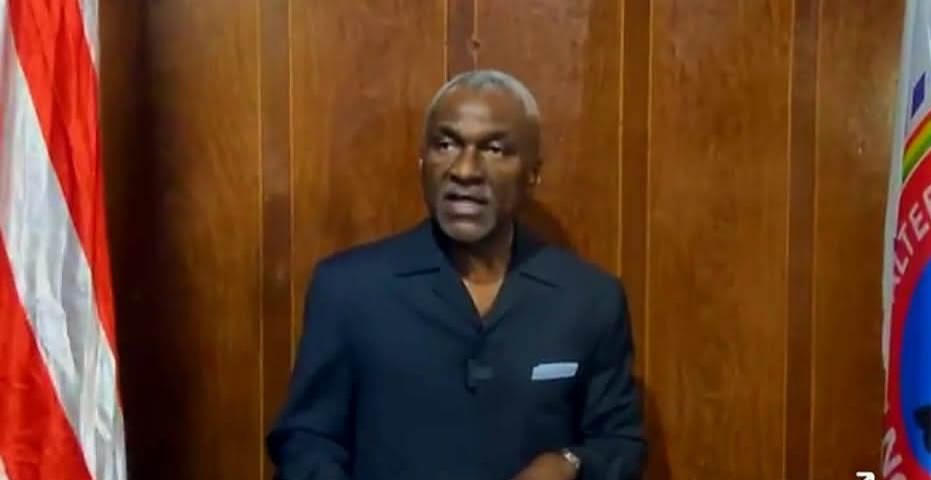
MONROVIA – Alternative National Congress (ANC) Political Leader Alexander B. Cummings has called for an international investigation into Liberia’s US$19.2 million cocaine seizure, accusing the Boakai administration of mishandling the high-profile case and declaring that the government has lost the confidence of many Liberians in its ability to conduct a credible, transparent, and independent investigation.
In a special statement delivered Monday, Cummings criticized the Unity Party-led government over its handling of the June 8, 2026, cocaine seizure at Roberts International Airport (RIA), arguing that promises of a swift, transparent, uncompromising, and independent investigation have instead produced secrecy, delays, and growing public suspicion.
“It has been over a month since the interception of 198 compressed plates of high-grade cocaine at Roberts International Airport,” Cummings said. “The Unity Party-led government promised the Liberian people a swift, transparent, uncompromising, and independent investigation. Yet, what we have seen is quite the opposite. The investigation has been secretive, slow, and seemingly compromised.”
The ANC leader linked the handling of the drug investigation to what he described as a broader pattern of governance failures under President Joseph Nyuma Boakai, citing controversies surrounding the Foya road construction project, allegations of illegal mining along the Liberia-Guinea border, and other corruption-related matters that he argued demonstrate a government more focused on public relations than accountability.
Cummings questioned how such a significant quantity of cocaine could have entered Liberia and passed through critical security checkpoints without the knowledge or involvement of influential individuals.
“How does such a huge volume of cocaine enter any country and transit through without the knowledge and authority of people who have significant power?” he asked. “That is the million-dollar question the public is asking the government.”
He criticized investigators for charging what he characterized as lower-level suspects while failing to publicly identify or prosecute those allegedly responsible for organizing or facilitating the trafficking operation.
The ANC political leader also expressed alarm over testimony before the Liberian Senate indicating that Michael Brown, commonly known as “US Marshall,” a central figure previously imprisoned on drug trafficking charges, had escaped custody and remains at large.
According to Cummings, the government’s admission that it does not know the whereabouts of several suspects raises troubling concerns about possible collusion within Liberia’s security sector and political establishment.
“The government claims five suspects have been charged, yet admits it does not know the whereabouts of nearly all of them,” he said. “This raises disturbing questions about collusion between state security personnel and the big hands within or close to the corridors of power.”
Describing drug trafficking as a direct threat to Liberia’s national security, Cummings warned that the country’s institutions, economy, international reputation, and future generations are all at risk if authorities fail to dismantle sophisticated trafficking networks.
He pointed to the growing drug abuse crisis, noting that the Liberia Drug Enforcement Agency has identified approximately 866 ghettos across Monrovia and surrounding communities that serve as centers for drug use and related criminal activities.
“Already, drug abuse is destroying our youth and communities,” Cummings declared, adding that many young Liberians have become victims of addiction while families continue to suffer the social consequences.
The ANC leader further argued that the government’s response contradicts President Boakai’s January 2024 declaration that drug trafficking constituted a national emergency, contending that nearly two years later the situation has worsened rather than improved.
He also accused the Liberia Drug Enforcement Agency of practicing selective justice by aggressively prosecuting minor offenders while allegedly moving cautiously in the high-profile cocaine investigation.
Cummings announced that he would lead efforts to encourage international partners to investigate, preserve evidence, and audit the government’s handling of the June 8, 2026, US$19.2 million cocaine seizure.
He argued that the government lacks the political will, institutional capacity, and technical competence to conduct a professional and impartial investigation capable of restoring public confidence.
Calling for regional involvement, Cummings urged the Mano River Union and ECOWAS to activate early warning mechanisms to help ensure that everyone connected to the trafficking network is identified and prosecuted, warning that the scale of the operation points to sophisticated transnational criminal organizations capable of laundering illicit proceeds through regional trade, real estate, construction, and other sectors.
He also commended the Liberian Senate, civil society organizations, journalists, and ordinary citizens for demanding greater transparency and accountability, urging Liberians to continue advocating peacefully for an independent investigation backed by international technical support.
Cummings concluded by warning that any government that protects the interests of a few powerful individuals over the welfare of ordinary Liberians risks failing in its fundamental responsibility to uphold the rule of law, protect its citizens, and safeguard the country’s future.
The Boakai administration has maintained that investigations into the June 8 cocaine seizure remain ongoing. However, criticism from opposition leaders, civil society organizations, lawmakers, and sections of the public has intensified calls for an independent investigation into the case and the possible involvement of senior officials or transnational criminal networks.