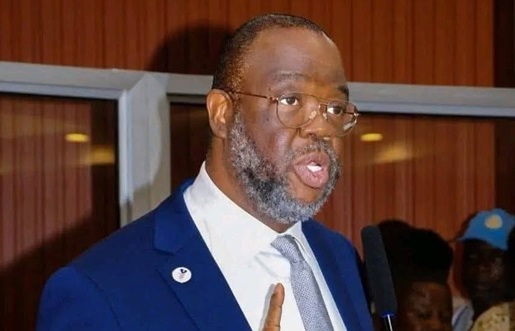
MONROVIA — The Ministry of Information has announced that the newly constructed Liberia Broadcasting System (LBS) radio and television complex will be named in honor of the late journalist Charles Gbenyon, recognizing his dedication and ultimate sacrifice for national journalism. The announcement was made during a MICAT press briefing on Thursday, February 5, 2026, by Information Minister Jerolinmek Matthew Piah.
Minister Piah said the decision, approved by President Joseph Nyuma Boakai after consultations with the LBS Board and management, aims to preserve Gbenyon’s legacy and highlight his lasting contributions to public communication. “The Charles Gbenyon Radio and Television Complex will serve as a lasting tribute to a journalist who dedicated his life to informing Liberians, even under the most dangerous circumstances,” Minister Piah said.
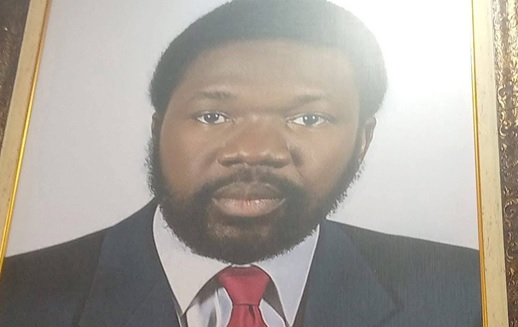
Charles Gbenyon was a respected Liberian broadcast journalist who worked for the state broadcasting services ELBC and ELTV during the 1980s. He was known for his courageous reporting during the military regime of President Samuel K. Doe, providing critical information to the public in a turbulent period of Liberia’s history.
Tragically, Gbenyon was arrested and killed by government security forces in November 1985 amid unrest following a failed coup attempt against Doe. His death remains a high-profile case highlighting the risks faced by journalists under repressive regimes, and his legacy is frequently cited in discussions about press freedom in Liberia.
Minister Piah emphasized that naming the new LBS complex after Gbenyon not only commemorates his sacrifice but also reinforces the government’s commitment to professional journalism and public communication. “This state-of-the-art facility is a symbol of respect for journalists who have risked their lives to serve the nation,” he said.
The Minister also confirmed that the LBS complex will soon be officially turned over to the station’s leadership. The modern facility is expected to enhance radio and television broadcasting across Liberia, providing improved platforms for news dissemination, educational programming, and cultural content.
While the details of the official dedication ceremony are yet to be announced, Minister Piah stated that the event will appropriately honor Gbenyon’s memory. He described the complex as a tangible tribute to all journalists who have contributed to Liberia’s media history, particularly those who lost their lives in the line of duty.
The Ministry of Information stressed that the initiative aligns with broader government efforts to strengthen public broadcasting and professional journalism in the country. By commemorating Gbenyon, Liberia hopes to inspire future generations of media practitioners to uphold integrity, courage, and dedication in their reporting.