By Socrates Smythe Saywon | Smart News Liberia
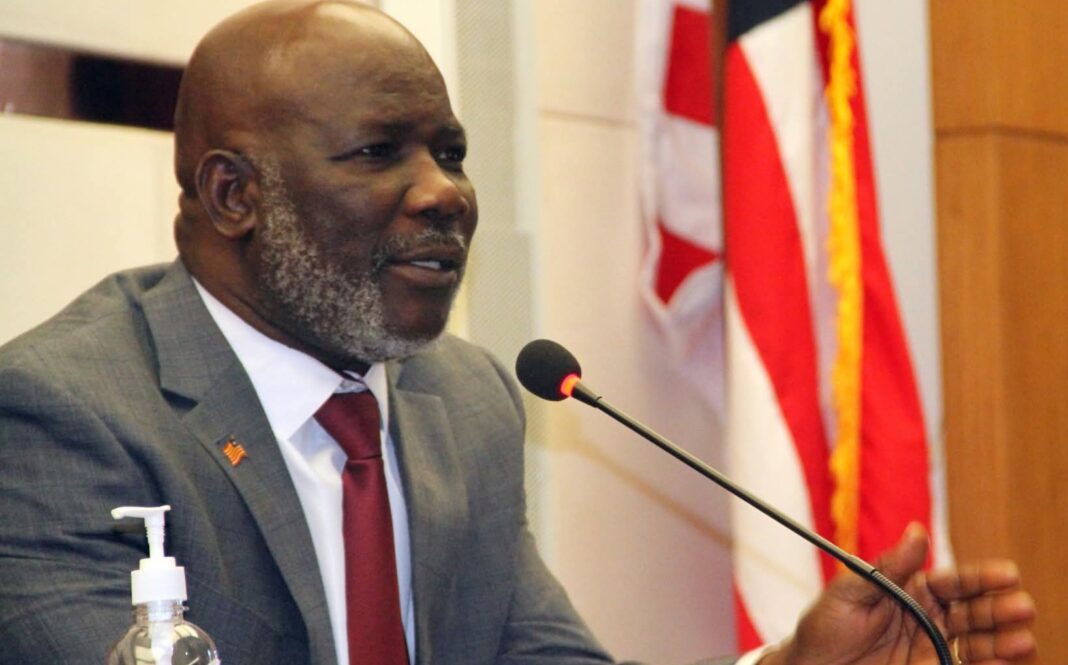
What began as the launch of a political movement supporting President Joseph Nyuma Boakai’s development agenda and future political ambitions has quickly evolved into one of the most significant governance controversies confronting his administration. At the center of the storm is Civil Service Agency (CSA) Director-General Dr. Josiah F. Joekai Jr., whose participation in the unveiling and groundbreaking ceremony of the National Independent Movement for Boakai (NIMBO) has triggered a fierce debate about the rule of law, political neutrality, and whether public officials are held accountable equally under Liberia’s Code of Conduct.
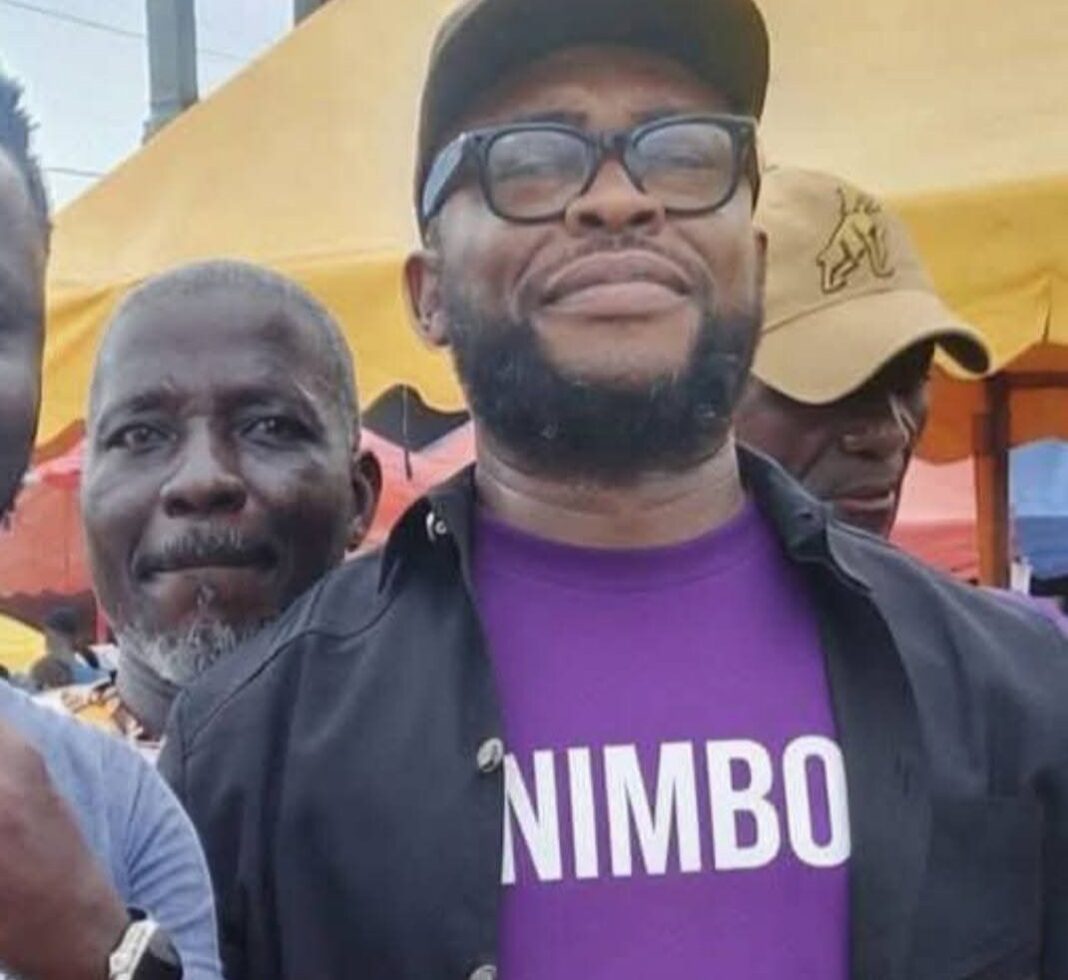
The controversy originated on May 23, 2026, when Deputy House Speaker Thomas Fallah, a former stalwart of the opposition Coalition for Democratic Change (CDC), launched NIMBO in Monrovia. The movement openly declared its objective of supporting President Boakai’s development agenda while laying the groundwork for his re-election campaign in 2029. The event attracted several influential figures from the ruling establishment, including Unity Party Secretary General Amos Tweh, National Chairman Rev. Dr. Luther Tarpeh, and CSA Director-General Dr. Josiah Joekai.
Ordinarily, such a gathering might have attracted little more than routine political commentary. But Joekai’s presence immediately raised questions because he is not just another government official. As head of the Civil Service Agency, he occupies a position entrusted with enforcing standards of professionalism, discipline, and political neutrality throughout Liberia’s public service.
The issue gained national attention when Gbarpolu County Senator Amara Konneh publicly challenged Joekai’s participation. Konneh argued that Part V, Section 5.1 of the National Code of Conduct for Public Officials clearly restricts presidential appointees from engaging in partisan political activities. According to the senator, the controversy is not about personalities, political rivalries, or even NIMBO itself. Rather, it is about whether those charged with enforcing the law are willing to abide by it themselves.
Konneh’s criticism carries weight because it speaks directly to one of the promises that helped bring the Unity Party-led government to power. Liberians were told that institutions would be strengthened, accountability would be restored, and public officials would be held to the same standards regardless of status or political affiliation. For many citizens, the Joekai controversy has become a test of whether those promises were genuine commitments or merely campaign slogans.
In his public response, however, Joekai rejected the allegations and accused his critics of distorting the facts. He argued that comparisons between himself and other public officials are misleading because he serves as a political appointee at the pleasure of the President. He further maintained that he is not a civil servant and therefore cannot be accused of violating regulations intended for civil servants. According to Joekai, his attendance at the NIMBO event was an exercise of his constitutional rights as a citizen and did not involve the misuse of government resources or official authority.
The CSA boss also insisted that he is not a member of any political party and that his attendance at the event occurred on a weekend, outside the scope of his official duties. He portrayed the criticism as politically motivated attacks designed to distract from the reforms his administration has undertaken within the Civil Service Agency.
Yet Joekai’s defense has done little to quiet the controversy. If anything, it has intensified it.
Former Representative Acarous Moses Gray, who identifies himself as the chief sponsor of the Code of Conduct, quickly challenged Joekai’s interpretation of the law. Gray accused the CSA Director-General of selectively citing provisions while ignoring the specific section governing political participation by appointed officials. In unusually blunt language, Gray described Joekai’s interpretation as misinformation and argued that the restrictions contained in Section 5.1 apply to all presidential appointees, including the Director-General of the Civil Service Agency.
That intervention is particularly damaging because it comes from an individual directly associated with the drafting and sponsorship of the legislation itself. If the sponsor of the law believes Joekai’s actions violate the Code of Conduct, then the administration cannot simply dismiss the criticism as political grandstanding.
The debate took another turn when the Youth League of the Liberia People’s Party entered the fray. In a statement, the group demanded Joekai’s immediate resignation or dismissal, arguing that the law leaves no room for ambiguity. According to the LPP Youth League, the Code of Conduct expressly prohibits presidential appointees from engaging in political activities, canvassing, or associating themselves with political campaign structures.
The Youth League’s statement raises a troubling question that the government has yet to answer convincingly. If ordinary civil servants can face disciplinary action, suspension, or dismissal for conduct deemed inconsistent with regulations, why should the official responsible for enforcing those regulations be treated differently?
This is where the controversy becomes larger than Dr. Josiah Joekai.
At its core, the issue concerns public confidence in Liberia’s institutions. The Civil Service Agency exists to promote merit, professionalism, and neutrality within government. The agency is supposed to stand above partisan politics and ensure that public service remains focused on national interests rather than political campaigns.
When the head of such an institution is seen participating in an event whose stated objective includes securing the President’s re-election, questions naturally arise about whether the agency can continue to be perceived as politically neutral. Even if Joekai’s legal interpretation were accepted, the optics alone create a perception problem that cannot easily be ignored.
Perception matters in governance. Citizens judge institutions not only by what officials say but by what they do. Public trust is built when leaders avoid even the appearance of conflicts between official responsibilities and political interests.
The Boakai administration now finds itself confronting a dilemma of its own making. If it takes no action, critics will likely argue that the government is applying one standard to politically connected officials and another to ordinary public servants. Such perceptions could erode public confidence in the administration’s stated commitment to accountability, transparency, and equal enforcement of the law.
Conversely, if the President acts against Joekai, he risks alienating supporters who view the controversy as an exaggerated attack by political opponents. Yet leadership is often measured by the willingness to make difficult decisions rather than politically convenient ones.
The President’s challenge is compounded by the fact that this controversy comes at a time when public confidence in institutions remains fragile. Liberians have witnessed repeated debates over accountability, corruption, and selective enforcement of laws. Against that backdrop, any appearance of favoritism risks deepening public cynicism.
Perhaps the most significant aspect of this controversy is what it reveals about the broader state of governance in Liberia. Too often, laws are interpreted strictly when applied to political opponents and flexibly when applied to allies. Successive governments have faced accusations of selective accountability, and many Liberians hoped the current administration would break from that tradition.
The Joekai controversy presents President Boakai with an opportunity to demonstrate that his government is different. Whether that opportunity is seized or squandered remains to be seen.
Several critical questions now demand answers. Does the Code of Conduct apply equally to all presidential appointees? If Joekai’s actions were lawful, why do respected legal and political figures interpret the law differently? If his actions were improper, what consequences should follow? And perhaps most importantly, what message does the government’s response send to thousands of civil servants across Liberia who are expected to remain politically neutral?
These are not questions that can be answered through political rhetoric or social media exchanges. They require clear legal interpretation and principled leadership.
For President Boakai, the stakes extend far beyond the future of one official. His response will help shape public perceptions of his presidency, his commitment to institutional integrity, and his willingness to enforce standards consistently.
This controversy is not about NIMBO. It is not about Senator Amara Konneh. It is not even primarily about Josiah Joekai. It is about whether Liberia’s laws remain supreme over personalities, political alliances, and partisan interests.
The answer will determine whether the government’s promises of accountability were genuine or conditional.
As the debate intensifies and calls for action grow louder, one question continues to echo throughout the country:
Can President Joseph Nyuma Boakai afford to remain silent while the head of the Civil Service Agency stands accused of violating the very Code of Conduct he is expected to uphold?
The country awaits an answer. Whether the rule of law prevails over politics may depend on the answer President Boakai provides.