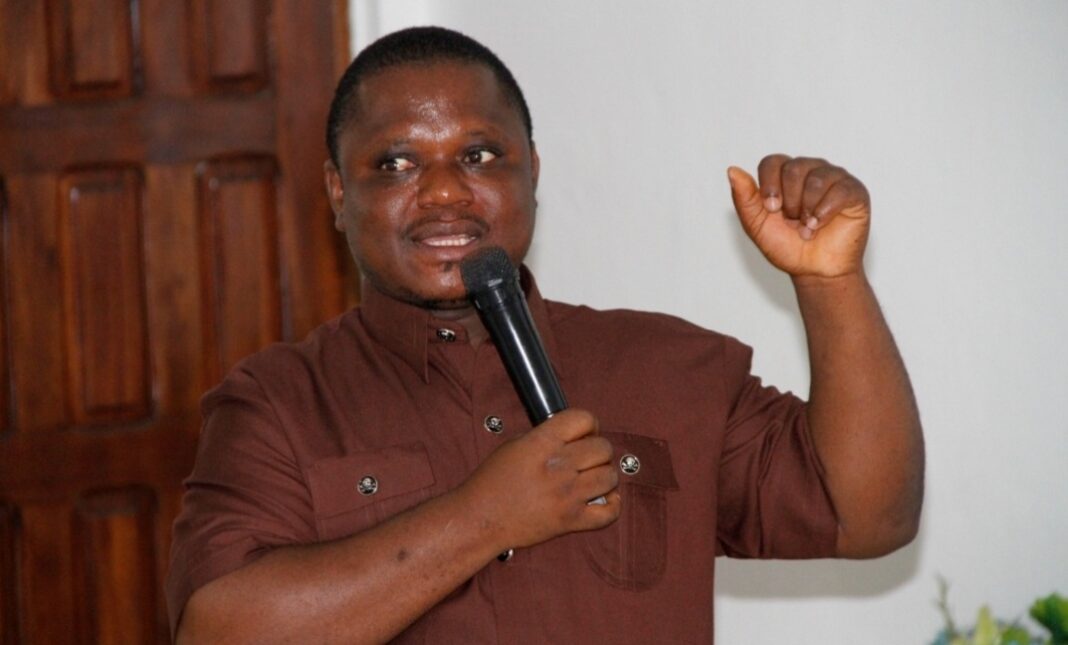
Liberia’s long-running battle against corruption has again come under sharp scrutiny after Anderson Miamen, Executive Director of the Center for Transparency and Accountability in Liberia (CENTAL), publicly questioned the effectiveness of the country’s anti-graft fight, declaring that despite numerous allegations and confirmed cases of corruption, no one is currently behind bars for such offenses.
Miamen’s remarks followed his appearance on the program Daybreak West Africa on the Dakar-based West Africa Democracy Radio on Friday, March 13, 2026. Speaking with presenter Imoh Edet, the Liberian anti-corruption advocate joined a regional discussion titled “Anti-Corruption or Accountability Gap? Debating the LACC Decision,” where the state of Liberia’s accountability system was critically examined.
After the radio engagement alongside Eddie Jarwolo, founder and Executive Director of Naymote Partners for Democratic Development, Miamen took to his official Facebook page to reflect on the discussion, describing the conversation as a meaningful exchange about the progress and persistent challenges confronting Liberia’s anti-corruption institutions. “It was a great engagement this morning on ‘Daybreak West Africa’ on the Dakar-based West Africa Democracy Radio,” he wrote, noting that the discussion explored both achievements and shortcomings in Liberia’s anti-graft framework.
Central to the conversation was the work of the Liberia Anti-Corruption Commission (LACC), which is currently headed by Chairperson Alexandra Kromah Zoe. While acknowledging some institutional progress, Miamen stressed that the commission and other integrity institutions continue to operate under serious constraints that limit their effectiveness.
“We talked about the fight against corruption in Liberia, the progress made by the LACC and other integrity institutions and the enormous challenges faced,” Miamen explained. Among the major obstacles he cited were inadequate budgetary support to anti-graft institutions, the slow pace of investigations and prosecutions, and a weak asset declaration system that fails to effectively monitor the wealth accumulation of public officials.
Miamen also criticized what he described as the limited impact of the government’s asset recovery initiative, which was designed to retrieve stolen public funds. According to him, without stronger enforcement and transparent follow-through, such initiatives risk becoming symbolic efforts rather than genuine tools for accountability.
In his Facebook commentary, the CENTAL Executive Director emphasized that meaningful progress in the fight against corruption will require stronger commitment from Liberia’s leadership across all branches of government. “We called for greater presidential, legislative and judicial will in the fight against corruption,” he stated, underscoring the need for coordinated action from the executive, legislature, and judiciary.
He further urged the LACC to improve its communication with the public by providing clearer information about individuals who have been investigated and subsequently cleared of corruption allegations. According to Miamen, such transparency is essential for strengthening public trust and ensuring that anti-corruption efforts are perceived as fair and credible.
However, it was his blunt assessment of Liberia’s current accountability record that drew the strongest reaction. “It is unthinkable that, with all of the allegations and confirmed incidences of corruption in the country, to the best of my recollection, not a single person is in jail for corruption and other related offenses at the moment,” Miamen wrote.
His statement reflects a growing frustration among civil society advocates who argue that Liberia’s anti-corruption struggle remains incomplete. While institutions like the Liberia Anti-Corruption Commission under Chairperson Alexandra Kromah Zoe continue to face mounting expectations from the public, many Liberians say the true measure of success will be whether investigations ultimately lead to prosecutions and convictions that demonstrate that corruption in Liberia carries real consequences.