
By Staff Writer | Smart News Liberia
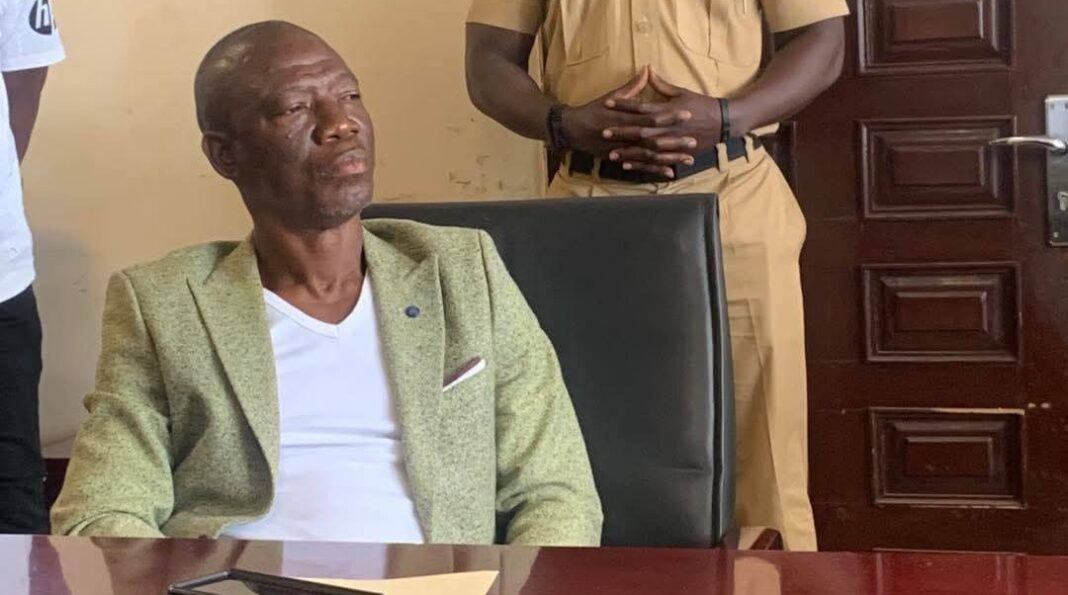
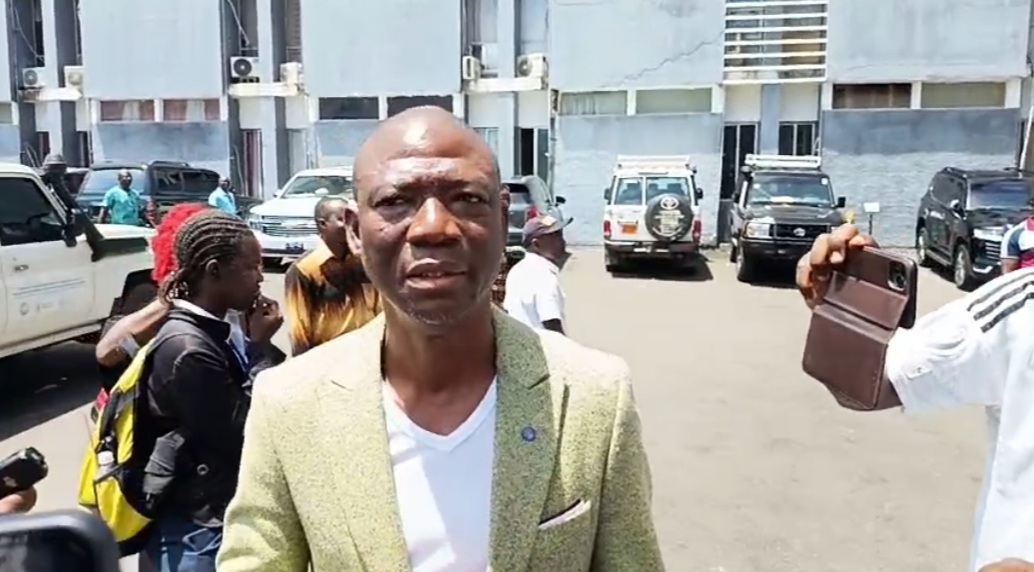
MONROVIA – A new dimension has emerged in the ongoing political and legal debate surrounding Montserrado County District #10 Representative Yekeh Y. Kolubah, as Assistant Professor of Law, Cllr. Kanio Bai Gbala, has offered a compelling rebuttal to Senior Counsel Tiawan Saye Gongloe’s position. In a written response dated April 15, 2026, Gbala questions whether Gongloe’s approach to Kolubah’s controversial remarks is blending legal reasoning with political advocacy, ultimately challenging the broader implications of Gongloe’s stance on the matter.
Gbala, in his response, begins by acknowledging Gongloe’s longstanding legacy in Liberia’s legal and human rights sectors but quickly shifts focus to the crux of his disagreement. The central issue, according to Gbala, lies in whether Gongloe’s position, while legally sound, truly reflects the practical realities of governance in Liberia.
Gbala draws a sharp distinction between criminal prosecution and legislative discipline, asserting that the two are not interchangeable and operate within separate domains of authority. He agrees with Gongloe’s assertion that treason is a criminal matter for the courts to decide. However, Gbala underscores that the Legislature holds its own independent power to regulate the conduct of its members. This includes the authority to censure, suspend, or expel lawmakers whose actions threaten the integrity of the institution.
“The Legislature has the inherent right to regulate its own members,” Gbala argues. “This is an institutional function that doesn’t require waiting for the courts to act. It is within the Legislature’s mandate to discipline its own when necessary.”
In this view, Gbala defends the autonomy of the House of Representatives, which he describes as a co-equal branch of government with the right to hold its members accountable internally, independent of judicial processes.
Taking the discussion further, Gbala contextualizes Kolubah’s remarks within Liberia’s delicate post-conflict environment. While he acknowledges the importance of free speech, he argues that public figures bear heightened responsibility for their words, especially when their statements have the potential to destabilize national unity.
“Free speech is a fundamental right,” Gbala states. “However, public figures carry an amplified responsibility. Their words can influence the national stability, and that cannot be ignored.”
Gbala emphasizes that Kolubah’s statements, given the current fragile state of the nation, cannot be viewed in isolation or purely from a legal perspective. He argues that speech, particularly in the context of Liberia’s political climate, should be evaluated for its broader societal impact, not just its technical legality.
Moving beyond theoretical legal frameworks, Gbala addresses what he perceives as an overly rigid interpretation of the separation of powers. He acknowledges that the law must guide political processes but insists that it must also be adaptable to the practical needs of governance.
Democracy isn’t just about principles; it’s about managing risk in real-time governance,” Gbala explains. “In Liberia, where post-conflict sensitivities are still prevalent, the law must be responsive to the immediate needs of the nation.
He cautions that an excessively academic or theoretical approach could lead to governance paralysis, making it difficult for the Legislature to act decisively when urgent action is required.
Ultimately, Gbala proposes a balanced dual-track approach to addressing Kolubah’s case. He suggests that the courts should handle any criminal matters, such as allegations of treason, while the Legislature should be empowered to deal with internal discipline and conduct. According to Gbala, these two processes are not mutually exclusive but rather complementary to one another.
“Both systems can work in tandem,” he says. “The courts can address criminal allegations, while the Legislature can exercise its responsibility to maintain its own integrity.”
This exchange between two respected legal minds, Gongloe and Gbala, represents a deeper constitutional debate about the balance of power in Liberia. Gongloe, advocating for a strict separation of powers, emphasizes the need to preserve the purity of legal processes, while Gbala calls for empowering institutions to act within their mandates when necessary to ensure stability and accountability.
“This is not just about Kolubah,” Gbala concludes. “It’s a question of how we balance legal integrity with the practicalities of governance. Should institutions wait for perfect legality, or should they act in real-time to preserve national order?”