By Socrates Smythe Saywon | Smart News Liberia
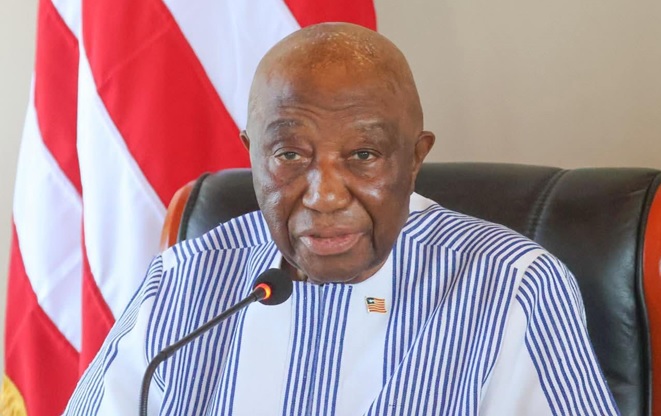
MONROVIA – The 2026 Millennium Challenge Corporation (MCC) Scorecard presents a complicated and revealing portrait of the Unity Party administration under President Joseph Nyuma Boakai. While the government succeeded in passing 12 indicators, it also failed 10 others, exposing both encouraging progress and troubling weaknesses at a time when Liberians are demanding economic recovery, stronger institutions, and improved governance.
For the Boakai administration, the scorecard is neither a complete victory nor a devastating collapse. Instead, it serves as a mirror reflecting the difficult realities facing Liberia’s governance system after years of political instability, economic hardship, weak public institutions, and declining public confidence.
The MCC scorecard remains one of the most internationally respected governance assessment tools used to evaluate countries seeking partnership opportunities and development support through the United States Millennium Challenge Corporation. The scorecard measures a country’s performance across critical areas including governance, economic freedom, investment in people, rule of law, corruption control, education, health, and economic management.
For Liberia, passing or failing these indicators carries consequences far beyond statistics. The MCC scorecard influences investor confidence, international partnerships, donor trust, and the country’s broader image within the global development community.
Under President Boakai’s administration, Liberia managed to pass important indicators including inflation, international market access, property and land rights, regulatory quality, women in the economy, market competitiveness, health expenditures, personal freedom, government accountability, control of corruption, and freedom of information.
These successes are politically significant for the Unity Party government because they suggest that Liberia is maintaining relative macroeconomic stability while also preserving certain democratic and institutional freedoms during a period of economic and political transition.
Particularly notable is Liberia’s passage in the areas of control of corruption and government accountability, especially at a time when the Boakai administration continues to face public criticism over allegations of corruption, controversial public appointments, budget disputes, and growing concerns about transparency in government spending.
The passage in freedom of information and personal freedom may also strengthen the administration’s argument that democratic space remains open under President Boakai despite increasing political tensions and criticisms from opposition figures and civil society groups.
However, beneath these positive indicators lies a deeply concerning reality that the government cannot afford to ignore.
Perhaps the most politically damaging failure for the Boakai administration is Liberia’s failure in the rule of law indicator. This raises difficult questions about the effectiveness, independence, and credibility of Liberia’s justice system under the current government.
How can a government pass control of corruption while simultaneously failing rule of law and government effectiveness? Can corruption truly be controlled in an environment where institutions responsible for justice and enforcement remain weak or politically vulnerable? These are the uncomfortable questions many Liberians at home and abroad are now likely asking.
The failure in government effectiveness is equally troubling because it directly measures the state’s ability to formulate and implement sound policies, deliver public services, and manage institutions efficiently. In practical terms, it suggests that many Liberians may still not be feeling the impact of governance beyond political speeches and policy announcements.
Even more alarming are the failures connected to ordinary people’s daily economic realities. Liberia failed indicators related to employment opportunity, access to credit, business start-up, and workforce development. These failures strike at the center of the country’s economic survival.
For struggling Liberian businesses, unemployed youth, and ordinary citizens attempting to survive in a difficult economy, these failed indicators confirm widespread frustrations about limited economic opportunities, lack of financing, bureaucratic barriers, and weak job creation.
If businesses cannot easily start or access credit, how can the private sector expand? If workforce development remains weak, how can young Liberians compete in an increasingly global economy? If employment opportunities remain limited, how sustainable is Liberia’s social and political stability in the long term?
The failures in child health and girls’ primary education completion rates are also deeply concerning because they suggest that despite some progress in health expenditures, major gaps remain in Liberia’s human development sector. Increased spending alone does not automatically translate into better outcomes for children and vulnerable communities.
Equally important is Liberia’s failure in natural resource protection, an indicator that may intensify concerns about illegal mining, environmental degradation, forest management, and the broader governance of Liberia’s vast natural wealth. This failure could further raise international scrutiny regarding how the country manages concessions and environmental sustainability.
For the Unity Party administration, the MCC scorecard ultimately sends a mixed but powerful message. The government can legitimately point to gains in accountability, anti-corruption perception, inflation management, and democratic freedoms. Yet the failures in rule of law, economic opportunity, government effectiveness, and social development reveal structural weaknesses that continue to undermine national progress.
The political danger for President Boakai is that Liberians may increasingly judge his administration not by policy intentions or international speeches, but by whether ordinary citizens experience real improvements in jobs, justice, education, healthcare, and economic opportunity.
The scorecard therefore becomes more than a technical governance report. It becomes an international report card on whether Liberia under the Boakai administration is truly moving toward reform or merely managing expectations while deeper institutional problems remain unresolved.
In the end, passing 12 indicators and failing 10 does not place Liberia in a position of celebration or despair. Instead, it places the country at a crossroads. The central question now is whether the Boakai administration will treat the MCC scorecard as a political public relations tool or as a serious warning demanding urgent reforms before public frustration and institutional weakness grow even deeper.