By Our Reporter | Smart News Liberia
BREWERVILLE, MONTSERRADO COUNTY – Prominent Liberian cleric Kortu K. Brown says comparisons being drawn between a biblical statement made by Jesus Christ and recent comments by President Joseph Nyuma Boakai regarding “barking dogs” are misplaced and should not be interpreted as carrying the same meaning.
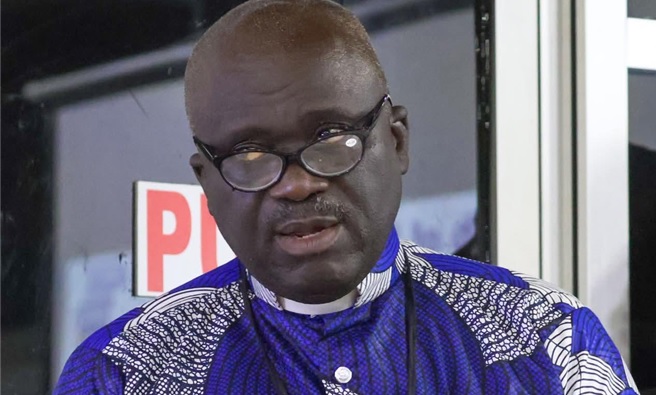
Bishop Brown’s latest clarification follows widespread public debate generated by comments he made during an interview with reporters at the New Water in the Desert Apostolic Pentecostal Church in Brewerville on Sunday, May 3, 2026.
The controversy intensified after several media outlets, including FrontPage Africa, published reports highlighting his call for President Boakai to clarify remarks many Liberians viewed as offensive or dismissive toward critics of his administration.
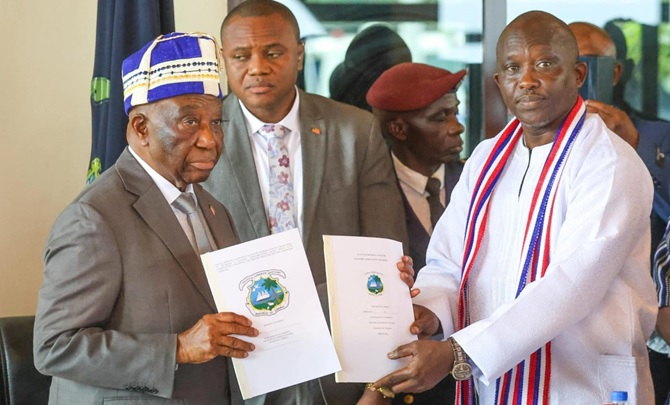
During the dedication of the new Ministry of Local Government building, President Boakai reportedly stated: “We hear lots of criticisms from people especially from people not living here, but don’t mind them. If you are going somewhere and there are dogs barking at you, if you stop to throw stones at every dog, you won’t reach where you are going.”
The statement quickly sparked backlash, particularly among some Liberians residing abroad, who interpreted the comment as a direct reference to government critics and political opponents.
Responding to questions from journalists, Bishop Brown, a former president of the Liberia Council of Churches, suggested that it would be in the country’s best interest for the President to clarify his statement in order to ease growing political tension and misunderstanding.
According to him, many Liberians perceived the comment as implying that certain citizens, especially those critical of the government from outside the country, were being likened to “dogs.”
Since his initial remarks were published, reactions have remained sharply divided, with supporters and critics of the President debating whether clarification is necessary.
Addressing worshippers during a special intercessory prayer service on Tuesday, Bishop Brown specifically responded to attempts by some individuals to compare President Boakai’s statement with the biblical account found in St. Matthew Chapter 15, where Jesus referred to “dogs” while speaking to a Canaanite woman seeking healing for her daughter.
Bishop Brown explained that the biblical passage reflected the cultural and religious context of the time, in which Jews often viewed Gentiles as outsiders.
“The ‘children’ represented the Israelites, while the ‘dogs’ symbolized Gentiles,” he explained, noting that Jesus initially emphasized His mission to the Jewish people before ultimately commending the woman’s faith and granting her request.
The bishop questioned whether supporters defending President Boakai’s statement were implying that some Liberians should be viewed as politically inferior or outside the national fold.
“Are the followers of President Boakai suggesting that’s what he meant when he made his remarks about avoiding barking dogs in the streets?” Bishop Brown asked during the prayer service.
“Are they suggesting that there are two classes of Liberians in the country and that the President should not be concerned about the other people who may not support or agree with the way he’s administering the country?” he further questioned.
Drawing from the biblical narrative, Bishop Brown argued that the story of the Canaanite woman ultimately reflects Jesus’ effort to break social and cultural barriers rather than reinforce division.
He noted that Jesus later praised the woman’s faith and healed her daughter, demonstrating that God’s mercy transcends ethnic, social, and religious boundaries.
According to the bishop, Liberia, as a politically divided country, should focus on reconciliation, unity, and inclusion rather than deepening partisan, tribal, or regional divisions.
“In this politically divided country, are we taking steps to break down tribal, regional, and partisan barriers in order to bring our people together?” he asked.
Bishop Brown maintained that his earlier call for clarification was not intended to attack the President, but rather to encourage national healing and reduce tensions surrounding the interpretation of the statement.
He warned that failure to address such controversies could further widen political and social divisions at a time when many Liberians are calling for reconciliation and inclusive governance.
The bishop concluded by urging Liberians to move beyond labels, divisions, and partisan hostility, emphasizing that the biblical story serves as a lesson in faith, inclusion, and compassion rather than exclusion.