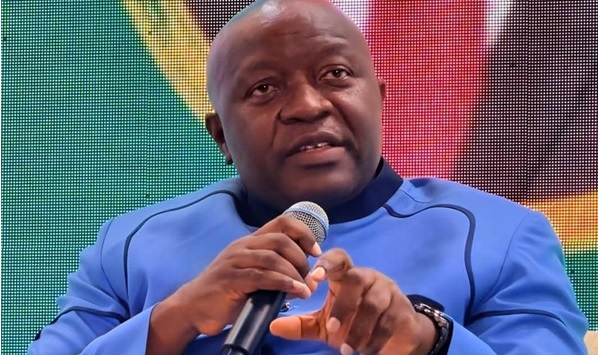
The revelation by Liberia’s Representative Moima Briggs Mensah at the ECOWAS Parliament should not pass as routine diplomatic commentary. It is a disturbing signal of a growing humanitarian and regional governance failure that West Africa can no longer ignore. According to her disclosure, 802 Liberian family heads in Ghana have formally expressed interest in repatriation due to what she described as mistreatment and harsh living conditions.
If these claims reflect the reality on the ground, then the issue is no longer simply about migration policy or bilateral relations. It is about the dignity of West African citizens and the credibility of regional integration under the ECOWAS Parliament framework.
Liberians, as Rep. Mensah stated, are no longer recognized as refugees in Ghana. That transition, while legally understandable after years of displacement following Liberia’s civil war, appears to have left many in a dangerous policy vacuum. “Let me make this clear, Liberians are no longer under refugee status in Ghana, and they are not being catered to as such,” she warned, adding that many are now living independently without structured support systems.
The closure of the Buduburam refugee settlement in 2024 marked a turning point that, instead of resolving displacement concerns, appears to have deepened vulnerability. According to Mensah, many Liberians were left in churches and public spaces, surviving on informal arrangements until intervention efforts were made. The question that now arises is whether West African states are adequately prepared to manage post-refugee transitions without exposing already vulnerable populations to hardship.
This is where the issue becomes uncomfortable for regional diplomacy. Ghana has long been regarded as one of West Africa’s more stable democracies and a host to numerous ECOWAS citizens. However, stability alone does not absolve responsibility. Regional integration must mean more than open borders; it must include humane treatment of citizens who move within those borders.
The allegation that Liberians are now effectively self-sustaining, renting homes without structured assistance or protection, raises concerns about whether their rights and welfare are being adequately safeguarded. Even if refugee status has expired, dignity does not expire with it.
Rep. Mensah’s warning that 802 families are requesting repatriation should be treated as a policy alarm, not political rhetoric. Large-scale voluntary return movements rarely occur without underlying distress. If citizens are choosing to leave rather than remain, then conditions in the host country deserve urgent review through diplomatic and humanitarian channels.
But the issue does not end there. Mensah also broadened her intervention to West Africa’s energy vulnerability, questioning Liberia’s reliance on electricity imports from Côte d’Ivoire. Her argument was blunt: dependency breeds weakness. “If we cannot develop our own resources, others will continue to take advantage of us,” she cautioned.
This point is not isolated from the migration issue. Both reflect a wider structural problem in West Africa: overdependence, weak domestic systems, and insufficient regional solidarity in practical terms. ECOWAS has long championed free movement and integration, but integration without shared responsibility becomes uneven burden-sharing.
The silence or slow response of regional institutions to such concerns risks eroding public confidence in ECOWAS itself. Citizens do not evaluate regional bodies by communiqués; they judge them by outcomes. When migrants feel abandoned, when energy systems remain fragile, and when states struggle to protect their own nationals abroad, regional unity becomes theoretical rather than practical.
Mensah’s intervention therefore should not be dismissed as parliamentary theater. It reflects growing frustration that West Africans are integrated in principle but unsupported in practice. Her warning that these issues could escalate into “bigger economic crises” is not exaggerated rhetoric; it is a reflection of interconnected vulnerabilities across migration, energy, and governance systems.
The responsibility now lies with ECOWAS and member states, particularly Ghana and Liberia, to engage in frank diplomatic dialogue. If repatriation requests are increasing, then structured reintegration programs must be developed. If migrants are vulnerable, then protection mechanisms must be strengthened. If energy dependency is becoming a strategic weakness, then regional investment must urgently shift toward domestic capacity.
West Africa cannot continue to celebrate integration while ignoring its human cost. The measure of regional cooperation is not in how freely people move, but in how safely and dignifiedly they live when they do.
Until these issues are addressed decisively, the promise of ECOWAS risks remaining incomplete, a union of borders without a guarantee of protection, and a community of states without equal regard for their citizens abroad.