By Socrates Smythe Saywon | Smart News Liberia
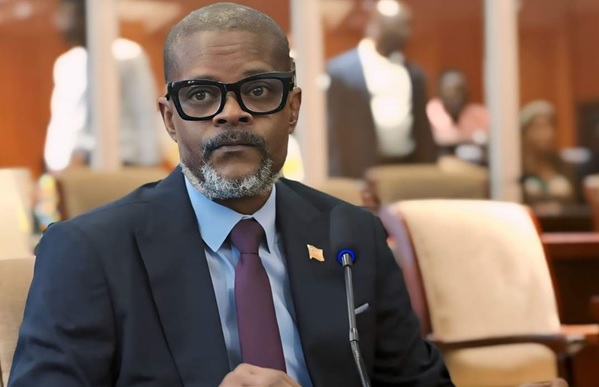
MONROVIA, LIBERIA – In the aftermath of the controversial verdict in the US$6.2 million economic sabotage case involving former officials of ex-President George Weah’s administration, Montserrado County Senator Abe Darius Dillon has triggered a national debate that goes beyond the courtroom and strikes at the heart of Liberia’s fight against corruption.
The ruling delivered Friday, May 8, 2026, by Criminal Court “C” at the Temple of Justice ended a tense 46-day legal battle involving five former public officials accused in connection with the alleged misuse of public funds. While three defendants were found guilty on some charges, two of the most prominent figures in the case, former Finance Minister Samuel D. Tweah and former FIA Comptroller D. Moses P. Cooper, were acquitted of all charges.
The mixed verdict immediately triggered political reactions, public outrage, and renewed skepticism about whether Liberia’s judicial system is capable of effectively punishing corruption involving politically connected figures. But Senator Dillon’s reaction stood out because it shifted attention away from prosecutors, judges, or politicians and instead placed the spotlight squarely on ordinary Liberians themselves.
In a social media post on Satursday, May 9, 2026, Dillon argued that the very citizens who loudly accuse public officials of corruption are often the same people who later serve on juries and ultimately free those accused officials when given the legal authority to decide their fate. “The Jurors in criminal cases are fellow Liberians … especially the ordinary Liberian citizens,” Dillon wrote, before questioning why citizens complain about corruption yet allegedly fail to convict accused officials when seated in the jury box.
His argument is politically risky, emotionally provocative, and deeply uncomfortable because it challenges a popular narrative in Liberia, the belief that corruption survives solely because of weak institutions, compromised politicians, or ineffective governments. Dillon appears to suggest something broader and more troubling, that the anti-corruption struggle may also be undermined by society itself.
But Dillon’s comments also raise a difficult constitutional and moral question, is he accusing ordinary Liberians of sabotaging the anti-corruption fight, or is he indirectly admitting that the state consistently fails to present strong enough evidence to secure convictions? That distinction matters because under Liberia’s legal system, jurors are expected to decide cases based on evidence presented before them, not on public emotions or political pressure.
The verdict itself reflects the situation. While former Acting Justice Minister Nyenati Tuan and former National Security Advisor Jefferson Karmoh were convicted on several charges, the jury simultaneously cleared Tweah and Cooper entirely. Meanwhile, former FIA Director General Stanley S. Ford received hung verdicts on multiple charges, meaning jurors could not reach the required majority decision to convict or acquit him.
That split outcome suggests the jurors were not blindly protecting every defendant. Instead, they appear to have weighed each case separately, convicting some individuals while rejecting parts of the prosecution’s arguments against others. In that sense, Dillon’s frustration may not necessarily be with the concept of jury trials themselves, but with what he sees as a contradiction between public outrage over corruption and the legal decisions ultimately reached by citizens serving as jurors.
Still, critics may interpret Dillon’s statement as unfairly blaming ordinary Liberians for systemic failures that go far beyond the jury room. After all, jurors can only assess the evidence placed before them by prosecutors. If investigations are weak, evidence poorly presented, witnesses inconsistent, or legal procedures flawed, the responsibility cannot rest entirely on citizens called to deliberate under the law.
At the same time, Dillon’s remarks expose a deeper societal dilemma in Liberia’s governance culture. Corruption is universally condemned in public conversations, radio talk shows, and political debates. Yet personal relationships, tribal loyalties, political affiliations, sympathy, fear, and distrust of state institutions often influence how corruption cases are perceived. In some instances, accused officials are viewed less as suspects and more as victims of political persecution. That emotional divide can shape public attitudes long before jurors enter deliberation rooms.
The Senator’s argument may therefore be less about attacking jurors and more about confronting what he sees as national hypocrisy. Liberia’s anti-corruption rhetoric is often fierce, but when accountability reaches real individuals with political identities, personal networks, or public influence, public certainty can quickly become hesitation. Dillon appears to be warning that Liberians cannot simultaneously demand aggressive anti-corruption enforcement while consistently doubting every prosecution or celebrating every acquittal involving politically connected figures.
Yet there is another layer to this debate that Dillon did not fully address. Public confidence in corruption prosecutions remains fragile because many Liberians believe anti-corruption efforts are selective and politically motivated. When prosecutions appear inconsistent or targeted, acquittals are often interpreted not as proof of innocence, but as proof of political battles within the elite class. That perception weakens trust in both the courts and the government’s broader anti-corruption agenda.
The verdict in the US$6.2 million case has become bigger than the defendants themselves. It has evolved into a national mirror reflecting Liberia’s complicated relationship with justice, corruption, politics, and public trust. Senator Abe Darius Dillon’s remarks, controversial as they may be, force the country to confront an uncomfortable possibility, the fight against corruption may not fail only in government offices or courtrooms, it may also falter in the hearts, perceptions, and contradictions of the society demanding accountability.