By Socrates Smythe Saywon | Smart News Liberia
SUPREME COURT, MONROVIA – Closing arguments and jury deliberations in the high-profile US$6.2 million economic sabotage trial concluded Friday, May 8, 2026, at Criminal Court “C” in Monrovia, resulting in a dramatic mixed verdict that cleared former Finance Minister Samuel D. Tweah Jr. of all charges while convicting some of his co-defendants on selected counts.
After weeks of testimony, legal arguments, and intense public scrutiny surrounding disputed joint-security transfers involving L$1.055 billion and US$500,000, the 12-member jury delivered one of the most consequential rulings in Liberia’s post-war corruption and economic sabotage prosecutions.
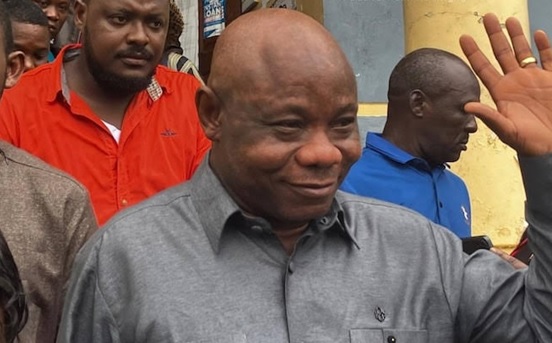
Samuel Tweah, the central figure in the case and former Minister of Finance and Development Planning under former President George Weah’s administration, was found not guilty of economic sabotage, theft of property, money laundering, criminal facilitation, and criminal conspiracy.
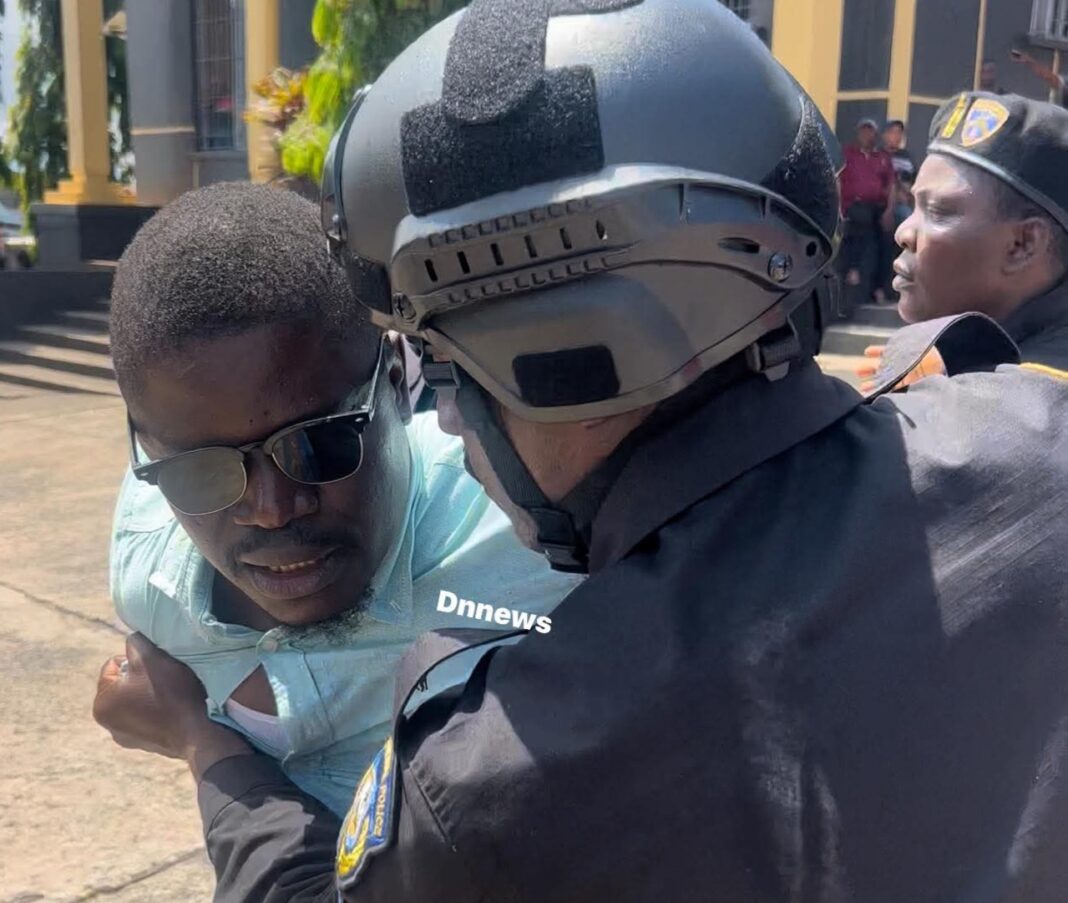
The verdict immediately sparked strong reactions both inside and outside the courtroom, with supporters of the former official celebrating the acquittal while government supporters expressed disappointment over the outcome.
Former National Security Advisor Jefferson Karmoh was also acquitted of the major charges of economic sabotage, theft of property, and money laundering. However, the jury found him guilty of criminal facilitation, making him one of the few defendants convicted in connection with the controversial transactions.
Former Acting Justice Minister and Solicitor General Cllr. Nyanti Tuan was reportedly found guilty of theft of property, while former Financial Intelligence Agency Director Stanley Ford was also convicted on theft-related charges, according to courtroom updates following the ruling.
The mixed outcome meant that although Samuel Tweah walked free of all allegations, the government still secured convictions against some of the accused individuals tied to the disputed security-related financial transactions.
Friday’s proceedings followed emotionally charged closing arguments from both prosecution and defense lawyers, who made final attempts to influence the jury before deliberations began.
Leading the prosecution, Solicitor General Cllr. Augustine C. Fayiah and state prosecutor Cllr. Richard Scott Jr. insisted that the defendants abused public trust and unlawfully handled government funds intended for national security purposes.
“Bring them down guilty for stealing the Liberian people’s money,” Cllr. Scott urged the jury during his final argument, accusing the defendants of criminal conspiracy, theft, money laundering, and criminal facilitation.
The prosecution maintained throughout the trial that the disputed funds were improperly disbursed outside established financial procedures and lacked sufficient legal authorization under Liberia’s Public Financial Management framework.
However, the defense team mounted an aggressive final response, with lead defense lawyer Cllr. Arthur Johnson arguing that the case was fundamentally based on disagreements over administrative procedures rather than evidence of criminal conduct.
Johnson told the jury that prosecutors failed to present any direct proof showing that Samuel Tweah personally stole or benefited from the funds in question.
“The whole case is about disagreement on administrative procedures,” Johnson argued before the jury. “The prosecution chose to criminalize it.”
The defense further argued that the government failed to provide recordings, written statements, bank records, or surveillance footage linking Tweah to personal use of the money, insisting that the prosecution relied heavily on assumptions rather than concrete evidence.
Johnson also emphasized that all witnesses acknowledged the existence of a national security emergency during the 2023 electoral period, a factor he said justified urgent government financial actions outside normal administrative processes.
In one of the most emotional moments of the trial, Johnson appealed directly to jurors, warning against allowing themselves to become instruments of political persecution.
“Today, the whole country is looking at you,” he told jurors. “When you return a verdict of not guilty, you will be saving democracy and protecting the lives of future generations.”
The defense additionally accused the prosecution of selective enforcement of financial regulations and argued that not all national security operations require publicly documented requests or disclosures because of the classified nature of security activities.
Following the verdict, Samuel Tweah publicly expressed gratitude to God and supporters after securing acquittal on all charges.
“A jury of my peers has set me free of all charges! To God Almighty be this glory! To Him alone!” Tweah wrote shortly after the ruling.
Public reaction to the verdict quickly spread across political and social media circles, exposing sharp divisions over the outcome of the case.
Some government supporters questioned the jury’s decision, while opposition figures and supporters of the former ruling Coalition for Democratic Change celebrated the acquittal as proof that the prosecution lacked sufficient evidence.
Ambassador Raphael E. Donokolo II reacted with disbelief online, writing “Unbelievable,” while another government supporter suggested the jurors “might have taken something stronger than kush.”
At the same time, Unity Party Youth Chairman Togar Melvin Cephas defended the judicial process, stating that Liberia’s courts were functioning independently under President Joseph Boakai’s administration.
“Under JNB, the courts are talking. No mysterious disappearances. No running into exile. Just due process. That’s the difference between then and now. Liberia is changing,” Cephas wrote.
The trial has remained one of Liberia’s most politically sensitive corruption-related cases, largely because it involved former senior officials connected to the previous CDC-led government and allegations tied to national security funding during the tense 2023 electoral period.
A Liberian legal expert based in the United States, speaking on condition of anonymity, told Smart News Liberia that the verdict is expected to fuel continued debate over national security discretion, financial accountability, and the evidentiary burden required in high-profile economic crime cases.
Despite the acquittal of Samuel Tweah on all counts, the convictions secured against some co-defendants ensure that the case will remain a major political and legal talking point in Liberia for months to come.