By Socrates Smythe Saywon | Smart News Liberia
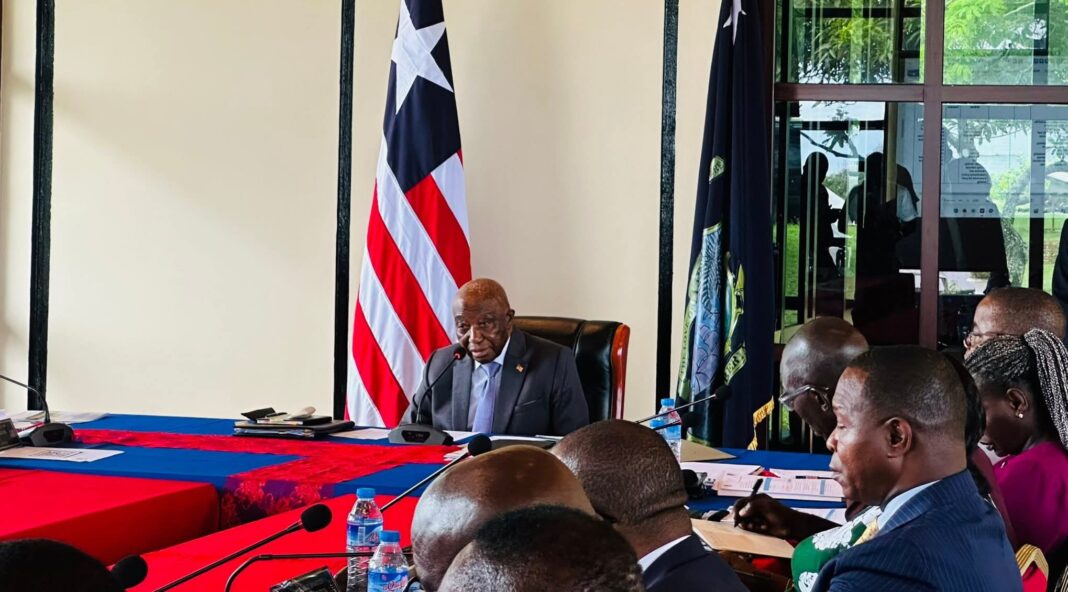
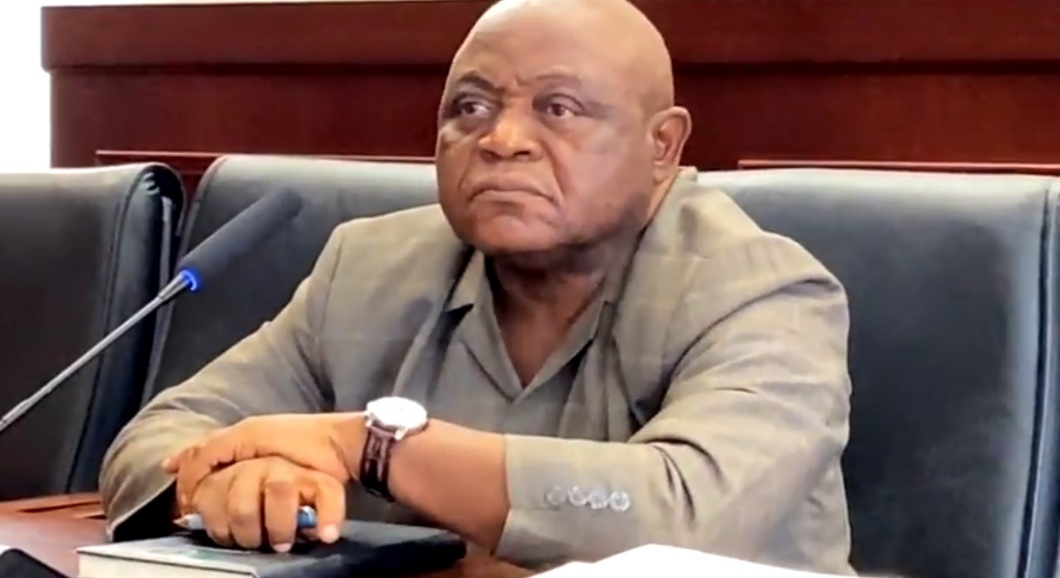
MONROVIA, LIBERIA – Jonathan K. Weedor’s appearance before the Liberian Senate as nominee for Chairman of the National Elections Commission (NEC) showcased an impressive résumé, ambitious reform proposals, and strong commitments to electoral integrity. Yet beyond the promises and declarations, many Liberians are asking a more important question, can the NEC finally deliver the credible, transparent, and efficient elections that citizens have been demanding for years? In a country where public trust in institutions remains fragile, results rather than rhetoric will ultimately determine the success of Weedor’s leadership.
Weedor arrived before the Senate armed with credentials that few can easily dismiss. He recounted a journey from humble beginnings in Gbarpolu County to nearly sixteen years of service as a commissioner at the NEC. He spoke of education, experience, resilience, and commitment. He reminded senators that he had served under multiple administrations and had accumulated extensive knowledge of electoral management.
Yet Liberia’s democratic challenge today is not a shortage of experienced election officials. The challenge is whether the NEC can convincingly demonstrate independence in a political environment where public trust in institutions remains fragile.
Throughout his opening statement, Weedor repeatedly emphasized integrity, impartiality, independence, transparency, efficiency, and professionalism. These are admirable principles. In fact, they are exactly the principles every NEC chairman should publicly embrace.
But Liberians have heard similar promises before.
Successive administrations have spoken about strengthening institutions. Electoral officials have pledged transparency. Political leaders have promised fairness. Yet after nearly two decades of postwar elections, controversies surrounding voter registration, election logistics, delayed results, inadequate civic education, and disputes over electoral laws continue to emerge with alarming regularity.
This is why Weedor’s confirmation hearing deserves closer scrutiny beyond the applause that often accompanies well-delivered speeches.
One of the most revealing moments came when Weedor candidly acknowledged that Liberia’s democratic progress remains incomplete. Unlike some public officials who portray every challenge as a success story, he openly identified operational inefficiencies, funding uncertainties, technological weaknesses, logistical obstacles, barriers affecting persons with disabilities, and the growing threat posed by misinformation and digital manipulation.
His assessment was accurate.
Indeed, Liberia’s elections continue to be heavily dependent on donor support. Electoral preparations are frequently delayed by funding concerns. Rural communities often face significant challenges in accessing election-related services. The country’s electoral infrastructure remains underdeveloped in many counties. These realities cannot be ignored.
The concern, however, is that identifying problems is considerably easier than solving them.
The true measure of Weedor’s leadership will not be found in his diagnosis of NEC’s weaknesses. It will be found in whether he can implement meaningful reforms that survive political pressure and bureaucratic resistance.
His proposal to modernize NEC’s information technology systems and introduce a genuine biometric voter verification process deserves particular attention. If successfully implemented, such reforms could significantly reduce concerns about duplicate registrations, improve voter confidence, and enhance the overall credibility of elections.
However, Liberia has a long history of ambitious reform proposals that never advance beyond conference rooms, donor presentations, and policy documents. The challenge is not drafting modernization plans. The challenge is execution.
Even more significant was Weedor’s insistence that the NEC must remain independent and operate without external influence.
“I will serve the interest of the Republic of Liberia above any other interest,” he declared before senators.
That statement may ultimately become the defining benchmark against which his tenure is judged.
The reason is simple. Independence is not tested when an electoral commission is making popular decisions. Independence is tested when those decisions anger powerful politicians, influential parties, and even the government that appointed its leadership.
The Liberian public has repeatedly witnessed how political pressure can influence institutions that are supposed to operate above partisan interests. If confirmed, Weedor will eventually face difficult decisions involving election disputes, candidate qualifications, party complaints, and controversial electoral outcomes.
At that point, speeches about independence will no longer matter. Actions will.
Another noteworthy aspect of the hearing involved Weedor’s response to Senator Abraham Darius Dillon regarding enforcement of electoral laws governing political parties.
“We will implement any law that says once a presidential candidate or political party obtains a certain percentage in previous elections, they will not be allowed to contest future elections,” Weedor stated while pledging to enforce the electoral law to the fullest.
That response may appear straightforward, but it touches one of the most politically sensitive aspects of Liberia’s democracy.
The relevant electoral provisions require political parties to maintain minimum electoral performance standards. Under the law, parties that repeatedly fail to secure meaningful voter support can face suspension or restrictions on future participation.
From a legal standpoint, enforcing such provisions promotes accountability and discourages the proliferation of inactive political entities that exist largely on paper.
From a political standpoint, however, strict enforcement could generate significant controversy.
Critics of Weedor’s position may argue that restricting political participation risks narrowing democratic space and limiting political competition. Supporters, however, may counter that serious democracies require political organizations capable of demonstrating genuine public support and electoral viability.
The NEC under Weedor will inevitably find itself navigating these competing perspectives. What makes this issue particularly important is that selective enforcement would be disastrous. If the law is applied against some political actors while others receive preferential treatment, public trust in the electoral process could rapidly deteriorate. Consequently, consistency may prove just as important as legality.
Weedor was also correct when he noted that democracy is not the responsibility of a single institution. The Legislature, political parties, civil society organizations, the media, and citizens all play essential roles in protecting electoral integrity and strengthening public confidence in the democratic process.
Yet that reality should not become an excuse for institutional shortcomings.
The NEC occupies a unique position within Liberia’s democratic framework. It serves as the referee of political competition. When confidence in the referee declines, confidence in the game itself begins to collapse.
That is why the stakes surrounding Weedor’s potential chairmanship are exceptionally high.
Liberians are increasingly demanding more than ceremonial commitments to transparency. They want timely election preparations. They want accurate voter rolls. They want efficient results management systems. They want electoral disputes resolved fairly. Above all, they want confidence that their votes will count equally regardless of geography, ethnicity, political affiliation, or economic status.
These expectations are not unreasonable.
As Liberia approaches future elections, citizens are becoming less interested in political rhetoric and more interested in institutional performance. They are demanding competence over excuses and credibility over promises.
Jonathan K. Weedor’s confirmation hearing demonstrated that he understands the challenges confronting the NEC. His experience is substantial. His vision is ambitious. His understanding of electoral administration is evident.
The unanswered question is whether he can transform those qualifications into measurable results.
Liberia does not need another NEC chairman remembered primarily for speeches about reform. It needs one remembered for delivering reform.
The Senate may ultimately confirm Jonathan K. Weedor. But confirmation alone will not strengthen Liberia’s democracy.
Only performance will.
And in a country where electoral credibility remains one of the pillars supporting peace and political stability, performance is precisely what Liberians will be watching.