By Staff Writer | Smart News Liberia
MONROVIA, LIBERIA – Prominent anti-corruption advocate Tiawan Saye Gongloe has warned that corruption in Liberia has become a systemic governance crisis undermining development, accountability, and public trust, calling for stronger rule of law enforcement and sweeping transparency reforms.
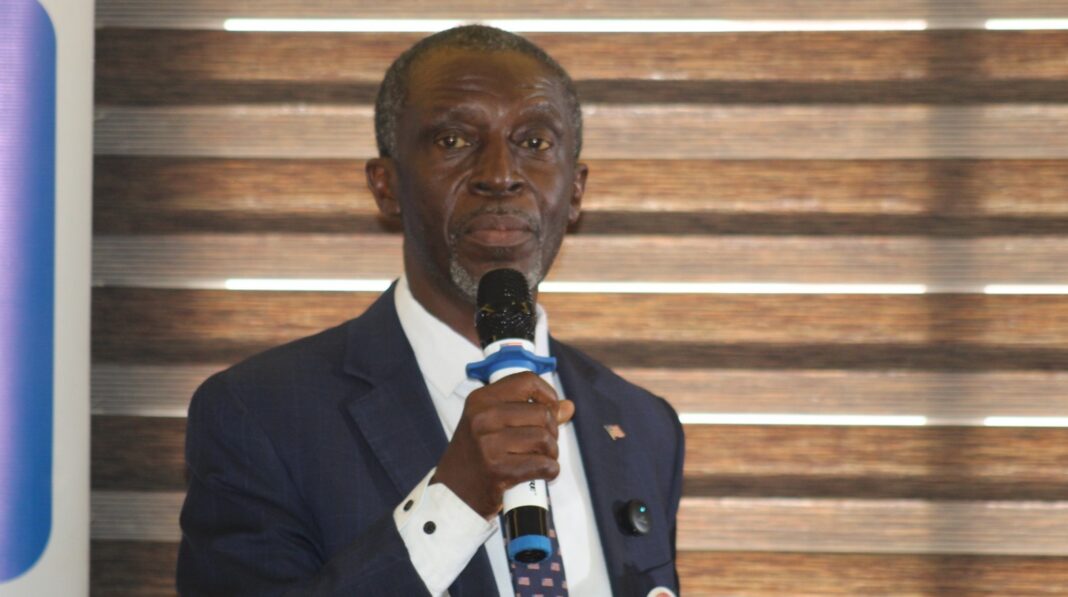
Delivering the keynote address marking International Anti-Corruption Day, Gongloe said Liberia’s struggle against corruption is not only about financial theft but about deep institutional weaknesses and disregard for constitutional governance across public institutions.
“This day is more than a ceremonial observance. It is an opportunity for national reflection,” he said. “We must honestly examine where Liberia stands, why we have struggled for so long, and what we must do differently if we are to build a prosperous and just nation.”
Gongloe broadened the definition of corruption, arguing that it extends far beyond the misappropriation of public funds and includes any abuse of public power outside the law.
“Corruption is the abuse of public power through disregard for the Rule of Law,” he said. “Whenever public funds are spent without legislative appropriation, corruption has occurred. Whenever contracts are awarded outside the Public Procurement and Concessions Law, corruption has occurred.”
He further warned that selective enforcement of laws and withholding public information also constitute corruption, stressing that “corruption begins where the Rule of Law ends.”
The anti-corruption advocate criticized what he described as Liberia’s reliance on slogans instead of institutional reform, insisting that sustainable progress depends on strong, independent systems of accountability.
“A nation cannot effectively fight corruption while failing to strengthen respect for its Constitution and laws,” he said. “Strong institutions, not slogans, are the foundation of integrity.”
He called for impartial accountability across all branches of government, stressing that no institution or official should be exempt from scrutiny.
“No public official should be above the law. Justice must depend upon evidence and the law, not political influence or official position,” Gongloe stated.
Gongloe drew a sharp comparison between Liberia and Botswana, arguing that governance quality, not natural resources, determines national prosperity.
“Botswana became one of Africa’s best-governed and least corrupt nations, while Liberia continues to struggle with poverty,” he said. “Natural resources do not create prosperity. Good governance does.”
He noted that Botswana transformed its mineral wealth into national development through transparent agreements and disciplined investment in education, healthcare, and infrastructure.
“Every concession agreement, every procurement contract, and every public expenditure should be judged by one question: does it maximize the long-term benefit of the Liberian people?” he asked.
Gongloe described corruption as a direct violation of human rights, arguing that it deprives citizens of essential services and fuels inequality and migration.
“It destroys opportunity, weakens institutions, discourages investment, and forces many of our young people to leave their homeland,” he said. “The fight against corruption is therefore about restoring justice, hope, and confidence in public institutions.”
Gongloe warned that corruption has persisted across successive governments regardless of political party, describing it as a deeply embedded national governance failure.
He said that from 2006 to the present, anti-corruption efforts have not dismantled entrenched systems of abuse.
“Corruption grew stronger. It became, figuratively speaking, a vampire feeding upon public resources and weakening public confidence in government,” he said.
He added that both the Unity Party and the Coalition for Democratic Change administrations have struggled to contain the problem, stressing that corruption is not partisan but systemic.
The keynote address also raised concerns about recurring allegations of legislative bribery and undue influence in national decision-making processes.
Gongloe referenced long-standing suspicions dating back to earlier transitional governments, as well as more recent allegations involving budget negotiations.
He cited claims by former Speaker J. Fonati Koffa regarding budget discussions allegedly held in informal settings involving lawmakers and Executive officials.
“Whether such allegations are ultimately proven or disproven, they deserve prompt, independent, and transparent investigation,” he said. “Democracy is strengthened when credible allegations are investigated rather than ignored.”
Gongloe further criticized secrecy in governance, particularly in public procurement, concession agreements, and official compensation.
He questioned the lack of clarity surrounding reported salary reductions by former President George Manneh Weah and President Joseph Nyuma Boakai, arguing that percentage reductions lack meaning without disclosure of actual figures.
“Citizens cannot determine the significance of a percentage reduction without knowing the original amount,” he said. “Public officials are paid from public funds. The people therefore have a legitimate right to know how much their senior officials earn.”
He emphasized that transparency is essential to rebuilding public trust, stating that secrecy remains one of the strongest enablers of corruption.
“Corruption thrives in secrecy. Transparency is one of its most effective antidotes,” he warned.
Gongloe concluded with a call for ethical leadership, institutional reform, and collective national responsibility in the fight against corruption.
“We need leaders who understand that government is a place to serve, not to steal,” he said. “We need transparency in public finance, integrity in public service, and accountability in every branch of government.”
He urged Liberians to commit to a governance culture rooted in accountability and the rule of law, stressing that the country’s transformation depends on discipline and institutional strength rather than political promises.