By Socrates Smythe Saywon | Smart News Liberia
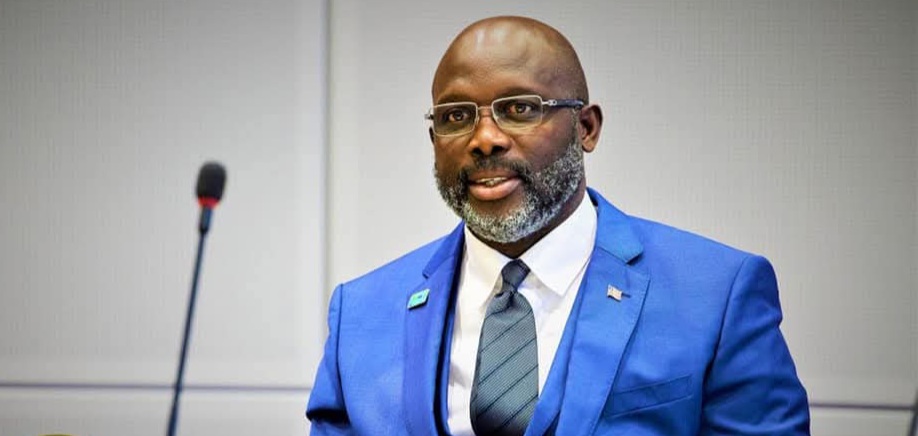
ZWEDRU, GRAND GEDEH COUNTY – Former President George Manneh Weah has declared that the political road to the 2029 presidential election has officially begun, using the Congress for Democratic Change’s (CDC) 22nd anniversary celebration to launch a political attack on President Joseph Nyuma Boakai’s administration, which he accused of betraying Liberians, weakening democratic institutions, and turning Liberia into what he described as a “narco state.”
Speaking Saturday, June 27, before thousands of supporters and a gathering of opposition political leaders in Zwedru, Weah transformed what was expected to be a commemorative celebration into a political rally, outlining the CDC’s strategy for returning to power while delivering one of his strongest public critiques of the Unity Party government since leaving office.
“The road to 2029 begins today,” Weah declared, calling on CDC supporters, opposition political parties, and ordinary Liberians to begin mobilizing for the next presidential election.
“This is not the time for division. This is not the time for complacency. This is the time for mobilization,” he told cheering supporters.
The former Liberian leader claimed the Unity Party administration entered office promising national rescue and transformation but has instead left many Liberians grappling with worsening economic hardship.
According to Weah, families are struggling to survive, businesses are closing, young people have been neglected, and entire communities have been abandoned despite campaign promises to improve living conditions.
He further accused the Boakai administration of reversing Liberia’s democratic gains by allegedly persecuting political opponents, suppressing free speech, and deploying state security institutions against peaceful citizens rather than protecting the public.
Without presenting evidence for his allegations, Weah also claimed President Boakai has weakened the rule of law by disregarding decisions of Liberia’s Supreme Court and exerting pressure on members of the judiciary to align with the Executive Branch.
Turning to national security, Weah alleged that Liberia’s sovereignty has been compromised, claiming foreign troops are occupying Liberian territory while the government has failed to adequately address reported border encroachment in Lofa County.
One of the strongest moments of his address came when he accused the current administration of failing to confront organized drug trafficking.
“We have turned into a narco state,” Weah declared, alleging that officials involved in drug trafficking are being shielded because they are part of the current government. He did not provide evidence to support the allegation.
The remarks come amid heightened public attention surrounding recent high-profile narcotics investigations, including the seizure of millions of dollars worth of suspected cocaine and ongoing investigations into alleged drug trafficking networks.
Throughout his address, Weah contrasted the CDC’s political philosophy with what he described as the shortcomings of the current administration.
Reflecting on the party’s founding 22 years ago, he said the CDC emerged from Liberia’s forgotten communities rather than political elites and was built by market women, students, farmers, commercial motorcyclists, workers, and ordinary Liberians determined to have a voice in national leadership.
He also defended his administration’s record, pointing to investments in road construction, market buildings, housing projects, and expanded access to education, arguing that those achievements were realized despite significant domestic and global economic challenges.
According to Weah, his rise from an impoverished background to the presidency represented the aspirations of millions of ordinary Liberians and demonstrated that leadership should be earned rather than inherited.
The former President dismissed suggestions that the CDC has lost its political relevance, insisting the party remains united, organized, energized, and prepared to return to power.
“A movement built by the people cannot be destroyed by propaganda,” he declared.
The anniversary celebration also reflected growing interaction among opposition figures from across Liberia’s political landscape.
Among those attending were Alexander Cummings of the Alternative National Congress (ANC), Musa Hassan Bility of the Citizens Movement for Change (CMC), Benoni Urey of the All Liberian Party (ALP), Simeon Freeman of the Movement for Progressive Change (MPC), Dee-Maxwell Kemayah of the Movement for Economic Empowerment (MOVEE), Senator Thomas Yaya Nimely, former Justice Minister Kabineh Ja’neh, and former Finance Minister Amara Konneh. Former Vice President Jewel Howard-Taylor also issued a public statement expressing support for the CDC anniversary.
Weah praised the attendance of opposition leaders, describing their presence as evidence that political actors committed to Liberia’s national interest can work together despite belonging to different political parties.
As the CDC celebrated its 22nd anniversary, Weah left little doubt that the event was intended to mark more than the party’s history. By declaring that “the road to 2029 begins today,” he formally signaled the start of what is expected to be an aggressive opposition campaign, setting the stage for an increasingly competitive political landscape as debates intensify over governance, the economy, national security, and accountability ahead of Liberia’s next presidential election.