By Socrates Smythe Saywon | Smart News Liberia
MONROVIA –The five-year prison sentence handed down to Madam Quati Dolo in Liberia’s Roberts International Airport (RIA) cocaine trafficking case represents another moment in the country’s continuing struggle against narcotics-related crimes, but it also comes at a time when Liberia is confronting a much larger and more complex challenge involving international drug trafficking networks.
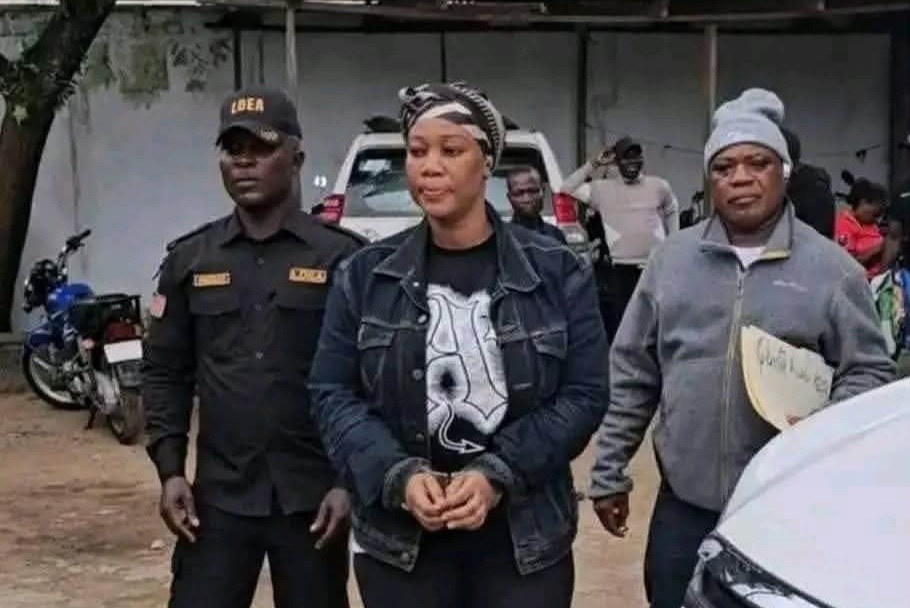
On Wednesday, August 5, 2026, Resident Judge of the 13th Judicial Circuit Court in Margibi County, Her Honor Victoria Duncan, sentenced Dolo to five years imprisonment after accepting a plea bargaining agreement reached between the prosecution and the defense.
Dolo, one of the defendants in the RIA cocaine trafficking case, pleaded guilty to the charges brought against her by the Republic of Liberia, accepting responsibility for her role in the case that followed the seizure of narcotics at Roberts International Airport, the country’s main international gateway.
Court records indicate that the plea agreement was negotiated between state prosecutors and the defense team, allowing Dolo to admit guilt instead of proceeding with a full trial.
Before accepting the agreement, Judge Duncan ensured that Dolo understood the consequences of her decision and that the guilty plea was entered voluntarily. The court subsequently imposed a five-year prison sentence at a correctional facility designated by the Ministry of Justice.
The conviction marks a major legal development in the RIA cocaine case, which has remained under public attention because of the seriousness of the allegations and concerns surrounding drug trafficking in Liberia.
However, Dolo’s conviction is specifically linked to the RIA cocaine trafficking case and is separate from other recent cocaine seizures and arrests currently being investigated by Liberia’s security institutions.
The distinction is important as Liberia has recently witnessed some of the largest narcotics interceptions in its history, exposing the country’s growing vulnerability to international drug trafficking operations.
In June 2026, security forces intercepted approximately 237.6 kilograms of cocaine at Roberts International Airport, with an estimated value of about US$19.2 million. The discovery triggered a major national security investigation involving multiple agencies.
Weeks later, Liberia recorded another unprecedented drug seizure when the Joint Security Task Force intercepted approximately 3,971 kilograms of suspected cocaine in Duazon, Margibi County, valued at more than US$317 million.
The massive seizure, considered one of the largest cocaine interceptions in Liberia’s history, sent shockwaves across the country and raised urgent questions about how international drug networks are operating within Liberia’s borders.
The combined scale of these separate drug cases has placed Liberia’s justice and security institutions under intense public attention.
Citizens are demanding answers about how such large quantities of narcotics entered the country, who may have facilitated their movement, and whether weaknesses within state systems are being exploited by criminal networks.
The sentencing of Quati Dolo therefore arrives at a critical moment. While her conviction demonstrates that the justice system can hold individuals accountable, it also highlights the larger challenge of ensuring that investigations reach beyond those directly involved in handling illegal substances.
Drug trafficking is rarely carried out by a single individual. Behind major narcotics operations are often international suppliers, financial backers, transport networks, and local facilitators who provide support and access.
For Liberia, the challenge is no longer only about making arrests. The bigger test is whether law enforcement institutions can successfully identify and prosecute the individuals who organize and profit from these operations.
The recent cocaine seizures have also renewed discussions about national security, border control, and institutional integrity.
Liberia’s strategic location along the West African coast has increased concerns that the country could become attractive to international criminal networks seeking alternative routes for transporting illegal drugs.
The government has repeatedly emphasized its commitment to fighting organized crime and narcotics trafficking. Security institutions, including the Liberia Drug Enforcement Agency (LDEA), Liberia National Police (LNP), and other agencies, have increased efforts to investigate and disrupt drug-related activities.
President Joseph Nyuma Boakai’s administration has also stressed accountability within public institutions, particularly where officials or state structures may be exposed to criminal exploitation.
But beyond official declarations, the public will measure success through results. The effectiveness of Liberia’s anti-drug campaign will depend on whether major investigations lead to transparent prosecutions and convictions that reach the organizers of trafficking operations.
The Ministry of Justice has maintained that it remains committed to aggressively prosecuting narcotics-related offenses and ensuring that those found guilty face the consequences of their actions.
The continuation of proceedings in the RIA cocaine case will now be closely watched as other defendants face the court.
For Liberia, the fight against drugs has moved beyond isolated criminal cases. It has become a test of national institutions, law enforcement capacity, and political commitment.
Madam Quati Dolo’s five-year prison sentence represents accountability in one case. The larger challenge before Liberia is ensuring that the country’s response to narcotics trafficking is strong enough to confront the networks behind these operations.
As Liberia continues to battle the growing threat of international drug trafficking, the public expectation is clear that every individual involved, regardless of influence or connection, must face justice.
The war against cocaine trafficking will not be won by arrests alone. It will require sustained investigations, strong prosecution, institutional reforms, and the determination to dismantle the criminal networks seeking to use Liberia as a pathway for illegal trade.