
Saamoi reveals proposed three-country payment arrangement involving Nigeria, Ghana and Senegal as Liberia prepares to deepen digital financial integration
MONROVIA — West African countries are moving toward establishing a regional payment and settlement system designed to make cross-border financial transactions faster, cheaper and less dependent on the United States dollar, according to Central Bank of Liberia Executive Governor Henry F. Saamoi.
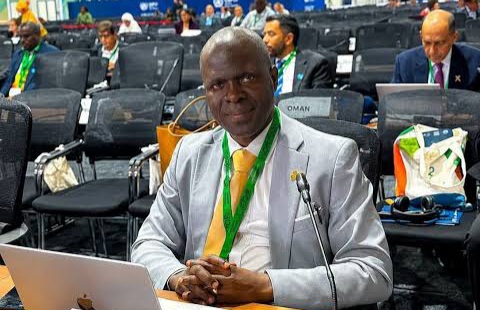
Speaking on the sidelines of the launch of the 2026 State of Inclusive Instant Payment Systems (SIIPS) report in Mauritius, Saamoi disclosed that regional monetary authorities are considering a three-country arrangement that would distribute responsibility for hosting the proposed Economic Community of West African States (ECOWAS) Payment and Settlement System among Nigeria, Ghana and Senegal.
The development comes as ECOWAS intensifies preparations for the long-delayed introduction of its proposed single currency, the ECO, currently targeted for a phased launch in July 2027.
The two initiatives are expected to strengthen regional economic integration, improve trade and reduce the financial barriers that have made transactions between West African countries expensive and complicated.
NIGERIA, GHANA AND SENEGAL TO HOST REGIONAL PAYMENT INFRASTRUCTURE
According to Saamoi, a feasibility study commissioned by ECOWAS recommended distributing the proposed payment infrastructure among three countries rather than allowing one country to control the entire system.
Under the proposed arrangement, Nigeria would host the regional Instant Payment System (IPS), while the Central Bank of West African States (BCEAO), based in Senegal, would operate the Real-Time Gross Settlement (RTGS) component.
Ghana, meanwhile, would host the backup infrastructure to ensure continuity if the primary system experiences technical disruptions.
Saamoi explained that Nigeria was selected because of its experience operating the National Instant Payment System, which has been recognized for its maturity and technological development.
He said the three-country arrangement would also address concerns about allowing one country to dominate the region’s financial infrastructure.
The proposal has reportedly received support from central banks across the region, although final technical and operational arrangements remain under discussion.
REDUCING WEST AFRICA’S DEPENDENCE ON THE US DOLLAR
One of the major objectives of the proposed payment system is to reduce the region’s dependence on the US dollar when conducting transactions between African countries.
Currently, businesses and traders in different West African countries often encounter high transaction costs, delays and foreign-exchange complications when making cross-border payments.
Saamoi said the proposed regional system is expected to facilitate settlements in local currencies, drawing on the experience of the Pan-African Payment and Settlement System (PAPSS).
PAPSS allows participating countries to conduct cross-border transactions using their respective local currencies rather than relying entirely on third-party currencies such as the US dollar.
However, Saamoi acknowledged that ECOWAS has not yet determined the common base currency or fully settled the exchange-rate arrangements for the proposed regional payment infrastructure.
The West African Monetary Institute is studying ways to manage exchange-rate risks among participating countries.
For ordinary Liberians, the proposed arrangement could eventually make it easier to send money to businesses and individuals in Nigeria, Ghana, Senegal and other participating countries without the same level of dependence on conventional international banking channels.
LIBERIA’S PROGRESS IN DIGITAL PAYMENTS
Liberia is already making progress toward improving its domestic digital payment infrastructure.
Saamoi disclosed that the Central Bank launched the country’s first instant payment system, known as Pay Na-Na, on December 16, 2025.
The platform connects Liberia’s two major mobile money operators, Lonestar Cell MTN and Orange Liberia, allowing customers to transfer money between the networks.
According to the governor, the system was developed within 73 business days and has already processed millions of transactions involving millions of US dollars and billions of Liberian dollars.
The Central Bank is also planning to introduce a National Electronic Payment Switch by the end of the first quarter of 2027.
The proposed switch is expected to connect commercial banks, allowing customers to transfer money between different banks instantly.
Saamoi said the development would eliminate some of the existing difficulties customers face when transferring money between commercial banks.
The Central Bank has also identified financial inclusion as a major priority, with a target of increasing Liberia’s financial inclusion rate from approximately 52 percent to 75 percent by the end of 2029.
WHAT HAPPENED TO THE ECOWAS SINGLE CURRENCY?
While the regional payment system is advancing, the proposed ECO single currency remains one of the most ambitious and repeatedly postponed economic integration projects in West Africa.
ECOWAS originally targeted 2003 for its introduction, but the deadline was subsequently moved to 2015 and then 2020.
The latest target is 2027.
At their July 2026 summit in Sierra Leone, ECOWAS leaders reaffirmed their commitment to introducing the currency, agreeing that countries meeting the required economic convergence criteria could participate in the initial phase.
The proposed phased approach means countries that are not economically ready would receive additional time to meet the requirements before joining.
On November 19, Ghana’s Central Bank Governor, Johnson Pandit Asiama, also announced that Ghana was ready to adopt the ECO, although he acknowledged that logistical arrangements and the readiness of other participating countries remain important considerations.
The four principal economic convergence requirements include:
– Inflation not exceeding 5 percent.
– A fiscal deficit, including grants, not exceeding 3 percent of Gross Domestic Product.
– Central bank financing of government deficits not exceeding 10 percent of the previous year’s tax revenue.
– Foreign reserves sufficient to cover more than three months of imports.
There are also six secondary requirements, including limits on public debt, exchange-rate stability, interest rates and government revenue and expenditure.
These requirements are intended to ensure that countries entering the monetary union have sufficiently stable economies to support a common currency.
WILL LIBERIA BE READY FOR THE ECO?
For Liberia, the proposed currency presents both opportunities and significant economic questions.
The country currently operates a dual-currency system in which the Liberian dollar and US dollar circulate alongside each other.
The introduction of a common regional currency could change how Liberian businesses conduct transactions, how the country manages monetary policy and how cross-border trade is financed.
However, Liberia would need to demonstrate that its economy meets the required convergence standards before participating in the initial phase.
The Central Bank will also have to address questions surrounding monetary independence, exchange-rate stability, inflation management and the country’s continued dependence on the US dollar.
Although Saamoi has discussed the need for gradual economic preparation and stronger domestic productive capacity, the precise timeline for Liberia’s participation in the initial ECO rollout has not been officially established in the latest reports.
WHAT DECISION WILL ECOWAS MAKE NEXT?
Saamoi disclosed that central bank governors were expected to meet in Abidjan, Côte d’Ivoire, on November 20 to consider important issues relating to preparations for the proposed single currency.
The meeting is expected to help guide the next phase of monetary integration and address outstanding questions surrounding the 2027 launch.
As of the publication of this report, the outcome of the November 20 meeting has not been independently confirmed.
The proposed ECOWAS regional payment system and the ECO single currency represent two significant steps toward reducing West Africa’s dependence on external financial systems and strengthening economic cooperation among member states.
However, establishing a regional payment infrastructure is not the same as introducing a common currency.
While the payment system is intended to make transactions between participating countries easier, the ECO would require deeper monetary coordination, economic discipline and agreement among governments and central banks.
For Liberia, the challenge is not simply whether the country will adopt the ECO in 2027, but whether its economy will be sufficiently prepared to benefit from regional monetary integration without creating additional financial instability for ordinary citizens.
As preparations continue, Liberians will be looking to the Central Bank for clear answers about the country’s readiness, the future of the Liberian dollar and what regional financial integration will mean for businesses, consumers and the wider economy.
Smart News Liberia will continue to monitor developments surrounding the ECOWAS payment system and the proposed 2027 ECO currency launch.