
By Our Reporter | Smart News Liberia
MONROVIA – The Liberia Revenue Authority (LRA) has acknowledged that imported cargo spends an average of 12 days, 19 hours and 42 minutes before leaving the Freeport of Monrovia, exposing significant inefficiencies in Liberia’s trade clearance system and prompting renewed promises of sweeping customs reforms.
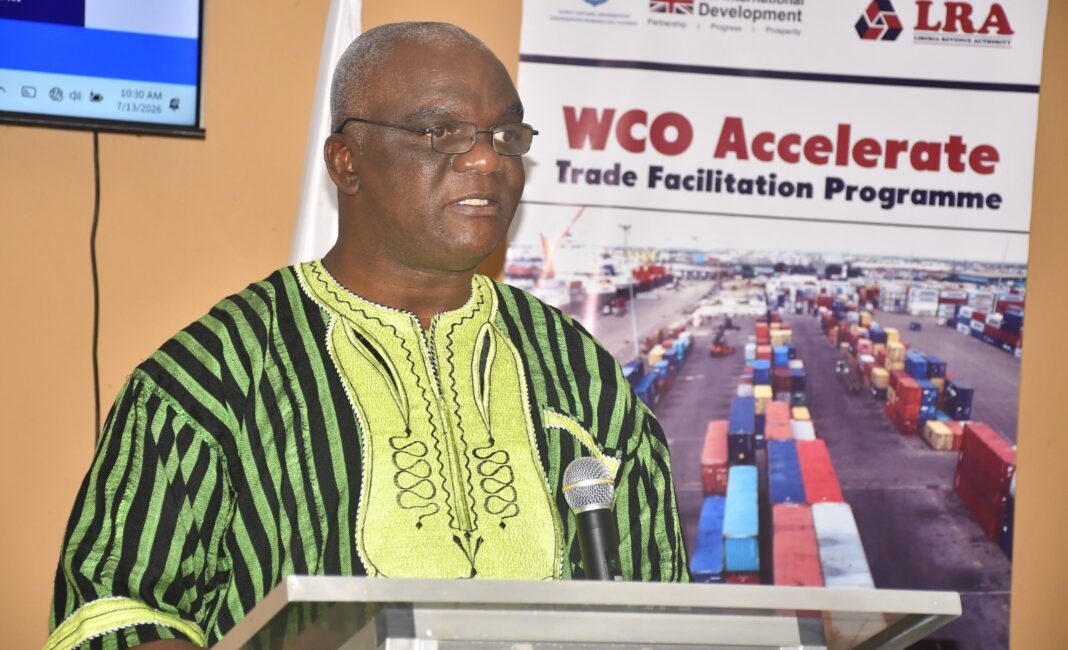
Speaking Monday at the official launch of the National Time Release Study of Liberia at the Liberia Chamber of Commerce, LRA Commissioner General James Dorbor Jallah described the findings as a “national mirror” that exposes weaknesses in the country’s cargo clearance process while providing what he called an internationally credible benchmark for future reforms.
The study, conducted using the World Customs Organization’s (WCO) internationally recognized methodology, examined 670 import declarations, surpassing its target sample and tracking cargo from vessel arrival through customs clearance to final exit from the Freeport.
The findings underscore the lengthy bureaucratic process facing importers and businesses that rely on Liberia’s principal commercial gateway, through which more than 90 percent of the country’s international trade passes.
According to the report, customs inspections themselves are not the primary source of delays. Joint inspections conducted by customs officers and other agencies average less than one hour, while processing at the port’s exit gate takes approximately 34 minutes.
Instead, Jallah said the major delays occur between institutions due to late cargo manifests, manual terminal delivery orders, and paper-based payment confirmations that slow cargo movement long before final clearance.
Responding to the findings, Jallah announced that the LRA has begun implementing several reforms designed to reduce cargo processing times and modernize customs administration, including the construction of a modern Destination Inspection Facility at the Freeport of Monrovia and an upgrade of the ASYCUDA World customs management system to enable real-time electronic processing between customs, commercial banks, the Central Bank of Liberia, and the LRA’s tax administration platform.
Officials say the modernization will also lay the foundation for Liberia’s long-awaited National Single Window, allowing traders to complete import procedures through a single digital platform.
Jallah said the reforms are part of the LRA’s 2025–2029 Corporate Strategic Plan and align with the Boakai administration’s ARREST Agenda for Inclusive Development, adding that reducing cargo clearance times would improve the business climate, lower trade costs, strengthen revenue collection, and enhance Liberia’s competitiveness.
“This study was not commissioned to sit on a shelf,” Jallah said. “It was commissioned to drive action.”
He called on shipping companies, terminal operators, customs brokers, importers, financial institutions, and government agencies to strengthen coordination and digitize their operations, stressing that cargo clearance is a collective responsibility that requires every stakeholder to improve performance.
Supported by the World Customs Organization’s Accelerate Trade Facilitation Programme with funding from His Majesty’s Revenue and Customs of the United Kingdom, the study also fulfills Liberia’s obligations under Article 7.6 of the World Trade Organization Trade Facilitation Agreement, which requires member states to measure and publish cargo release times.
While the LRA views the study as a roadmap for reform, the findings also highlight the significant logistical and administrative hurdles still affecting businesses that depend on imports. Extended cargo clearance periods can increase storage charges, delay commercial activity, raise the cost of imported goods, and ultimately place additional financial pressure on consumers.
With the Freeport of Monrovia serving as the gateway for the overwhelming majority of Liberia’s international trade, the success of the LRA’s promised reforms will ultimately be measured by whether the country’s nearly 13-day cargo clearance time can be significantly reduced in the years ahead.