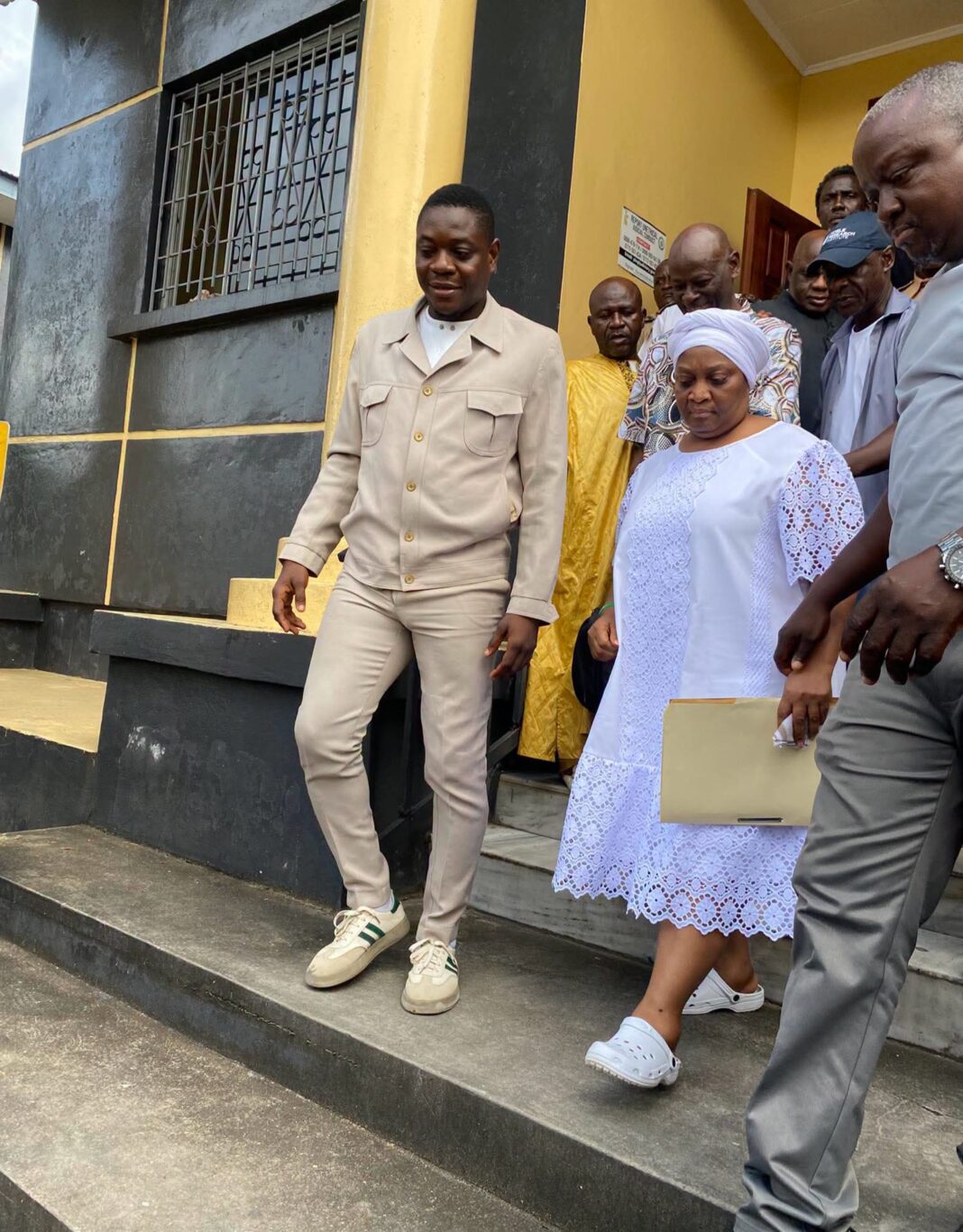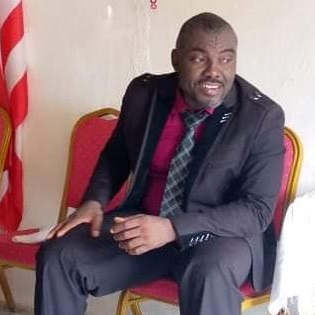
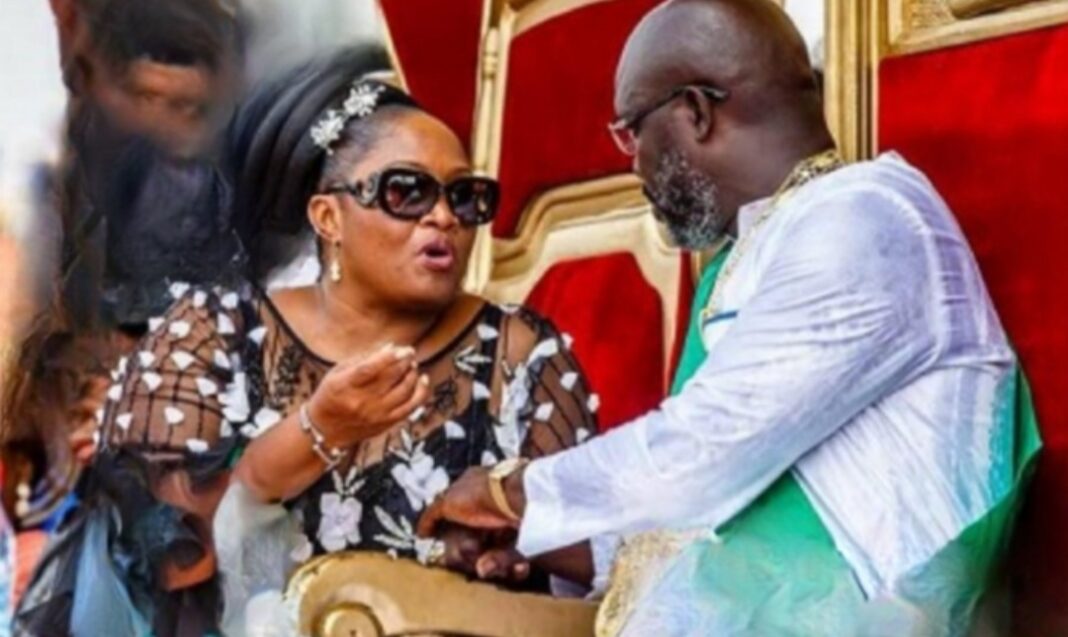
MONROVIA, LIBERIA — A shocking revelation came to light on Friday at the Monrovia City Court when a senior investigator from the Liberia National Police (LNP) testified about an audio recording that allegedly features former Vice President Jewel Howard-Taylor and Sheikh Bassirou Kante discussing a plot to assassinate then-President George Manneh Weah.
This conversation also included arrangements that prosecutors claim could have allowed a drug-trafficking network to operate freely in Liberia.
Assistant Commissioner of Crime Services Rafell Wilson, who was the first witness for the prosecution during Howard-Taylor’s preliminary examination, stated in court that investigators had obtained an audio recording of the exchanges between the former vice president and Kante.
Wilson revealed that their conversation not only involved alleged financial dealings with members of an international drug network but also included discussions about a plan targeting Weah, who was serving as president at the time.
This testimony adds a dramatic national-security angle to a case that initially focused mainly on allegations of drug trafficking, criminal conspiracy, facilitation, solicitation, and money laundering.
The prosecution has accused Howard-Taylor of having ties to a transnational narcotics organization and allegedly leveraging her political influence to aid its operations in Liberia.
The government has previously indicated that the broader investigation involves several foreign nationals who are believed to be members or organizers of the network.
Wilson’s testimony highlighted discussions in the recording about potential assistance that could supposedly allow the drug-trafficking organization to operate with what was referred to as “free passage” in Liberia.
If this phrase is ultimately established as part of the evidence, it could play a crucial role in the prosecution’s attempt to demonstrate that the alleged connection between Howard-Taylor and the narcotics network went beyond just receiving money.
Prosecutors have claimed that Howard-Taylor accepted payments linked to individuals that investigators identify as part of the network, including funds that were allegedly funneled through Kante.
The government has previously alleged three payments totaling $135,000, which includes $45,000 reportedly received during a trip to Dubai, $75,000 that was allegedly requested for the Jewel Star Fish Foundation, and another $15,000 that was supposedly received through Kante in August 2026.
Thus, the State’s theory seems to suggest that money, political influence, and alleged protection arrangements were all part of a larger relationship between the former vice president and the suspected drug network.
The audio recording could be particularly important because it allegedly captures Howard-Taylor in direct conversation with Kante, who investigators have identified as an intermediary in this alleged relationship.
Recent reports have shed light on a secretly recorded conversation where Kante allegedly reached out to Howard-Taylor, mentioning a “gift” linked to individuals she met in Dubai.
This recording is said to have been made by someone cooperating in the conversation. The prosecution’s use of these recorded conversations brings up a crucial evidentiary issue that could turn into a significant point of contention as the case unfolds: was the recording obtained legally, properly authenticated, and clear enough to accurately reflect what was said by the participants?
This question is particularly relevant since the defense has already raised concerns about how the prosecution has handled evidence during the preliminary proceedings. Wilson’s testimony marks a significant turning point in the case against the former vice president, who served alongside Weah from 2018 to 2024.
Howard-Taylor was apprehended after authorities intercepted her at the Roberts International Airport while she was reportedly getting ready to fly to Ghana.
Following this, the government charged her with several offenses stemming from its investigation into an alleged international drug trafficking network, which she has firmly denied.
The former vice president appeared in court on Friday as prosecutors began to lay out their evidence, after the Monrovia City Court denied a defense request for access to the evidence the State plans to use.
The court made it clear that the preliminary proceedings are meant to assess whether there is probable cause, not to determine Howard-Taylor’s guilt or innocence.
If the recording is eventually accepted and its contents are deemed satisfactory by the court, the allegations brought forth by Wilson could significantly expand the government’s case.
The prosecution might be gearing up to present evidence that suggests Howard-Taylor wasn’t just linked to a supposed drug-trafficking ring, but was also part of discussions about political protection and an alleged violent scheme against a former head of state.
However, at Friday’s preliminary hearing, these remain just allegations put forth by the prosecution. The government has made it clear that facing criminal charges doesn’t mean someone is guilty, and defendants are entitled to due process and the presumption of innocence.
As the preliminary hearing continues, Howard-Taylor’s defense will likely focus on whether the State can prove the authenticity, context, and meaning of the recording—and ultimately tie the words allegedly spoken in it to the specific criminal charges against her.
On the flip side, Wilson’s testimony introduces a potentially game-changing piece of evidence into the preliminary examination: an alleged conversation that, if the court accepts it, could shift the case from a simple drug prosecution to a much larger allegation involving drugs, political influence, and a supposed plot against a former Liberian president.