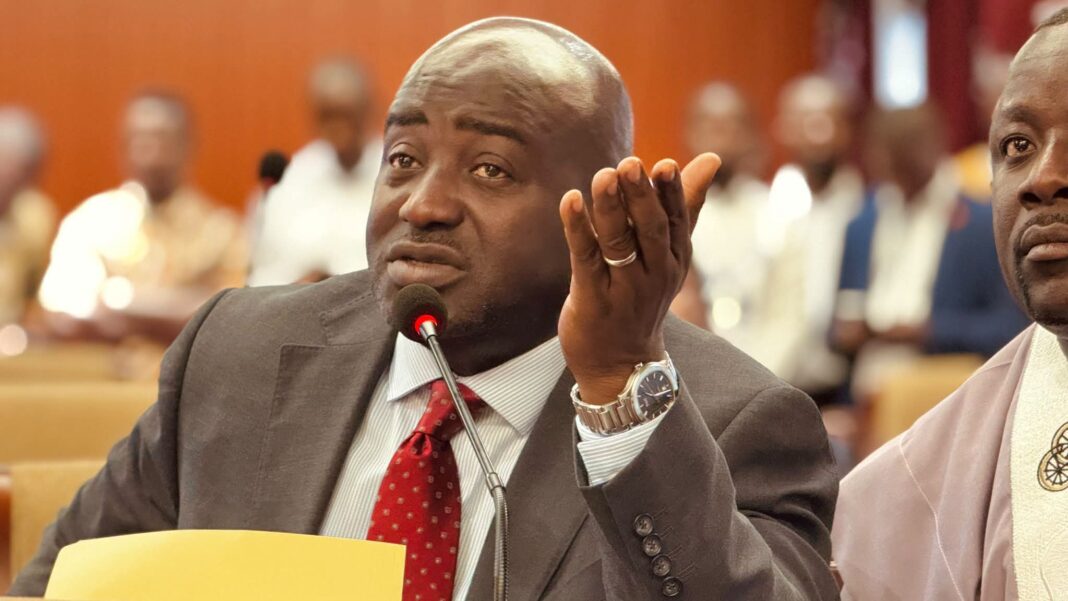
SACLEPEA, NIMBA COUNTY – Nimba County Representative Musa H. Bility has challenged what he describes as the growing contradiction in Liberia’s national conversation about citizenship, ethnicity and political leadership, arguing that no Liberian should be denied the opportunity to serve the country because of tribal identity or religious belief.
In a reflection titled “Letter from Saclepea: The Hypocrisy We Must Confront,” Representative Bility questioned why some Liberians celebrate the election of people of Liberian origin in the United States, regardless of their birthplace or religious backgrounds, while expressing reservations about the political leadership of Mandingo and Muslim citizens within Liberia.
The Nimba County lawmaker said the contradiction raises fundamental questions about the country’s understanding of citizenship, national belonging and equal political participation.
According to Bility, it is troubling that individuals can acknowledge someone’s leadership potential, competence and capacity to contribute to national development but still argue that Liberia is not ready to be led by a Mandingo or a Muslim.
He described such attitudes as prejudice that undermines the principles of national unity and equal opportunity, insisting that political leadership should be determined by a person’s record, competence, integrity and vision rather than ethnic or religious affiliation.
Bility maintained that Liberia cannot genuinely celebrate diversity abroad while tolerating discrimination against its own citizens at home. The lawmaker also challenged the tendency to associate particular ethnic communities with allegations of unlawful voter registration or voting, arguing that such claims should be investigated through evidence and established legal procedures rather than collective suspicion.
He pointed to the longstanding cross-border relationships among Liberia’s ethnic communities, noting that the Kissi of Lofa maintain family connections in Guinea and Sierra Leone, while the Mano and Kpelle communities also have historical relationships with neighboring populations.
Similarly, he observed that the Gio and Krahn have family connections across the Ivorian border, while Vai and Gola communities in western Liberia share longstanding ties with Sierra Leone.
Bility argued that these relationships existed long before modern African boundaries were established and should not become grounds for questioning the citizenship of particular Liberians. He emphasized that no ethnic community should be collectively blamed for alleged electoral violations and that individual allegations must be examined according to the same legal standards applied to everyone.
The representative’s argument comes against the background of longstanding national conversations about citizenship, ethnic identity, electoral participation and the place of Mandingo communities in Liberian society.
In reinforcing his position, Bility drew attention to Liberia’s own political history, particularly the foreign birthplaces of several individuals who occupied the country’s highest office.
He recalled that Liberia’s first president, Joseph Jenkins Roberts, was born in Virginia, United States, and argued that the country’s history demonstrates that birthplace has never been a straightforward measure of someone’s capacity to lead Liberia. He further stated that 11 of the 24 individuals who have served as Liberia’s presidents were born outside the country, including 10 in the United States and one in Barbados.
For Bility, the historical record makes it difficult to justify questioning the national belonging of a Liberian citizen born in the country to Liberian-born parents simply because of his ethnic background.
The lawmaker also challenged religious prejudice by questioning why Liberia readily welcomes development assistance from Muslim-majority countries while some citizens allegedly regard the Muslim faith of a fellow Liberian as a disqualification for political leadership.
He cited the completion of the Gbarnga-Salayea road project, supported by several international development financing institutions, including the Saudi Fund, Kuwait Fund, BADEA and the OPEC Fund, alongside the Liberian Government. He also referenced the Emirates Hospital in Gbarpolu County, which he said was funded by the United Arab Emirates, as another example of the country’s engagement with Arab development partners.
Bility argued that Liberia benefits from international partnerships because the country’s development needs are greater than religious or cultural differences.
He questioned why assistance from Muslim-majority countries can be welcomed for roads, electricity, healthcare and other development priorities while the religious identity of a Liberian citizen becomes an issue when that individual seeks an opportunity to contribute to national leadership.
The representative further recalled Liberia’s civil war history, referencing the reported support provided by Libya and Burkina Faso to Charles Taylor’s movement. While acknowledging the devastating consequences of the conflict and stressing that the suffering experienced by Liberians should never be excused, Bility questioned the inconsistency of accepting assistance from Muslim-majority countries during a political struggle while expressing reservations about Muslim citizens participating in peaceful democratic competition.
Beyond the questions of ethnicity and religion, Bility argued that Liberia’s political debate should be redirected toward the country’s development challenges.
He maintained that poverty, inadequate healthcare, limited educational opportunities and unemployment affect Liberians across ethnic and religious lines.
According to him, children are not deprived of education because their parents belong to a particular tribe or worship in a particular religious institution. Rather, the country continues to face development challenges that require capable leadership and practical solutions. Declaring his own identity as a Muslim, a Mandingo and a Liberian, Bility said he is prepared to have his competence, integrity, political record and national development proposals examined by the Liberian people.
However, he rejected the idea that his ethnic or religious identity should become a substitute for assessing his qualifications and capacity to serve.
He also disclosed that two of his daughters have developed an interest in politics, expressing hope that they and other Liberian children will inherit a country where citizens are judged by their abilities and contributions rather than their ancestral backgrounds.
Bility pledged to confront what he described as prejudice through peaceful and open engagement, emphasizing that the country’s urgent needs should take precedence over divisive debates about which ethnic or religious group deserves an opportunity to lead. His statement adds to the continuing national conversation about citizenship, political inclusion, religious tolerance and the responsibility of political leaders to promote a shared Liberian identity.
The central question raised by the Nimba County lawmaker is whether Liberia can build a genuinely inclusive democracy if ethnic and religious identity continues to influence how citizens assess the eligibility of others to participate in national leadership.