
After four decades of incessant darkness, and unending rural muds, President Boakai’s US$5.7 billion Master Infrastructure Development Agreement offers Liberia its boldest chance yet to turn the wealth beneath our soil into light, roads, jobs, and a prosperous future.
By Moncio Robert Wilmot Kpadeh
For nearly four decades, Liberia has lived beneath a cruel and stubborn darkness. When the sun goes down over Monrovia, over Gbarnga, Voinjama, and Harper, much of our nation surrenders to the night. The student closes her book because the candle has burned low. The woman in labor is delivered by the thin beam of a nurse’s phone. The welder’s machine falls silent, the cold-store melts its medicines, and the small trader counts her losses by the costly hum of a generator she can barely afford to feed.
This is the Liberia two generations have known — a land fabulously rich beneath the soil, yet impoverished in the one thing no modern nation can live without: power. And nowhere does the darkness bite harder than in the dry season, when our rivers thin, our turbines starve, and the little electricity we have flickers and dies.
A PRESIDENT WHO DARED TO CONFRONT THE DARKNESS
Successive governments promised light. Few delivered it. The crisis outlasted administration after administration, until many Liberians quietly stopped believing it could ever be fixed. Hope itself had been rationed, like the current.
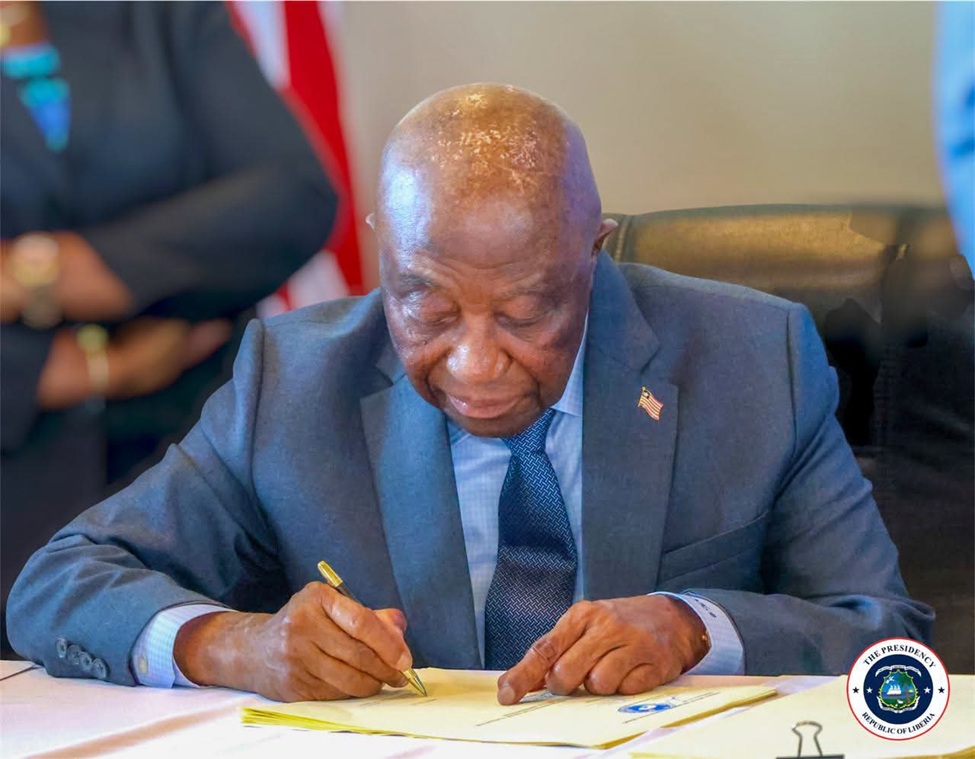
President Joseph Nyuma Boakai has refused to inherit that despair. He has chosen, instead, to confront it head-on. In the reported US$5.7 billion Master Infrastructure Development Agreement — the MIDA — signed on November 25, 2026, he has reached for a remedy as large as the malady itself. Here is a leader willing to think past the timid half-measures of the past and to stake his presidency on ending a predicament that has haunted this country since before many of our young people drew their first breath. That courage alone deserves the nation’s respect.
WHAT THE DEAL ACTUALLY DELIVERS
MIDA is no slogan. It is a plan with steel and water behind it. The agreement proposes four power plants adding roughly 270 megawatts of new generating capacity — a transformational leap for a nation that has survived on a fraction of what it needs. It proposes three major water reservoirs, extensive transmission networks, and significant upgrades to the national grid.
Those three reservoirs may be the quiet masterstroke. For they are aimed squarely at our oldest tormentor — the dry season, when the rivers fall and the lights go with them. A nation that can store its water can keep its promise of power through every month of the year. That is not a marginal improvement. It is the difference between a country that merely has electricity and a country that can depend on it.
WHY LIGHT IS LIFE
No nation has ever industrialized in the dark. Electricity is the very lifeblood of a modern economy. It turns the factory wheel, lights the operating theatre, cools the vaccine, powers the classroom, and summons the investor who will not come to a country he cannot keep his machines running in. The purchasing powers of our people have chronically suffered because the woe is wrapped in the cost of power on every item bought in this country. Imported goods carry it for the cost of electricity, and local goods in the cost of transportation.
Consider what reliable, affordable power would mean in the hands of ordinary Liberians. The market woman preserves her fish instead of watching it spoil. The clinic in the county keeps its refrigerator humming and its mothers safe. The young graduate opens a welding shop, a printing press, a cold-water business, and hires three of his friends. Household bills fall. Business costs fall. Public services rise. A single current, steady at last, lifts a thousand small ambitions that darkness has been strangling for forty years.
ROADS THAT OPEN A LOCKED COUNTRY
MIDA reaches beyond the wire and the turbine. The agreement envisions a 146-kilometer development highway and roughly US$1 billion in additional road projects — arteries that could finally open Liberia’s locked interior.
For the farmer in the deep rural county, a road is not asphalt; it is a lifeline. It is the difference between rice that reaches the market and rice that rots at the farm gate. These roads could unlock agriculture, quicken commerce, carry the sick to hospitals and the children to better schools, and stitch a long-divided country into a single, moving economy. Power and roads together are the twin engines of every nation that has ever lifted itself out of poverty.
THE GENIUS OF THE FINANCING
Perhaps the most visionary feature of MIDA is the idea at its heart: to convert the revenues of our mineral wealth into enduring national infrastructure. For too long, Liberia has lived the bitter paradox of exporting enormous riches while her own people languish amid want — shipping out the gold and the iron ore, and importing only darkness in return.
MIDA dares to break that curse. It insists that our resources must do more than fatten distant balance sheets — they must illuminate our communities, pave our roads, power our industries, and lift the daily condition of our people. Wealth that leaves a nation poor is a wasted inheritance. This agreement proposes, at last, to make our own riches work for us, at home, where the need is greatest.
A LEGISLATURE’S PATRIOTIC OPPORTUNITY
An undertaking of this magnitude rightly comes before the Legislature. Let our lawmakers examine it with the diligence the moment demands — not to hunt for reasons to refuse a good thing, but to perfect it, to sharpen its technical language, to clarify any ambiguity, and to secure its promise for the generations who will inherit it.
There is no such thing as a flawless concession agreement anywhere on earth. But MIDA offers a genuine glimmer of hope, and a rare, defining opportunity to end Liberia’s long electric nightmare—generally its infrastructure woes. This is a matter that transcends our politics; it is premised, first and last, on the national interest. We can refine it. We can strengthen it. But we must never squander it.
LET THERE BE LIGHT
President Boakai and his team deserve the commendation of a grateful nation for the rare political will and the vision to seize a challenge that has defeated leaders for generations. The ultimate measure of this agreement will not be the grandeur of its signing or the size of its figures, but its harvest in the lives of ordinary Liberians — in the lit classroom, the humming clinic, the busy workshop, the moving road.
If judiciously ratified, diligently executed, and prudently managed, MIDA can become the cornerstone of Liberia’s long-awaited industrial awakening and one of the most consequential legacies of the Boakai presidency. Energy is the sine qua non of development; without it, every other dream stalls in the dark.
Liberia has languished in the shadows long enough. It is time to turn the wealth beneath our soil into the prosperity of our people. Let there be light. Let there be industries. Let there be jobs. And let there be a prosperous, shining Liberia. Here comes MIDA for that. And we are glad—Liberia is happy!
