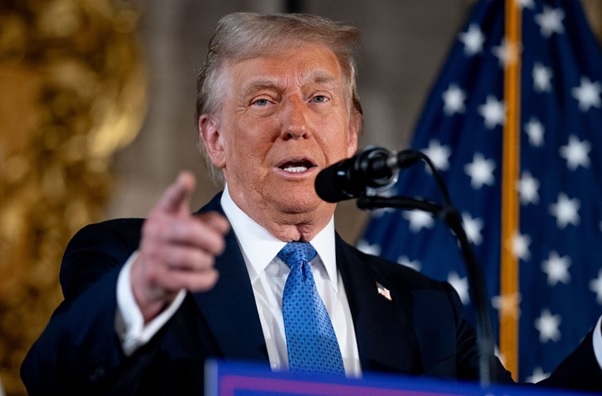
WASHINGTON — A new and consequential confrontation between the White House and the American news media is unfolding after President Donald Trump barred CNN, MS NOW and Politico from the White House, accusing the three organizations of publishing what he described as “fake news” and false reports about his administration.
Trump announced the ban on September 18, saying the outlets should not be allowed to “constantly write or report” what he characterized as fiction and lies about the president and his administration. The journalists were subsequently denied entry to the White House grounds and had their credentials revoked.
The decision has now moved from a political confrontation into a constitutional and legal battle.
CNN, MS NOW and Politico filed a federal lawsuit on September 21, arguing that the administration violated their First Amendment protections and improperly retaliated against them because of their reporting. They are seeking an emergency order restoring their access.
A federal hearing is scheduled for September 23 before U.S. District Judge Timothy Kelly. The case could become an important test of how much control a president can exercise over journalists who cover the White House.
WHITE HOUSE: ACCESS IS A PRIVILEGE
The Trump administration disputes the characterization of the ban as an attack on press freedom.
The White House says journalists have a constitutional right to publish but do not have an automatic right to a White House hard pass, a seat in the briefing room or membership in the presidential press pool.
In a court filing, the Justice Department has argued that White House access is a privilege and that the president has broad authority over access to restricted presidential spaces, including when national-security considerations are involved. The administration has also accused the three organizations of publishing sensitive information and violating standards it says apply to journalists with White House credentials.
The White House’s position therefore raises a fundamental distinction: Does the First Amendment guarantee journalists physical access to the White House, or does it prevent the government from excluding journalists because of the content of their reporting?
That question is now before the courts.
WHY THE PRESS POOL MATTERS
The dispute is larger than CNN, MS NOW and Politico.
CNN is part of the five major television networks — alongside ABC, CBS, Fox News and NBC — that rotate responsibility for providing live television coverage of the president through the White House press pool.
After CNN was prevented from performing its scheduled pool duties, the other major networks suspended presidential pool coverage. The result was that some presidential events lacked the independent television coverage normally distributed to broadcasters across the United States.
The White House subsequently promoted its own “Trump TV” digital stream carrying presidential events and administration-produced material.
That development has intensified concerns about the distinction between government-controlled presidential communications and independent journalism. The White House says its feed provides information directly to the public; critics argue that government-produced footage cannot substitute for independent journalists who can question officials, challenge statements and investigate claims.
WHAT DOES THIS MEAN FOR PRESS FREEDOM IN THE UNITED STATES?
The immediate consequence is that access to the White House has become part of a much broader constitutional dispute.
The First Amendment protects freedom of the press. But American courts have also recognized that the government does not necessarily have to provide every journalist with access to every restricted government facility.
The critical issue is therefore why access is being denied.
If access is restricted for legitimate security, logistical or operational reasons, the government has a different argument than if journalists are excluded because the president dislikes their reporting.
Legal experts cited by Reuters and other news organizations say the Trump administration could face significant constitutional difficulties if the court determines that the outlets were excluded because of their viewpoint or reporting.
A REPEAT OF THE AP FIGHT?
This is also not Trump’s first major confrontation with a national news organization during his second presidency.
The administration previously restricted Associated Press access after the news organization declined to adopt the administration’s preferred terminology, including Trump’s designation of the Gulf of Mexico as the “Gulf of America.”
That dispute also produced litigation over the limits of presidential control over press access.
The latest case goes further because CNN, MS NOW and Politico say they were effectively excluded from the White House grounds altogether.
THE BIGGER DEMOCRATIC QUESTION
At its core, the dispute is not simply about three news organizations.
It raises a broader question about whether a government can control access to itself by rewarding favorable coverage and punishing unfavorable coverage.
A president has the right to criticize journalists, challenge inaccurate reporting and demand corrections. News organizations, in turn, remain responsible for accuracy, fairness and professional journalism.
But a functioning democracy also depends on journalists being able to investigate those in power without fearing that unfavorable reporting will result in government retaliation.
The White House argues that it is fighting misinformation and protecting presidential security.
The three media organizations argue that the administration is punishing them for their journalism.
The courts will now have to determine where the constitutional boundary lies.
And whatever happens in the case, the implications extend beyond CNN, MS NOW and Politico. If the government can exclude one organization because officials dislike its reporting, the legal standard established by this dispute could potentially affect other news organizations in future administrations.
For American journalism, therefore, the Trump-White House media confrontation has become more than another presidential quarrel with the press. It is now a test of how the United States balances presidential authority, national security, government access and the constitutional protection of an independent press.
And the outcome could help define the rules governing that relationship for years to come.