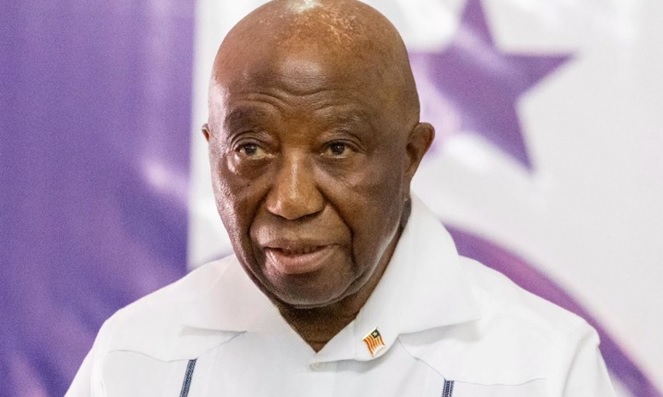
For nearly three years, President Joseph Nyuma Boakai Sr. has been answering one of the most persistent political narratives thrown against him: that because of his age, he would lack the stamina, strength, and capacity to effectively discharge the enormous responsibilities of the Liberian presidency.
The record of his presidency, however, provides a very different picture.
At 81, President Boakai continues to maintain a demanding public schedule that includes Cabinet engagements, national ceremonies, diplomatic meetings, public addresses, regional summits, and international travel. His administration has also maintained a busy schedule of presidential activities and official engagements. The Executive Mansion’s records show presidential addresses and official functions continuing throughout 2026, including a special address on the US$1 billion domestic revenue milestone on September 15 and remarks at a high-level women, peace, and security event on September 22.
Whatever one’s political opinion of President Boakai may be, the argument that age alone prevents him from carrying out the duties of the presidency cannot simply be assumed. His public schedule and continued participation in national and international affairs are matters that can be observed and documented.
THE POLITICS OF MENDACITY:
This brings us to the unfortunate politics of misinformation, disinformation, and utter lies.
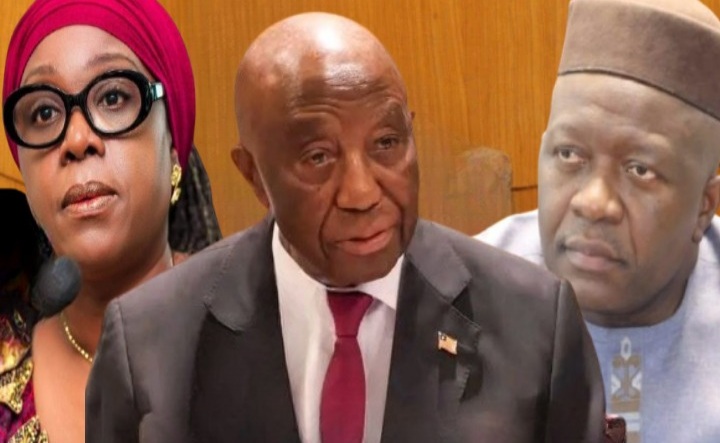
During the President’s current visit to New York for the 81st United Nations General Assembly, claims and images purporting to show him falling or collapsing have circulated in political discourse. Interestingly, President Boakai was sitting in the session yesterday morning, listening to other world leaders address the UNGA, when this fake AI image depicting him falling was being circulated on social media. Imagine how he felt. Such material should not be accepted as fact without verification. The Liberian public has already been warned by its own government about the circulation of fabricated and AI-generated material, underscoring the importance of authenticating politically sensitive information before sharing it.
In my view, such warning matters!
Artificial intelligence can now manufacture remarkably convincing images, documents, and videos. The danger is not merely that false information can embarrass an individual; it can also damage institutions, mislead citizens, and distort national debate.
Political opposition is legitimate. Criticism of a president is legitimate. Scrutiny of government performance is essential in any democracy.
But political competition should be built on facts, evidence, ideas, and policy alternatives, not manufactured lies.
If someone disagrees with President Boakai’s policies, let the disagreement be articulated. If there are failures in government, identify them. If there are weaknesses in the administration’s record, document them. If there are better solutions, present them to the Liberian people.
That is how serious and constructive politics is conducted.
WHEN THE PRESIDENT REPRESENTS LIBERIA, LIBERIA COMES FIRST:
There is another principle we should never lose sight of.
When the President of Liberia travels to the United Nations, he does not carry only the banner of the Unity Party. He carries the flag of the Republic of Liberia.
He represents a country whose history has been marked by war, suffering, reconciliation, and a long struggle to establish itself as a responsible member of the international community.
Political differences should not erase patriotism.
Whether one supports the President or opposes him, whether one belongs to the ruling party or the opposition, whether one’s political ideology is conservative, progressive, or somewhere in between, Liberia remains the common denominator.
We can disagree passionately about government while still wishing our country well.
Indeed, when a Liberian president stands before the international community, every Liberian should want him to represent the country with dignity and confidence. The office is temporary. Liberia is permanent.
RAISE THE BAR OF LIBERIAN POLITICS:
Liberia deserves a higher standard of political engagement.
Politics should be a competition of ideas. It should be about policies, development strategies, accountability, and competing visions for the future.
It should be about asking difficult questions and demanding answers.
It should be about exposing genuine failures, not manufacturing imaginary ones.
It should be about using facts intelligently and confronting one’s political opponents with evidence rather than misinformation.
Propaganda, in its most recognizable political form, is not simply criticism. It can involve manipulating facts, selectively presenting information, or creating false impressions to influence public opinion.
But there is a fundamental difference between exposing a genuine weakness in an opponent’s record and inventing a vicious falsehood only to paint a negative image of your opponent. This is unproductive politics and must never be the kind of politics we practice in Liberia.
The former is politics. The latter is misinformation.
And in the age of artificial intelligence, Liberians must become even more vigilant.
The world is watching Liberia. The political class must therefore understand that what is created for domestic political consumption can quickly travel beyond our borders and become a reflection of the country itself.
BOAKAI AT THE UNITED NATIONS:
President Boakai’s participation in UNGA 81 has already included a series of high-level engagements. Liberia’s official mission says the country’s priorities during the General Assembly include youth, women, climate change, peace and security, peacekeeping reform, sustainable development, and natural resources.
On the margins of the Assembly, President Boakai has also held diplomatic engagements, including a meeting with Kenyan President William Ruto that resulted in commitments to deepen cooperation in trade, investment, peace and security, alongside Liberia’s decision to establish a diplomatic mission in Kenya.
His General Debate address is scheduled for Thursday, September 24, 2026.
That is where the attention should be directed.
Let Liberia listen to what its President tells the world. Let him speak about Liberia’s journey from conflict to peace, the country’s development aspirations, the challenges confronting its young people, the importance of global peace and security, climate vulnerability, and Liberia’s responsibilities as a member of the United Nations community.
President Boakai will make Liberia’s case, and the nation must rally around him because it will be for us and about us as he speaks.
LIBERIA MUST RISE ABOVE POLITICAL PETTINESS:
The presidency will change hands someday. Presidents come and presidents go. Political parties rise and fall.
But Liberia remains.
This is why our politics must become more mature, more constructive, and more patriotic.
What those who oppose the Boakai government should do is challenge President Boakai intelligently, not discourteously. Question his policies wisely, relying on facts. Scrutinize his record impartially.
Demand accountability, but do it with facts.
Criticize the President and government with material evidence, not gossip from the rumor mill. Do it with ideas. Do it with dignity.
And above all, do not manufacture disaster for the country simply because the person leading the country belongs to a different political camp.
Liberia is bigger than Joseph Boakai. Liberia is bigger than the Unity Party. Liberia is bigger than the opposition. Liberia is bigger than every politician who temporarily occupies public office.
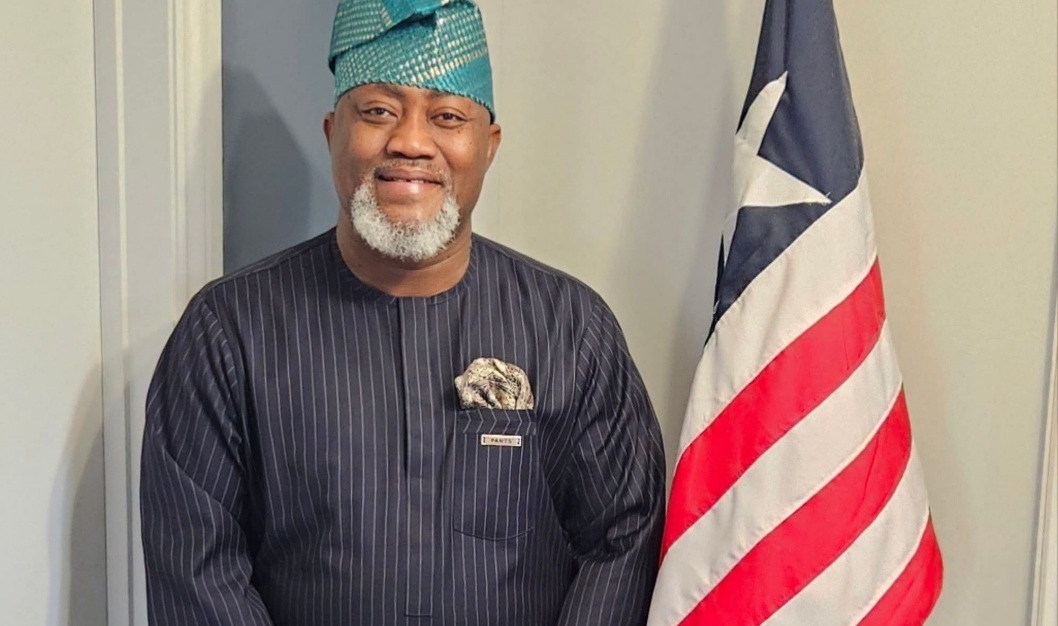
When Liberia’s President stands before the world, the flag behind him is not the flag of a political party. It is the flag of Liberia. And that flag belongs to all of us, not President Boakai or the Unity Party.