The Rival Political Forces That Challenged Liberia’s True Whig Party
By Lyndon Ponnie
For more than a century, Liberia’s political landscape was dominated by the True Whig Party (TWP), which became the country’s principal ruling political organization after the nineteenth century and eventually established an extraordinary grip over the state.
But by the 1970s, that political order was facing an intellectual and generational challenge.
At the center of the emerging opposition were two organizations that would become particularly important in Liberia’s political history: the Movement for Justice in Africa (MOJA) and the Progressive Alliance of Liberia (PAL).
They did not represent identical political philosophies, and their members did not always agree on strategy. But both emerged from a generation increasingly prepared to challenge Liberia’s established political order.
MOJA: THE RADICAL INTELLECTUAL CHALLENGE
MOJA emerged in the late 1960s and became one of the most influential progressive organizations in Liberia.
Its membership included young Liberian intellectuals, students, academics and professionals who were increasingly critical of Liberia’s political and economic structure.
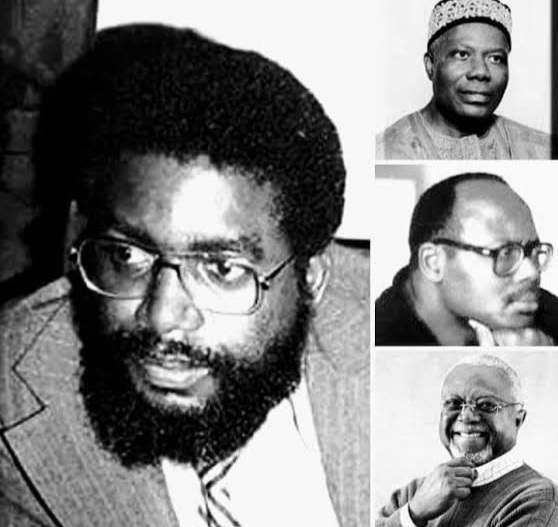
Among the figures associated with the progressive movement were Togba-Nah Tipoteh, Amos Sawyer, H. Boima Fahnbulleh Jr., Edward Kesselly and others.
MOJA’s politics were heavily influenced by Pan-Africanism, anti-colonial thought and socialist ideas.
Its members questioned why Liberia, despite its historical claim as Africa’s oldest independent republic, remained deeply divided by economic inequality and political privilege.
For MOJA activists, the problem was not simply who occupied the Executive Mansion.
The argument was about the structure of Liberian society itself
They challenged the concentration of political power, economic inequality and the dominance of a political establishment that had governed Liberia for generations.
PAL: THE PROGRESSIVE POLITICAL ALTERNATIVE
The Progressive Alliance of Liberia, commonly known as PAL, emerged as another important force within Liberia’s progressive opposition.
While MOJA developed primarily as a mass-based intellectual and political movement, PAL increasingly sought to translate progressive ideas into organized electoral politics.
The rivalry and differences between the progressive organizations reflected a broader question confronting Liberia’s opposition:
Should the existing political order be transformed through organized political participation, or did Liberia require a much more fundamental restructuring of the state and economy?
That debate would eventually contribute to the development of Liberia’s modern opposition politics.
THE TRUE WHIG PARTY UNDER PRESSURE
For the True Whig establishment, these organizations represented something different from the traditional political opposition.
Previous challenges to the TWP had often emerged from competing political personalities or elite factions.
MOJA and PAL introduced something potentially more disruptive: an ideological challenge.
They questioned the political assumptions upon which the existing system operated.
The progressive movement increasingly appealed to students, intellectuals, workers and sections of Liberian society that felt excluded from political and economic power.
The political debate was consequently moving beyond personalities.
It was becoming a debate over class, inequality, political representation, national identity and the distribution of economic power.
THE 1970s: WHEN THE OLD ORDER BEGAN TO CRACK
The rise of the progressive movement coincided with growing economic and social tensions.
Liberia’s economy was undergoing major changes, but the benefits of economic growth were unevenly distributed.
The William V.S. Tubman era had created a powerful political system, while President William R. Tolbert Jr. initially continued the True Whig tradition after Tubman’s death in 1971.
But Tolbert also attempted reforms.
The political environment became increasingly contested.
Progressive activists demanded greater political participation and economic reform.
The government, meanwhile, increasingly viewed sections of the progressive movement as a threat to political stability.
The confrontation reached a major turning point in 1979, when a proposed increase in the price of rice triggered mass demonstrations in Monrovia.
The Rice Riots transformed Liberia’s political landscape.
The protests demonstrated that opposition to the government was no longer confined to intellectual circles.
The political crisis exposed deep social and economic grievances and weakened the authority of the True Whig establishment.
FROM MOJA AND PAL TO THE COUP
The following year, Liberia’s political order collapsed.
On April 12, 1980, soldiers led by Master Sergeant Samuel K. Doe overthrew President Tolbert.
Tolbert was killed, and the True Whig Party’s long political dominance came to an abrupt end.
The irony of Liberia’s history is that the progressive organizations that had challenged the old order did not themselves take power.
Instead, the military seized power.
The People’s Redemption Council subsequently banned political parties and suspended constitutional government.
Thus, the political vacuum created by the collapse of the True Whig Party did not immediately produce the democratic progressive government many activists had envisioned.
THE PROGRESSIVE MOVEMENT’S LEGACY
The importance of MOJA and PAL therefore cannot be measured simply by whether they won elections.
Their greater historical significance lies in the political ideas they introduced into national debate.
They challenged the assumption that Liberia’s political system should remain dominated by a small political establishment.
They brought questions of social justice, economic inequality, Pan-Africanism, political participation and structural reform to the center of national political discourse.
Many individuals associated with the progressive movement would later occupy important positions in Liberian politics and government.
Some would become political leaders.
Others would become academics, diplomats, ministers and civil-society figures.
And some would eventually disagree sharply with one another over Liberia’s political future.
BUT MOJA AND PAL WERE NOT THE SAME
It is important not to collapse the two organizations into one.
MOJA and PAL operated within the broader progressive movement, but they had different organizational identities, political strategies and personalities.
Their differences reflected an important debate within Liberia’s emerging opposition:
Was the objective to reform the existing political system, replace it through electoral politics, or fundamentally transform Liberia’s socioeconomic structure?
That debate would continue long after the True Whig Party disappeared from power.
THE HISTORICAL CONNECTION TO TODAY
The political arguments of the 1970s may appear distant from contemporary Liberia, but many of the issues remain recognizable.
Who controls political power?
Who benefits from Liberia’s natural resources?
How should wealth be distributed?
What role should political parties play?
Should Liberia align itself more closely with African political movements or with its traditional Western partners?
And perhaps most importantly:
Can Liberia build a political system in which political power changes hands through institutions rather than through violence or military intervention?
These questions were already being debated by the progressive generation more than five decades ago.
MOJA and PAL did not overthrow the True Whig Party.
But they helped undermine the intellectual and political foundations upon which the old order rested.
The 1979 Rice Riots exposed the depth of public dissatisfaction.
The 1980 coup destroyed the TWP’s political monopoly.
And the progressive movement left behind an intellectual legacy that would continue to influence Liberia’s politics long after the True Whig Party disappeared from government.
To understand modern Liberia’s political divisions, therefore, one must go back beyond the CDC, UP, Unity Party and today’s political contests—to the generation of MOJA and PAL that first mounted a sustained ideological challenge to the True Whig establishment.
Part 3 will examine how the progressive movement evolved after the 1980 coup—and how some of the same political actors and ideas eventually resurfaced in Liberia’s later democratic struggles.