NEW YORK — President Joseph Nyuma Boakai has taken Liberia’s escalating drug-trafficking issue to the forefront of global diplomacy, urging the international community to recognize that the country cannot tackle increasingly advanced transnational criminal organizations on its own.
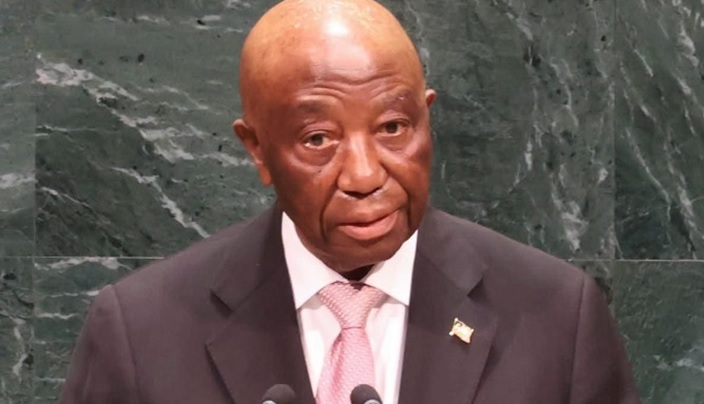
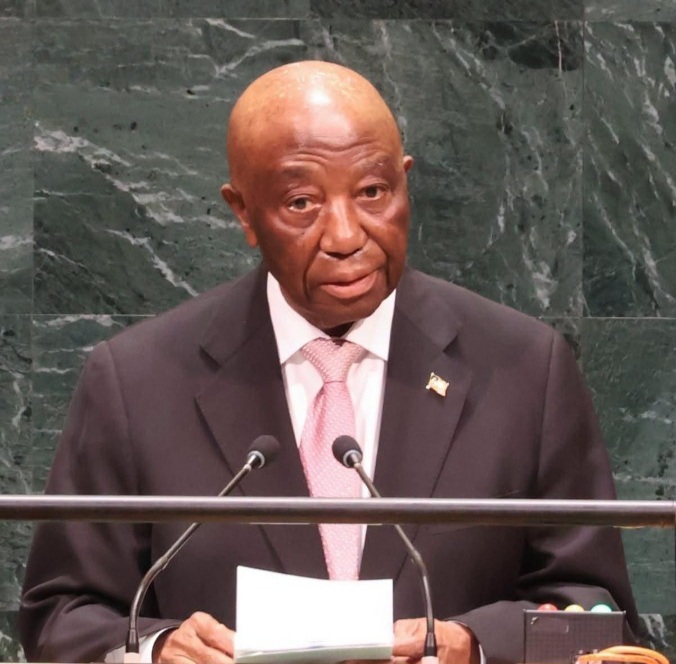
Speaking at the 81st Session of the United Nations General Assembly in New York, Boakai highlighted drug trafficking as a critical issue alongside terrorism, cyber warfare, and other emerging security challenges facing West Africa.
He made a direct appeal for international help to bolster Liberia’s border and maritime security.
The message from the Liberian leader was clear: Liberia requires assistance.
Moreover, the support he seeks extends beyond just financial aid. Boakai specifically requested enhanced coast guard surveillance, intelligence sharing, and advanced port-security technologies to improve Liberia’s capacity to identify and disrupt international drug trafficking networks operating in the Gulf of Guinea.
“As a current member of the United Nations Security Council,” Boakai stated to world leaders, “Liberia is putting these principles into practice while confronting evolving threats across West Africa, including transnational organized crime, cyber warfare, and illicit narcotics trafficking along maritime corridors in the Gulf of Guinea.”
He then made a poignant appeal: “Through our Joint Security forces, we are tightening the vise on transnational drug cartels,” adding, “No nation can police global criminal networks alone.”
That statement may ultimately stand out as one of the most significant points of Boakai’s address.
The President wasn’t just labeling the drug issue as a social crisis in Liberia; he was framing it as a global challenge to security and criminality.
LIBERIA’S DRUG WAR GOES INTERNATIONAL
For many years, Liberia has faced challenges with narcotics that extend beyond just local use.
International evaluations have pointed out that Liberia’s location near key West African drug-transit routes, along with its limited law enforcement capabilities and weak border controls, creates opportunities for traffickers.
Reports from the U.S. have highlighted cocaine and heroin being trafficked to and through Liberia, with connections to criminal networks from Nigeria and other nations involved in these activities.
This context makes Boakai’s appeal to the United Nations particularly important.
The President is essentially urging the global community to assist Liberia in securing a part of a worldwide supply chain that neither starts nor ends in Liberia.
The geographical aspect is crucial; the Gulf of Guinea serves as a significant maritime route, and West Africa has long struggled with issues stemming from transnational organized crime and trafficking networks.
United Nations officials have previously cautioned that drug trafficking and other forms of transnational crime can worsen insecurity and destabilize the region.
Boakai’s message is clear: if the networks operate on an international scale, then the response must also be international.
“NO NATION CAN POLICE GLOBAL CRIMINAL NETWORKS ALONE”
The President’s speech featured a clear appeal to the international community. He recognized that Liberia is already taking action, with joint security forces intensifying their efforts against drug cartels.
However, he also pointed out the limitations of the country’s resources. This is where he seeks assistance from international partners.
His request for coast guard surveillance highlights the extensive Atlantic coastline of Liberia.
Additionally, the call for intelligence sharing emphasizes the necessity of understanding the drug trafficking routes, including their origins and destinations, as well as the networks involved.
The push for enhanced port-security technology addresses a critical vulnerability in maritime trafficking: the handling of cargo at ports.
Boakai conveyed that Liberia cannot solely rely on arrests to tackle a problem that involves organizers, financiers, suppliers, and routes that may span multiple countries.
He stressed that the international community must step in to help bridge these gaps.
A SECURITY COUNCIL’S MEMBER WARNING
There’s another reason why Boakai’s appeal is particularly significant this year. Liberia is no longer just a small West African nation asking for help at the General Assembly. It currently holds a position as a non-permanent member of the UN Security Council.
This Council is responsible for maintaining international peace and security, and Liberia’s new role places Monrovia at the heart of some of the most important discussions regarding conflict, organized crime, and global security.
This context gives Boakai’s warnings about transnational criminal networks a new level of importance.
He wasn’t just addressing Liberia; he was talking about the entire region and possibly a threat that goes well beyond it.
The UN has recognized transnational organized crime and trafficking as significant threats that can overlap with larger security issues throughout Africa.
A 2026 UN counter-terrorism report specifically points out the link between maritime insecurity and transnational organized crime in African waters, including the Gulf of Guinea.
THE KUSH GENERATION AND THE INTERNATIONAK SUPPLY CHAIN
But behind the President’s diplomatic language lies a pressing issue that many Liberians face in their daily lives.
Drug trafficking extends beyond just ships, ports, borders, and international crime syndicates.
It also encompasses the aftermath of drug arrival. It affects young individuals, communities, addiction rates, crime levels, families, and an entire generation that is increasingly vulnerable to harmful substances.
Reports from the U.S. have highlighted the widespread use of locally consumed cannabis and raised alarms about other drugs, such as heroin, cocaine, and the so-called “kush,” indicating that drug use among the youth in Liberia is becoming a growing public concern.
This means that the President’s appeal at the UN addresses two critical aspects: the security fight against traffickers and the social and public health challenges posed by the consequences of drug use. Addressing one without the other will not resolve the ongoing crisis.
FROM THE PORT TO THE STREET
Boakai’s appeal for international assistance goes beyond just a plea for equipment.
A sophisticated surveillance system could help spot a suspicious vessel. Improved intelligence might uncover a trafficking network. Enhanced port security could stop a shipment from reaching the country.
Howbeit, these measures alone do not address the plight of the young Liberian who is already struggling with addiction.
That calls for a more comprehensive approach: treatment, prevention, education, community intervention, law enforcement, and international collaboration.
Boakai’s speech did not linger on these domestic issues. Instead, he concentrated on the international framework needed to disrupt the supply chain, which was a strategic choice.
At the UN, the President was addressing the governments and institutions that have the capabilities that Liberia lacks.
A COUNTRY ASKING FOR TOOLS
Boakai’s request was notably specific, which reveals a lot about his intentions.
He didn’t just say, “Help Liberia fight drugs.” Instead, he mentioned specific tools: surveillance, intelligence, and port security.
This level of detail adds a practical aspect to his appeal. The President is essentially asking international partners to assist Liberia in enhancing its vision, knowledge, and security at its maritime entry points.
The real question now is what will happen following the speech. Will international partners take action?
Will Liberia’s security agencies get the technology and training they need?
Will the arrangements for sharing intelligence become more robust?
Will maritime surveillance see improvements? Will ports be made more secure against traffickers?
And perhaps the most crucial question: will the increased pressure on traffickers lead to a reduction in the number of drugs reaching communities in Liberia?
These questions can’t be resolved from the UN stage; they will unfold over the coming months and years.
A MESSAGE BEYOND LIBERIA
Boakai’s main argument at the United Nations focused on the need to restore trust in multilateralism.
However, his appeal regarding drug trafficking provided a clear and practical example of why he believes multilateral cooperation is essential.
Criminal networks do not recognize national borders, and neither should our responses to them.
A shipment might start thousands of miles away, a vessel could traverse multiple jurisdictions, and the money may flow through yet another country.
The organizers might never even set foot in Liberia. Still, the drugs can find their way into the hands of a teenager in Liberia.
This illustrates the structure of transnational crime. That’s exactly why Boakai emphasized to the world that Liberia cannot tackle this issue alone.
THE QUESTION NOW RETURNS HOME
Despite the global attention his remarks garnered, the President’s toughest challenge may arise once the applause dies down in New York.
Seeking assistance from the world also brings responsibilities for Liberia. International allies can offer surveillance tools, share intelligence, train security forces, and enhance port controls.
Howbeit, Liberia must guarantee that these resources are utilized effectively.
The nation needs to coordinate its security agencies, bolster investigations, and maintain the integrity of its ports and borders.
Additionally, it must ensure that those responsible for combating international criminal networks possess the necessary institutional capacity and accountability to fulfill their roles.
Boakai has now placed this issue firmly in front of the global community. The real question is whether the world will respond.
THE DRUG WAR AT LIBERIA’S DOOR
In New York, President Boakai addressed issues surrounding drug cartels, maritime routes, and international security.
However, in Liberia, the impact is much more personal. It manifests in homes, neighborhoods, schools, and hospitals.
Communities are grappling with the alarming rise of dangerous drugs among the youth.
This is why the President’s message at the United Nations warrants attention beyond mere diplomatic headlines.
He has recognized a critical truth that Liberia can no longer overlook: the drug crisis is not just a local issue. It extends to the country’s borders, its maritime zones, intelligence operations, security measures—and it is fundamentally an international challenge.
If the networks involved in drug trafficking operate across borders, Liberia will require more than just resolve to combat them.
The nation will need allies, advanced technology, intelligence capabilities, secure ports, and a comprehensive national strategy that targets both the traffickers and the severe repercussions of their activities.
President Boakai has made this appeal to the world; now the real challenge lies ahead.
Liberia must transform this call to action at the United Nations into tangible efforts on the Atlantic, at the country’s ports, across its borders, and ultimately within the communities affected by these drugs.