From the United Nations to the streets of Monrovia, the pressing question is whether Liberia’s powerful words on trust, drugs, development, corruption, and global reform can translate into real change at home.
Some speeches are crafted for the global audience, while others must resonate within the nation itself.
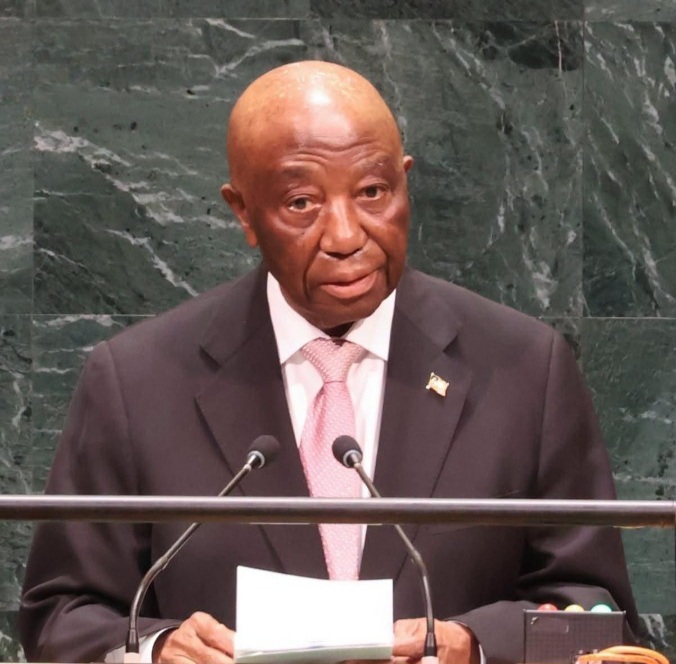
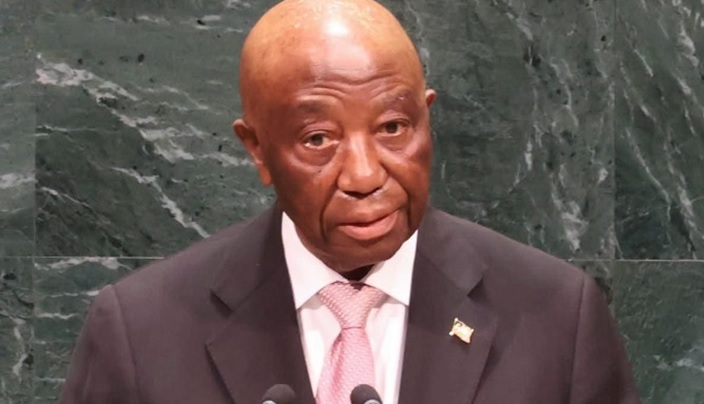
President Joseph Nyuma Boakai’s address at the 81st Session of the United Nations General Assembly was, at first glance, a commentary on global issues—wars, a fractured multilateral system, the climate crisis, financial disparities, artificial intelligence, and the future of the UN.
Howbeit, for Liberians, the more pressing inquiry is much closer to home: What does all of this signify for the average Liberian?
What does “restoring trust” mean for the market woman grappling with soaring prices?
What does “managing transformation” signify for the young man on the hunt for employment?
What does reforming the international financial system imply for the farmer who needs better roads to transport his goods?
And what does Liberia’s caution about transnational drug trafficking mean for a generation facing the harsh realities of illicit drugs?
These are the critical questions that will determine if the President’s speech in New York becomes just another diplomatic statement or a pivotal declaration of national intent.
Boakai didn’t attend the United Nations simply to celebrate Liberia’s past; he invoked it.
He reminded the world that Liberia was one of the African nations that signed the UN Charter in 1945 and showcased the country’s journey from civil strife to constitutional democracy as proof that even broken institutions can be restored. That history is significant.
Liberia understands the consequences of institutional collapse, the erosion of trust, and the rise of violence over governance. The nation has endured the cost of these failures for far too long.
Today, Liberia holds a seat on the UN Security Council for the 2026–2027 term, which allows the country to participate in discussions about international peace and security. This role amplifies Monrovia’s voice on the global stage, but it also raises expectations.
If Liberia advocates for restoring trust worldwide, its citizens will understandably question whether that trust is being rebuilt at home. This is where the conversation shifts from mere diplomacy to real accountability.
Boakai addressed world leaders, emphasizing that his administration is focused on enhancing public accountability, managing finances wisely, combating corruption, and supporting the judiciary to rebuild citizens’ trust. These are significant promises.
However, Liberians will ultimately judge their effectiveness not by the applause received in the General Assembly Hall, but by the tangible changes seen in government offices, courtrooms, schools, hospitals, police stations, and communities.
Trust isn’t built through speeches alone. It develops when citizens witness transparency in public spending, when justice is within reach, when government services function effectively, when the law is applied fairly to everyone, and when the promises made by the government translate into real outcomes.
THE DRUG WAR COMES HOME
One of the most important parts of Boakai’s address was his choice to frame Liberia’s battle against illegal drugs within the larger context of international security.
He informed the global audience that Liberia is facing challenges from transnational organized crime and drug trafficking along the maritime routes in the Gulf of Guinea.
Then he made a direct appeal: “No nation can police global criminal networks alone.”
He emphasized that Liberia requires international assistance for coast guard monitoring, intelligence sharing, and port security technologies.
This appeal is crucial because it acknowledges a growing understanding among Liberians: the drug issue cannot be viewed merely as a local crime problem. It also encompasses border security, maritime safety, intelligence operations, public health, and increasingly, national security.
The President had already cautioned in August that the fight against drugs must be paired with enhanced border security, and his administration has instructed security agencies to ramp up their efforts.
Bringing this message to the United Nations shifts the focus from a domestic issue to a global call for help.
Howbeit, Liberians will still wonder: What comes next? Will international support lead to better surveillance along Liberia’s coast? Will intelligence-sharing agreements be put into action? Will ports now get the necessary technology and equipment to combat trafficking?
Will law enforcement agencies have the necessary resources and expertise to track criminal networks beyond just arresting individuals?
More importantly, will the country also address the demand side of the crisis through prevention, treatment, rehabilitation, education, and employment?
Lest we forget, the drug crisis involves not only those who traffic drugs but also the young Liberians who are consuming them.
FROM ARREST TO RESULTS
Boakai’s key focus for domestic development—the ARREST Agenda for Inclusive Development—has also been presented to the international community.
The national development plan outlined by the government addresses critical areas such as Agriculture, Roads, Rule of Law, Education, Sanitation, and Tourism, and is described by official sources as the blueprint for Liberia’s development program from 2025 to 2029.
However, the acronym “ARREST” needs to signify more than just a catchy title. For the people of Liberia, it should mean building roads that link farms to markets, establishing schools where children can truly learn, and creating hospitals that provide dependable care.
It should lead to cleaner communities, more productive farms, increased private investment, greater opportunities for the youth, and trustworthy institutions.
The President noted that his administration has made strides in revenue management and infrastructure, particularly in rural road development.
This progress should be evaluated carefully—not just celebrated without thought or dismissed outright. It should be measured, because the primary audience for ARREST is not the international community, but the citizens of Liberia.
THE PRESIDENT’S BIGGER MESSAGE
Boakai also drew on Liberia’s experiences to highlight a broader issue of global inequality. He emphasized the need to reform the international financial system, arguing that developing nations are being pressured by debt, limited fiscal resources, and external shocks.
For a nation like Liberia, this isn’t just a theoretical discussion. Every dollar allocated to debt repayment is a dollar that can’t be used for other essential needs.
Financial limitations can impact infrastructure, electricity, healthcare, education, and job creation. Every decision made in international finance can ultimately affect a household in Liberia.
Consequently, the President contended that developing countries should have a stronger voice in institutions like the World Bank and the International Monetary Fund.
He also brought Liberia’s climate vulnerabilities to the forefront, citing issues like coastal erosion, flooding, and shifting agricultural patterns, while also emphasizing the importance of Liberia’s rainforest resources.
The message is unmistakable: Liberia seeks global acknowledgment that nations contributing minimally to global emissions can still face severe repercussions from climate change.
Howbeit, this argument carries an additional responsibility. If Liberia urges the world to value its forests, it must also commit to their protection.
If it seeks climate financing, it must show the ability to manage those resources with transparency.
If Liberia calls on international institutions to rebuild trust, it must exhibit that same level of discipline within its own borders.
THE YOUTH QUESTION
Some of the most crucial points in the speech didn’t focus on presidents, diplomats, or international organizations. Instead, they highlighted the importance of young people.
Boakai emphasized Africa’s youthful population and urged for increased investment in STEM education, digital skills, and technical training.
This is particularly urgent for Liberia. A young population has the potential to be a remarkable national asset. However, without jobs, skills, and opportunities, youth unemployment and discontent can lead to instability.
Thus, the issue extends beyond just education. It concerns whether Liberia can develop an economy that can support the generation reaching adulthood.
The President’s message at the UN was clear: African youth should not just be consumers of technology developed elsewhere; they should also be innovators.
This is a bold vision. Yet, ambition must translate into tangible resources like classrooms, laboratories, internet access, vocational training centers, electricity, funding, and job opportunities.
THE REAL TEST BEGINS AFTER NEW YORK
Boakai concluded his speech by highlighting Liberia’s significant role in the founding of the United Nations, asserting that Liberia is prepared to assist in “saving mankind from the scourge of war.” It was a powerful ending.
However, Liberia’s most vital contribution to this global mission may start with something much more fundamental: creating a nation where its citizens can trust their institutions.
The President addressed the assembly in New York, discussing a world plagued by a lack of trust. Liberia has firsthand experience with broken trust.
It understands the consequences when citizens lose faith in their government.
It recognizes the toll of institutional failures, the cost of conflict, and the challenges of nation-building compared to destruction.
This is why President Boakai’s speech at UNGA81 resonates with Liberians.
It’s not just because it was delivered under the flags of nearly two hundred nations or because it was heard by diplomats and global leaders.
It matters because every promise made in New York must eventually return home.
The appeal for international assistance against drug trafficking needs to reach Liberia’s ports and borders.
The demand for financial reform must impact the national budget.
The assurance of accountability must resonate within government ministries.
The commitment to youth must translate into opportunities in classrooms and workplaces.
The climate message must be felt in coastal communities and among farmers.
The promise of development must extend to roads, hospitals, schools, and villages far beyond Monrovia.
Ultimately, the call to restore trust must return to the Liberian people.
The brief address President Boakai gave in New York lasted only a few minutes, but the commitment Liberia must now fulfill through action will take years, and that is the real speech.
And indisputably, history will judge the second one—not based on the words spoken under the chandeliers of the United Nations, but on the changes that occur within the homes, streets, and communities of Liberia.
Boakai’s address certainly provides Liberia with a compelling international story, but its true importance for the people will hinge on tangible outcomes in their own country.