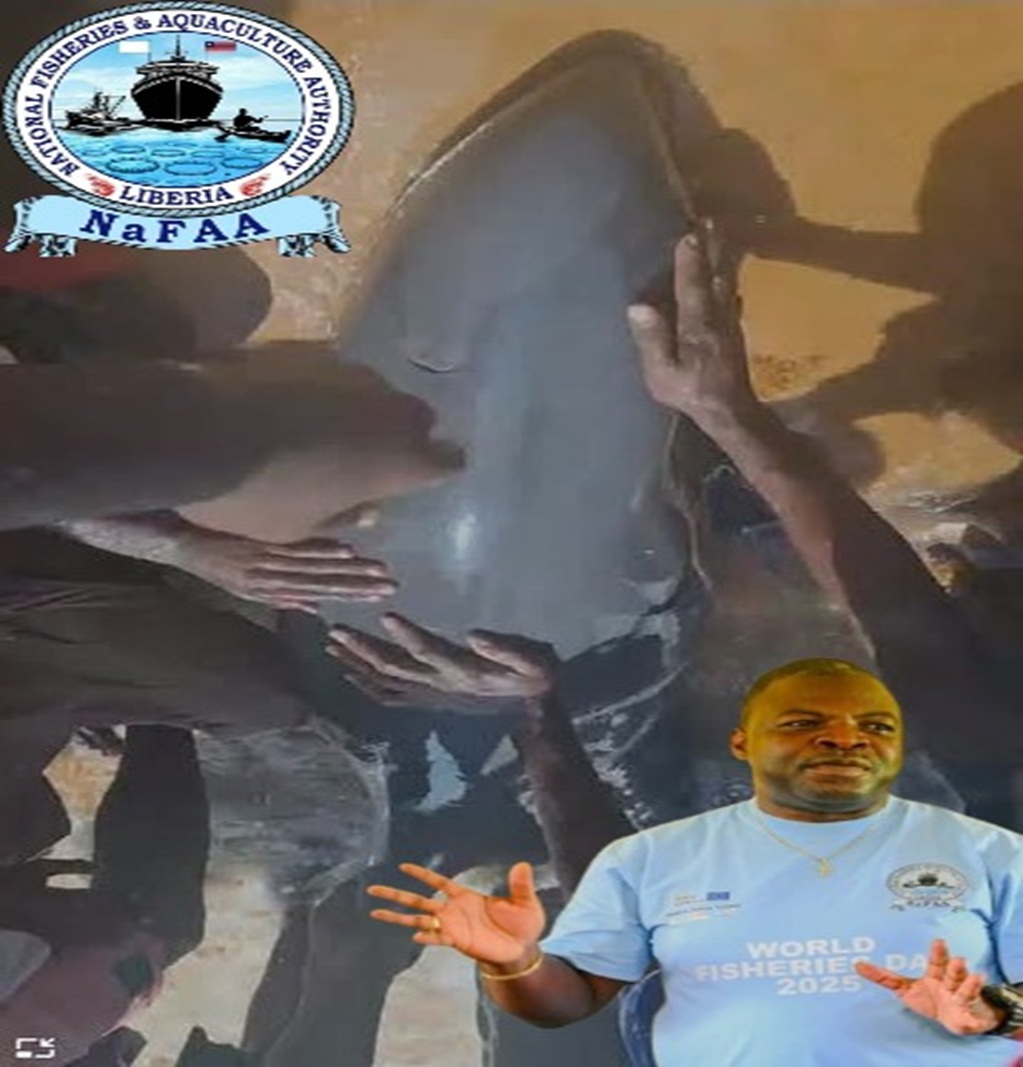
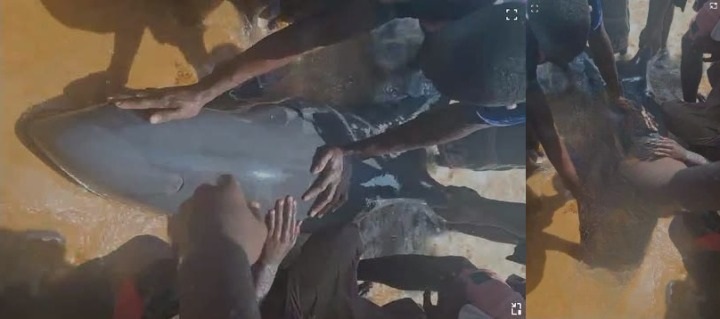
The incident involving a dolphin at Miami Beach calls for immediate public health measures, accountability from officials, and a renewed partnership between coastal communities and the government.
Sometimes, a single event along a nation’s coast can highlight a much larger issue. The death of a dolphin at Miami Beach, along with the subsequent killing and distribution of its body among local residents, serves as a critical moment for Liberia.
In a Facebook post on Sunday, October 25, Cyrus Saygbe Sr., the Director General of the National Fisheries and Aquaculture Authority (NaFAA), expressed his sorrow over the situation, stating: “It’s sad to report that the dolphin discovered on Miami Beach earlier 2day did not survive before our team arrived at the scene. The community helped but later killed and shared it.”
These words should alarm every Liberian who values public health, food safety, environmental conservation, and the government’s duty to protect human life.
The dolphin is gone, and its body has reportedly been cut up and shared. Howbeit, the pressing concern now is for those who may have consumed its flesh; what risks have they posed to themselves and their families, and what actions are the authorities taking to ensure their safety?
This is not a time for mockery, public shaming, or hasty judgments. It is a time for scientific inquiry, urgency, empathy, and decisive action from the government.
The danger is not always visible—and cooking may not remove it. When a dolphin washes ashore, it’s not just another fish caught in a net. This marine mammal’s presence on a beach, especially if it’s dead or in distress, could indicate a deeper issue that needs to be looked into.
The dolphin might have succumbed to natural causes, injuries, entanglement, infections, environmental pollution, or something else entirely.
Currently, the information available to the public does not clarify what caused the incident at Miami Beach. We shouldn’t assume we know what led to the dolphin’s death. Howbeit, this uncertainty is exactly why consuming the animal could be risky.
Dolphins are at the top of the marine food chain. As they eat other marine creatures throughout their lives, harmful substances like mercury and certain persistent pollutants can build up in their bodies.
Research has shown alarming levels of mercury, polychlorinated biphenyls (PCBs), and other toxins in some dolphin and whale products.
A peer-reviewed study published in April 2026 also pointed out the potential for human exposure to PFAS—chemicals that linger in the environment and can accumulate in marine mammals, posing health risks even at low exposure levels.
The consequences are serious. Methylmercury can harm the nervous system, and prenatal exposure can negatively affect a child’s developing brain.
Some persistent pollutants can have harmful effects on the immune, reproductive, and other bodily systems. The uncomfortable reality is that a dolphin may appear perfectly healthy while harboring dangerous levels of chemical contaminants.
On the other hand, a dolphin that is sick or has died under mysterious circumstances raises further concerns about potential infectious risks.
Cooking methods such as smoking, drying, or frying the meat do not reliably remove mercury or all persistent chemical pollutants. While proper cooking can eliminate many pathogens, it cannot ensure that meat from a dolphin that died under unexplained circumstances is safe to eat.
These issues are highlighted in research regarding marine mammal consumption and in a recent review of the health risks linked to dolphin and whale meat.
They serve as reasons for caution, but they do not prove that everyone who consumed the Miami Beach dolphin has been harmed. The immediate concern is the health of those who ate it.
Liberians need to avoid two dangerous extremes; dismissing the incident as harmless simply because the meat was cooked, or claiming that everyone who consumed it has been poisoned. Neither conclusion is supported by the current scientific evidence. The right course of action is to conduct urgent medical and public health assessments.
One major concern is foodborne illness. If the animal’s body was decomposing or contaminated during handling, consumers might have been exposed to harmful microorganisms. Depending on the pathogen and level of exposure, symptoms could include vomiting, diarrhea, abdominal pain, and fever.
Handling infected tissue can expose individuals through cuts or breaks in the skin. Another issue to consider is chemical contamination. Exposure to mercury may not lead to immediate symptoms after consumption, as its effects vary based on the quantity ingested, the concentration in the meat, and the individual’s cumulative exposure. This makes it particularly risky to assume that not feeling ill right away means the meat was safe to eat.
Special attention should be given to pregnant women, women who might become pregnant, infants, and children, as their developing nervous systems are particularly susceptible to mercury.
Anyone who has consumed the meat should reach out to a healthcare professional or public health authority for guidance, even if they feel fine at the moment.
Those experiencing severe or ongoing symptoms should seek urgent medical attention.
Additionally, people who handled the carcass, especially if they have cuts or wounds, should inform their clinician about their exposure.
This is not a message to incite panic but rather a call for responsible medical follow-up to prevent unnecessary suffering.
The government’s response needs to go beyond merely expressing sorrow over the dolphin’s death.
A statement acknowledging that an animal died and was shared among residents identifies the incident but does not address the public health risk.
According to multiple medical professionals, including cetologists and aquatic veterinarians, at least six immediate actions are necessary.
First, it’s important to identify and reach out to those who consumed the meat. NaFAA should collaborate with the Ministry of Health, health authorities in Montserrado County, community leaders, and local healthcare facilities to determine how widely the meat was distributed.
Officials need to approach residents in a respectful and confidential manner, finding out how many people ate the meat, when they did so, how it was prepared, which parts were consumed, and if anyone has shown symptoms.
The goal should be protection rather than humiliation or punishment. If people are afraid of being publicly identified, they may hesitate to share their exposure, which could hinder the public health response.
Next, a rapid medical risk assessment should be organized. The Ministry of Health ought to provide guidance to those affected and set up clinical assessments for individuals who consumed the meat or had significant exposure while handling it.
Healthcare workers should be informed about the incident and the potential infectious and toxicological risks involved.
Clinicians and public health specialists need to decide if individual examinations, targeted lab tests, or other follow-ups are necessary.
Testing should be tailored based on exposure history and clinical evaluations. Not everyone who ate the meat will need the same tests, and a single routine blood test won’t rule out all possible hazards.
Lastly, any remaining meat should be recovered and subjected to scientific testing. If there are still portions of the dolphin left, authorities must secure them urgently while minimizing risk to others. Trained personnel should gather the necessary samples for laboratory analysis.
The investigation should focus on mercury and other relevant contaminants, along with potential infectious causes, based on expert recommendations and the available laboratory resources.
Veterinary and marine mammal specialists need to assess whether any remaining tissues, photographs, or other evidence can shed light on the animal’s condition and the possible cause of death.
Officials must be open about what testing can and cannot determine. If the carcass has been entirely consumed or disposed of, this limitation should be acknowledged rather than hidden.
Additionally, an immediate public warning should be issued. NaFAA and the Ministry of Health should work together to inform residents of Miami Beach and nearby communities not to consume any remaining meat from this dolphin and to avoid collecting or eating other stranded or unexplained dead marine animals.
The warning must be communicated in clear language that people can understand and through channels they actually use, such as radio, community announcements, local leaders, social media, newspapers, and direct engagement with beach residents. It should clarify why an animal that appears edible might be unsafe, what symptoms require medical attention, whom to contact, and where to seek advice.
The warning must not misleadingly imply that every stranded dolphin poses a deadly risk. Its message should be straightforward; any unexplained marine mammal death needs professional evaluation before any decisions about handling or consumption are made.
Finally, it’s essential to investigate the circumstances surrounding the incident. The public deserves a transparent account of what transpired from the dolphin’s discovery to the arrival of NaFAA’s team. When was the animal first spotted? Was it alive, injured, or already dead when residents found it? When was the authority notified? Who tried to help the animal? How long did the response take, and what hindered securing the carcass before it was divided?
These questions are valid and should not be seen as accusations of misconduct. The investigation needs to clarify the facts, pinpoint any breakdowns in communication or emergency response, and suggest necessary improvements.
If any unlawful behavior is uncovered, it must be addressed through the proper legal channels.
Furthermore, it’s crucial to set up a permanent coastal marine-wildlife response system. Liberia cannot afford to treat each stranded whale or dolphin as a separate emergency.
The National Fisheries and Aquaculture Authority should collaborate with the Ministry of Health, environmental agencies, local governments, fishing groups, and community leaders to create a clear protocol for reporting and responding to such incidents.
Every major coastal community should be informed about whom to contact, what details to share, and how to act while waiting for trained responders to arrive. This system should encompass trained responders, suitable protective gear, methods for documenting fatalities and gathering samples, safe management of carcasses, and a public education initiative.
The authorities need to confirm and make public the proper emergency reporting procedures for stranded marine wildlife, ensuring that these arrangements are in place even outside of regular office hours.
Miami Beach must not serve as another reminder of Liberia’s forgetfulness.
There is a concerning precedent. In February 2026, a dead whale washed up on Sheri Beach in Monrovia. By the time the authorities arrived, the carcass had reportedly been dismembered and distributed.
An investigation by FrontPage Africa and New Narratives revealed health risks, a lack of public awareness, and the absence of clear reporting protocols for beach residents.
That previous incident should have served as a warning. The recurrence of similar issues raises an important question; have the lessons learned been transformed into practical measures that coastal communities can comprehend and utilize?
It would be unjust to conclude that every response system has failed based solely on these incidents. Howbeit, it would also be irresponsible to overlook the pattern and wait for another carcass to wash up on the shore.
For many households along the coast, access to affordable food is a real concern. The urge to salvage meat from a large animal may stem from economic difficulties, opportunity, tradition, or a mix of these factors.
Authorities should strive to understand these realities instead of dismissing residents as uninformed or reckless.
Yet, food insecurity cannot erase the risks posed by unknown biological hazards. Communities should not be left to make critical health decisions without accessible information and a reliable emergency response system.
The state has a duty to safeguard public health, communicate potential risks, and ensure that people are informed about what to do when unusual marine animals are spotted along the coast.
This duty encompasses not only education but also preparedness, swift action, and accountability.
A final note for those who consume dolphin meat—and for Liberia’s authorities; to those who ate the dolphin from Miami Beach, there’s no need to panic, but it’s important not to ignore the concerns. Reach out to a healthcare professional or public health authority, be honest about what you consumed and when, and seek immediate medical attention if you experience any troubling symptoms. Don’t assume that cooking the meat made it safe or that feeling fine right after eating it means everything is okay.
To NaFAA, the Ministry of Health, and the broader government, your next public statement should be paired with concrete actions. Inform the public about what is known, what remains uncertain, how affected residents can access medical guidance, and what measures are being implemented to investigate the situation.
For community leaders and beach residents, a stranded dolphin is far from an ordinary sight. It’s crucial to keep people away from the carcass, refrain from touching or cutting it, and notify trained authorities. Even a live dolphin in distress could be seriously ill or injured, and should not be handled by those without proper training.
This incident should serve as a wake-up call for Liberia as a nation, prompting a deeper reflection on the connections between food security, public health, environmental protection, and government preparedness.
Currently, a dolphin was recently found dead at Miami Beach, and its body was reportedly shared among some individuals. We still do not know if anyone who consumed it will fall ill, whether it contained harmful contaminants, or what led to its death.
Howbeit, we do know that caution is essential. The true test of the government’s response will not be how quickly it provides an explanation for the dolphin’s death, but rather how effectively it safeguards those who may have eaten it—and whether it can prevent the next stranded marine animal from becoming a public health crisis.
Liberia must take action now, acting with urgency but without panic, showing compassion but avoiding complacency, and relying on scientific evidence instead of speculation.
The public deserves clear answers. Those who consumed the meat need proper care. And the next community that encounters a stranded dolphin should have a reliable response system in place before any drastic measures are taken.