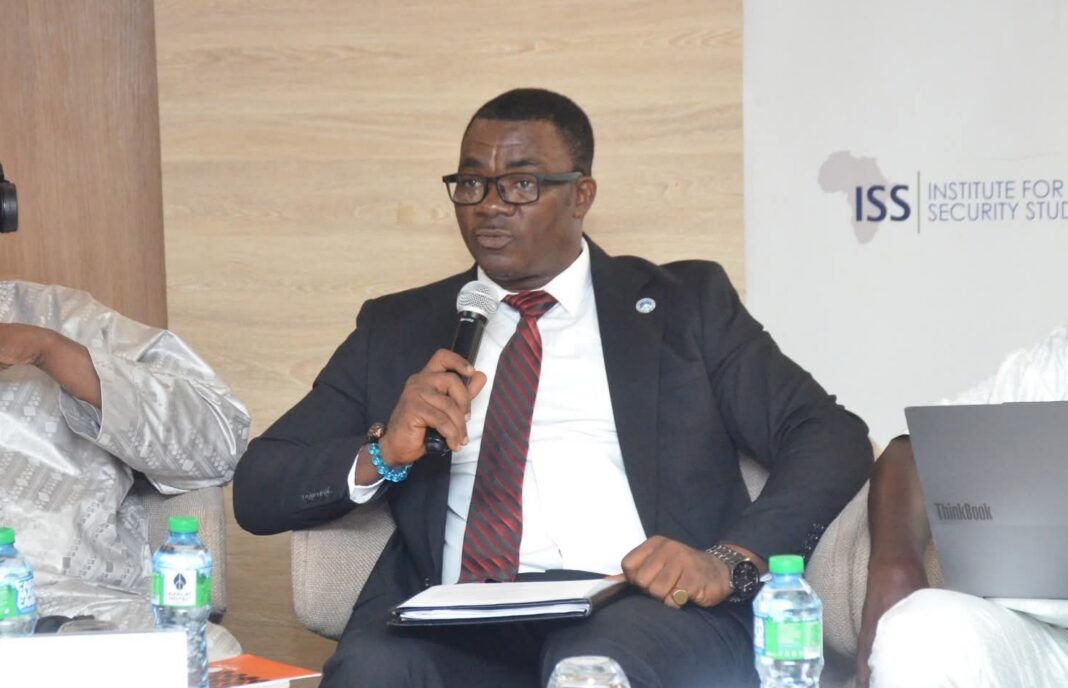
DAKAR, SENEGAL – Liberian human rights advocate Adama K. Dempster has called for sustained public pressure, stronger international partnerships, and alternative accountability mechanisms to prevent political resistance from derailing efforts to deliver justice for victims of Liberia’s civil wars.
Dempster, National Secretary General of the Civil Society Human Rights Advocacy Platform of Liberia and lead campaigner for the Coalition for the Establishment of War and Economic Crimes Court in Liberia, made the case during a two-day high-level transitional justice convening held in Dakar, Senegal, on October 19–20, 2026.
Addressing the topic Criminal Accountability Beyond Prosecution in Transitional Justice, Dempster argued that criminal accountability must remain a national priority even when official processes encounter legislative delays, political opposition, and institutional weaknesses.
His presentation examined Liberia’s transitional justice experience and outlined strategies civil society organizations could use to sustain public demand for accountability, preserve evidence, pursue cases beyond national borders, and connect justice for past atrocities with present-day governance reforms.
The intervention comes against the background of Liberia’s devastating civil wars, which lasted from 1989 to 2003 and left more than 250,000 people dead, while millions were displaced from their homes.
Although the conflict ended years ago, the pursuit of justice for serious wartime abuses remains a central issue in Liberia’s transitional justice debate.
Dempster’s presentation emphasized that the passage of time should not become a justification for abandoning the pursuit of accountability or allowing political considerations to determine whether victims receive justice.
Liberia’s Unfinished Transitional Justice Agenda
The Truth and Reconciliation Commission, established in 2005, was tasked with examining the causes and consequences of Liberia’s conflict and recommending measures to address the country’s painful history.
According to Dempster’s presentation, the commission identified deep-rooted inequalities, corruption, and an identity crisis among the factors contributing to the conflict. Its final report documented serious abuses committed by the various factions and recommended a range of measures intended to confront the consequences of the war.
Those recommendations extended beyond criminal prosecution.
They included the establishment of a special tribunal to prosecute serious crimes, reparations for individuals and communities, institutional reforms to strengthen the rule of law, community reconciliation through traditional Palava Hut forums, and national memorialization initiatives to honor victims and preserve collective memory.
Dempster’s central argument was that these measures must be understood as interconnected elements of transitional justice rather than isolated initiatives.
Criminal proceedings can establish individual responsibility for serious crimes, but the broader process must also address the conditions that allow impunity, corruption, institutional abuse, and political exclusion to persist.
Reparations can help restore the dignity of victims and affected communities, while institutional reforms can strengthen public confidence in government and reduce the risk of future abuses.
Similarly, community reconciliation and memorialization can preserve the experiences of survivors and ensure that the country’s history is not erased from public consciousness.
For Liberia, the challenge is how to advance these objectives when political disagreements and institutional delays obstruct implementation.
Keeping Accountability on the National Agenda
Dempster identified sustained civil society advocacy as one of the most important tools for maintaining pressure on political leaders.
He argued that accountability should not be treated as an issue reserved for human rights organizations, legal experts, or political elites. Instead, it should remain a public concern that citizens can raise through community meetings, radio discussions, social media campaigns, and public debates.
He pointed to Liberia’s 2023 elections as an example of how transitional justice issues can be introduced into national political discussions, including debates involving presidential and legislative candidates.
The broader lesson, according to the presentation, is that election campaigns provide opportunities for citizens to demand clear commitments from candidates on justice, institutional reform, and accountability.
However, keeping the issue alive requires more than raising it during election periods.
Civil society organizations must continue engaging communities and reminding elected officials that accountability is a public concern that does not disappear when electoral campaigns end.
This approach also places responsibility on citizens to question political leaders about their positions on transitional justice and the measures they intend to support.
Dempster’s presentation suggested that when official processes stall, civil society must prevent the resulting silence from being interpreted as public acceptance of inaction.
Consistent public engagement can keep the issue visible, encourage political debate, and make it more difficult for decision-makers to ignore demands for justice.
International Partnerships and Cross-Border Justice
The presentation also emphasized the importance of building strategic alliances with regional and international organizations.
Partnerships involving human rights groups, international nongovernmental organizations, the Economic Community of West African States, the African Union, and the United Nations can help strengthen advocacy efforts, provide technical support, and maintain attention on accountability when domestic political resistance persists.
Dempster further highlighted universal jurisdiction as another potential avenue for pursuing accountability for international crimes.
Under applicable national laws and international legal principles, certain serious crimes may be prosecuted in foreign jurisdictions even when the alleged offenses occurred outside those countries. The availability of this pathway depends on the relevant jurisdiction’s laws, the evidence, and the circumstances of each case.
The presentation cited the civil litigation brought in the United States by survivors of the St. Peter’s Lutheran Church massacre against former Armed Forces of Liberia commander Colonel Moses Thomas in 2021.
The case, supported by the Global Justice Research Project and the Center for Justice and Accountability, was presented as an example of how survivors and advocacy organizations can pursue accountability across borders.
The significance of such efforts extends beyond individual cases. They demonstrate how victims, civil society groups, and international legal networks can work together when domestic accountability mechanisms are unavailable or ineffective.
Dempster also pointed to immigration-related prosecutions in Europe involving allegations that individuals concealed wartime atrocities to obtain residency or citizenship.
Such proceedings can provide another avenue for examining allegations of past abuses, although immigration fraud cases and prosecutions for international crimes involve distinct legal questions.
For Liberia, these approaches illustrate why the pursuit of accountability cannot depend entirely on the progress of a single domestic process.
Evidence Preservation and the Risk of Lost Justice
Another major concern raised in the presentation was the need to preserve evidence while political and institutional processes continue.
Dempster argued that civil society organizations must continue documenting testimonies, collecting relevant records, and safeguarding information that could support future investigations and prosecutions.
The concern is particularly important in cases involving events that occurred decades ago, when witnesses may become unavailable, memories may fade, and documentary evidence may be lost.
Evidence preservation can help ensure that the passage of time does not unnecessarily weaken future cases.
The presentation also proposed low-cost digital platforms through which victims and citizens could submit testimonies, records, and other relevant information. Volunteers, students, and diaspora networks could assist with organizing and analyzing material, provided appropriate safeguards are in place.
Such initiatives would require reliable procedures for verifying information, protecting sensitive data, securing informed consent, and preventing the exposure or intimidation of witnesses.
The objective is not simply to accumulate information but to preserve credible, usable evidence that can support legitimate accountability processes.
Beyond Courtrooms and Criminal Trials
Dempster’s presentation stressed that criminal prosecution, although important, should not become the only measure of progress in transitional justice.
When prosecutions are delayed, other measures can help preserve victims’ dignity and maintain public recognition of past abuses.
These include reparations, public acknowledgment of wrongdoing, memorials, oral history projects, community museums, remembrance activities, documentaries, theatre, and educational materials.
The presentation also emphasized the importance of community-based reconciliation initiatives, including Palava Hut forums that provide opportunities for dialogue, acknowledgment, and reconciliation at the local level.
Such mechanisms are not substitutes for criminal accountability where prosecution is warranted. Rather, they can address additional needs that criminal proceedings alone may not resolve.
Dempster further proposed connecting transitional justice advocacy with contemporary governance concerns, including corruption, police brutality, poor public services, trafficking networks, and weaknesses in the rule of law.
By making these connections, civil society can demonstrate that accountability is not simply a debate about Liberia’s past. It is also a question of how the country governs itself today and what protections citizens can expect from public institutions.
A Test of Political Will
The message from Dempster’s presentation is that Liberia’s transitional justice process requires sustained public engagement, institutional commitment, and a willingness to pursue complementary avenues of accountability.
The Truth and Reconciliation Commission’s recommendations established an extensive agenda involving prosecution, reparations, institutional reform, reconciliation, and remembrance. Implementing that agenda requires more than accepting its historical importance.
It requires practical measures, credible institutions, adequate resources, and political decisions that translate recommendations into action.
Dempster’s intervention in Dakar placed particular responsibility on civil society to keep the issue alive through public campaigns, evidence preservation, international partnerships, and continued engagement with communities.
The challenge is whether Liberia can maintain that commitment long enough to ensure that the demands of victims and survivors remain central to national decision-making.
For a country still confronting the consequences of its civil wars, the pursuit of accountability is not only about determining responsibility for past atrocities. It is also about strengthening the rule of law, rebuilding public confidence, and ensuring that the passage of time does not erase the obligation to seek justice.