
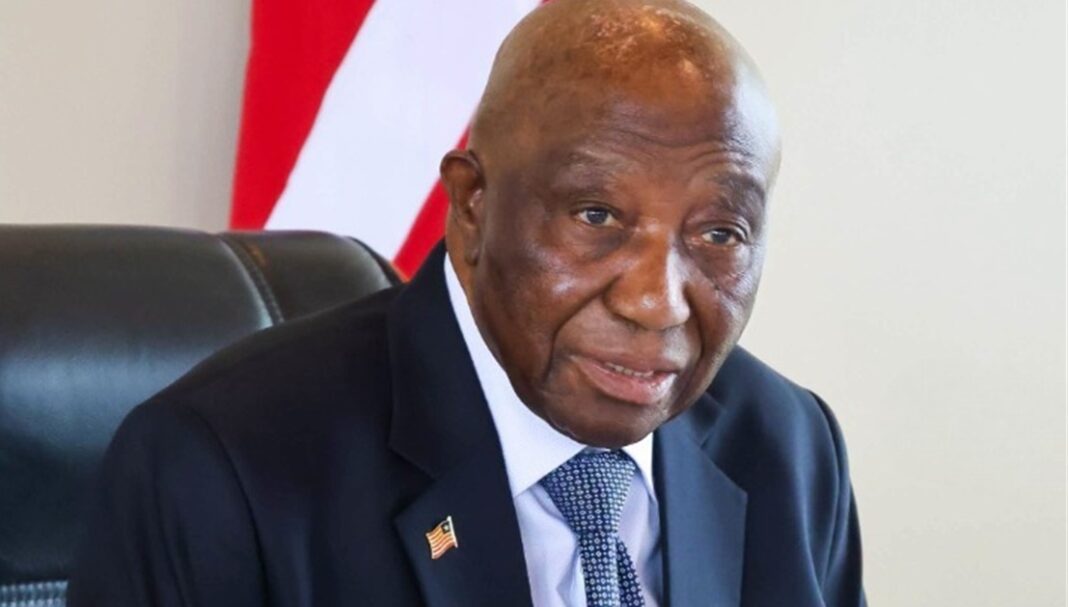
MONROVIA, LIBERIA – President Joseph Nyuma Boakai has initiated a major policy move aimed at strengthening Liberia’s commercial participation in its mineral sector, signing Executive Order No. 171 to establish an interim institutional mechanism responsible for developing the legal, financial, investment, and governance framework for a proposed National Minerals Company.
The initiative seeks to reposition the government’s participation in the mining industry beyond its traditional regulatory and revenue-collection responsibilities by exploring opportunities for the Republic to obtain greater economic benefits from its mineral resources through equity participation, strategic investments, mineral marketing, downstream processing, and other lawful commercial interests.
Under the Executive Order, the President establishes an Interim National Minerals Company Development and Transition Mechanism Council, a temporary inter-agency body mandated to undertake the technical, legal, financial, commercial, and institutional preparations necessary for the possible establishment of a National Minerals Company (NMC).
The decision is anchored in Article 22 of the Liberian Constitution, which provides that all minerals beneath the surface of Liberia belong to the Republic. It also recognizes the importance of ensuring that the country’s mineral wealth contributes more substantially to national economic growth, public revenue, employment, local participation, value addition, and the long-term welfare of the Liberian people.
Executive Order No. 171 reflects the administration’s recognition that possessing valuable mineral resources does not automatically translate into maximum economic benefits for the country. The government’s ability to participate commercially in the development and exploitation of those resources can also influence the extent to which national wealth contributes to domestic investment, employment creation, and sustainable economic development.
For Liberia, where mining remains an important component of the national economy, the proposed National Minerals Company represents an effort to establish a more structured mechanism through which the State could identify, manage, and potentially benefit from commercial opportunities associated with mineral development.
Under the proposed arrangement, the interim council will examine the Republic’s existing and potential commercial interests in mining projects, including equity interests, carried interests, citizen participation, contractual rights, infrastructure interests, mineral rights, geoscientific information, and other assets that could appropriately form part of a future State commercial participation strategy.
This assessment is particularly important because it would help establish a clearer understanding of the economic interests and opportunities available to the Republic within the mineral sector and identify lawful mechanisms through which those interests could be protected, developed, and managed.
The council is also expected to develop options for the acquisition, holding, management, valuation, investment, disposal, and realization of State equity interests in mining projects, subject to the Constitution and applicable laws.
Through this process, the government intends to examine how the country could participate more strategically in mineral investments while establishing appropriate financial and institutional safeguards for the management of public resources.
Another important dimension of the proposed framework is the promotion of domestic value addition and downstream processing.
Rather than concentrating exclusively on the extraction and export of raw minerals, the Executive Order directs the interim council to assess opportunities for mineral processing, mineral marketing, strategic partnerships, local procurement, skills development, and increased participation by Liberian businesses.
The emphasis on value addition carries important implications for Liberia’s long-term economic development. Greater domestic participation in mineral processing and related commercial activities could create opportunities for industrial development, technical skills acquisition, employment, and stronger linkages between the mining industry and the domestic economy.
The proposed National Minerals Company could also provide an institutional platform through which the Republic may explore strategic partnerships and investment opportunities that extend beyond the conventional relationship between government and mining concessionaires.
However, the extent of such participation will depend on the company’s eventual legal mandate, financial capacity, investment strategy, and ability to operate according to sound commercial principles.
To prepare the foundation for the proposed institution, Executive Order No. 171 assigns the interim council a broad mandate covering legal reviews, institutional assessments, commercial evaluations, and financial planning.
Among other responsibilities, the council must review Liberia’s existing legal framework governing mineral development, State participation, mining agreements, public assets, investment, taxation, procurement, public finance, and state-owned enterprises.
It must also determine the appropriate legal form, ownership structure, governance model, capitalization requirements, operational mandate, and accountability arrangements for the proposed company.
The Ministry of Mines and Energy will exercise direct supervision over the interim council, while representatives from the Ministries of Justice and Finance and Development Planning, the National Investment Commission, the Liberia Extractive Industries Transparency Initiative, and the National Bureau of Concessions will contribute to its work.
The Ministry of Justice will provide legal guidance to ensure that the proposed institutional arrangements and legislative instruments comply with the Constitution and existing laws. Meanwhile, the Ministry of Finance and Development Planning will provide technical advice on capitalization, investment structures, fiscal sustainability, and the management of public assets and revenues.
The inclusion of these institutions is intended to bring together the legal, financial, regulatory, investment, and transparency expertise required to develop a credible framework for the proposed company.
A major responsibility of the interim council will also be the preparation of a comprehensive financial and commercial model addressing capitalization, funding sources, investment criteria, expected returns, risk management, financial controls, and long-term sustainability.
This requirement is particularly important because the proposed institution must be designed to operate as a commercially viable entity rather than becoming an additional financial burden on the national government.
The Executive Order further directs the council to prepare a draft National Minerals Company Act, in consultation with the Ministry of Justice, the Law Reform Commission, and other relevant institutions, for consideration through the established legislative process.
The proposed legislation will determine the company’s legal personality, ownership, capitalization, investment authority, corporate governance, financial management, auditing arrangements, transparency requirements, and parliamentary oversight.
Until that legislation is enacted, however, the National Minerals Company will not exist as a separate statutory corporation or legal person.
Executive Order No. 171 expressly clarifies that the interim council does not establish the proposed company and does not grant it independent corporate powers.
This distinction means that the immediate objective of the presidential directive is to prepare the institutional and legal foundation upon which the National Legislature could subsequently consider establishing the company.
The order also requires the interim council to submit an initial implementation report to the President within 90 days after the effective date of the appointment of its members. The report must outline the work undertaken, legal and institutional findings, proposed governance structure, preliminary financial and commercial assessment, identified legal constraints, and a proposed timetable for preparing and submitting the enabling legislation.
The initiative further provides for consultations with mining companies, private-sector stakeholders, professional bodies, civil society organizations, development partners, and other relevant institutions.
Such consultations could be important in ensuring that the proposed framework reflects the realities of the mining industry while protecting the Republic’s economic interests and encouraging responsible investment.
For the Boakai administration, the proposed National Minerals Company offers an opportunity to establish a more deliberate approach to managing the country’s commercial interests in its mineral resources.
Its potential contribution to Liberia’s development will ultimately depend on whether the government can translate the policy objectives into a legally sound, financially sustainable, and professionally managed institution capable of generating measurable benefits for the country.
The real test will be whether the proposed framework creates opportunities for increased national participation without undermining private investment, weakening regulatory independence, or exposing public resources to unnecessary financial risks.
If properly structured and managed, the initiative could provide Liberia with a stronger institutional platform to participate in the commercial opportunities associated with its mineral wealth, promote domestic value addition, and improve the connection between natural resource development and national economic prosperity.
Executive Order No. 171 therefore represents an important preparatory step toward a potentially new model of State commercial participation in Liberia’s mining industry, with the next phase expected to determine the legal and institutional direction of the proposed National Minerals Company.