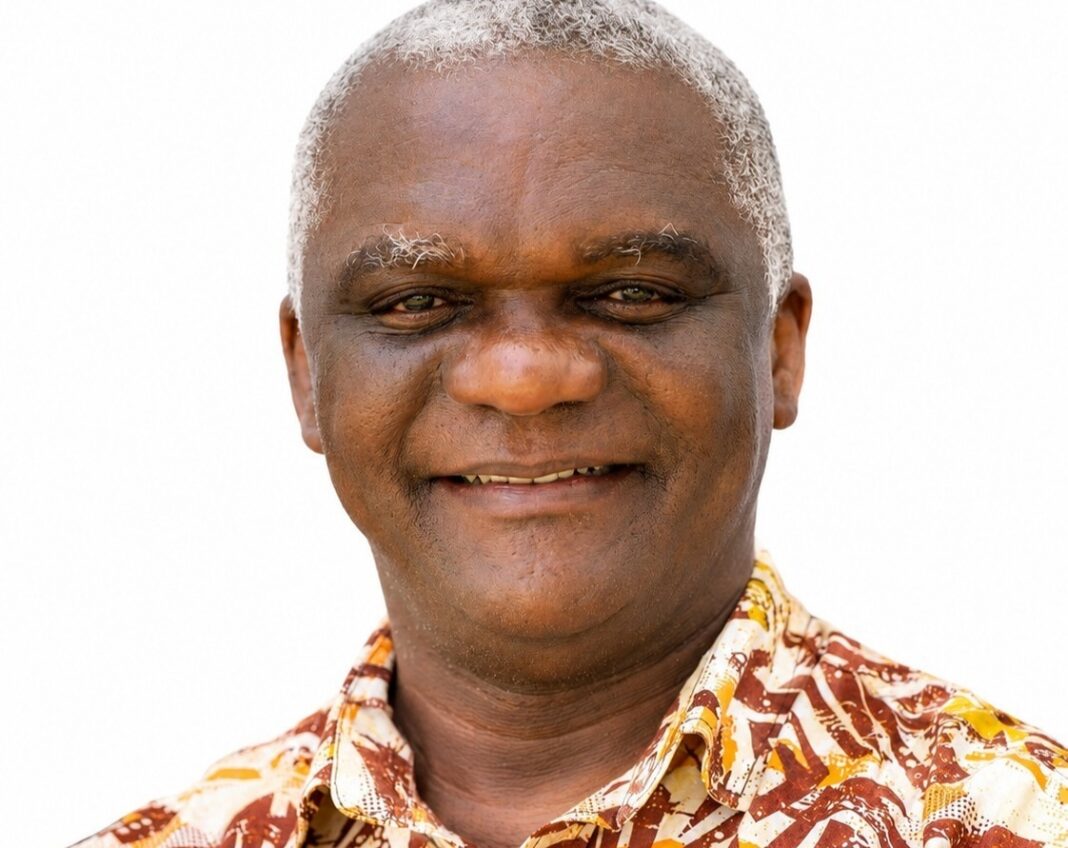

MONROVIA – Liberian political commentator and activist Martin K. N. Kollie has raised fresh concerns about the economic conditions facing ordinary government employees, arguing that the monthly gross salary of US$150 leaves civil servants struggling to meet even their most basic household obligations.
In a detailed assessment of the country’s public-sector wage structure, published on his official Facebook page on Sunday, November 15, 2026, Kollie argues that thousands of Liberian workers, including teachers, healthcare professionals, security personnel, office employees, county officials and entry-level government staff, are trapped in a cycle of borrowing and begging because their earnings fall considerably short of their household expenses.
Kollie describes the situation as an economic injustice that demands urgent government intervention, questioning how public servants expected to deliver essential services can maintain their livelihoods when their monthly compensation is insufficient to cover basic necessities.
To illustrate his argument, he presents a household expenditure breakdown that estimates a civil servant’s minimum monthly expenses at approximately US$863, against a gross monthly salary of just US$150.
According to his calculation, this leaves an estimated monthly deficit of US$713, forcing workers to depend on loans, financial assistance from relatives and friends, or other survival arrangements to meet their obligations.
The expenditure assessment covers transportation, communication, electricity, water, meals, accommodation, children’s education, household food, healthcare and clothing.
Kollie estimates that a civil servant spends approximately US$100 monthly on transportation, US$40 on scratch cards, US$30 on electricity and US$25 on water. He further allocates US$100 for lunch during working days and US$75 for monthly rent.
The financial burden becomes even more challenging when household responsibilities are considered.
For a worker supporting five school-going children, Kollie estimates annual school expenses at US$1,515, equivalent to approximately US$168 monthly when distributed across nine months of the academic year.
He also estimates US$150 for household food, US$100 for medical expenses and US$75 for clothing, household utensils and other necessities.
Although the figures represent Kollie’s illustrative expenditure estimates rather than a nationwide household survey, they highlight the financial pressures that low-income public employees may encounter in a country where essential goods and services must be purchased from the same market as those serving in senior government positions.
Kollie particularly emphasizes that the US$150 being discussed is the gross monthly salary, not take-home compensation after deductions, citing a recent statement by the Minister of Finance on the government’s wage structure.
His argument raises a fundamental question about the relationship between public-sector compensation, employee welfare and the government’s responsibility to ensure that workers can maintain a reasonable standard of living.
Beyond the immediate financial difficulties, inadequate compensation can also affect productivity, employee morale and the ability of public institutions to retain qualified personnel.
Teachers, for instance, are expected to educate the next generation, while healthcare workers provide essential services to vulnerable communities. Security personnel and other public employees are similarly expected to perform demanding responsibilities in the interest of national stability and service delivery.
However, when workers struggle to afford transportation to their workplaces, purchase food and meet their children’s educational expenses, the sustainability of public service becomes an important national concern.
Kollie argues that the problem should not be treated simply as an individual financial management issue, insisting that the government’s allocation and distribution of national resources must also be examined.
He proposes increasing the minimum monthly compensation of all civil servants to at least US$500, arguing that public employees deserve salaries that reflect the actual cost of living and the responsibilities they perform.
He also calls for a reassessment of government spending priorities, particularly the allocation of resources to senior public officials, so that more funding can be directed toward improving the welfare of ordinary workers.
His proposal, if considered, would require a comprehensive fiscal assessment covering the number of affected employees, the total wage bill, available revenue and the long-term sustainability of the national budget.
Nevertheless, the central issue raised by Kollie goes beyond the proposed salary increase. It concerns the dignity of public service and whether government employees should continue working under financial conditions that leave many unable to independently provide for their families.
For Kollie, the persistent dependence on borrowing and begging among low-income workers represents a failure to distribute national resources in a manner that sufficiently protects ordinary citizens.
He argues that Liberia must begin placing the welfare of ordinary people at the center of its economic decisions, insisting that those who sustain public institutions should not be left behind by the same government they serve.
His intervention adds to the continuing national debate over public-sector wages, the cost of living and the government’s responsibility to improve the economic conditions of its workforce.