MONROVIA — For decades, the world has known Liberia as a nation of resilience—a country that survived war, rebuilt its institutions, and continues to fight its way toward economic transformation.
But beyond Liberia’s borders, another story is unfolding—one that deserves far greater national attention.
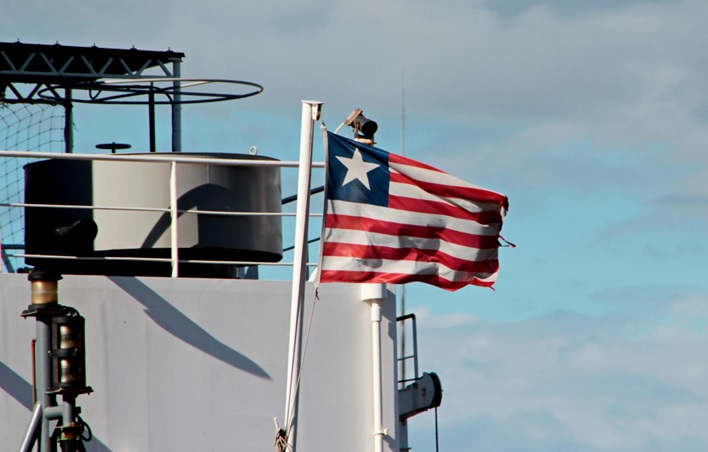
Liberia is not merely a country on the map. The Liberian flag is sailing across the world’s oceans.
Today, Liberia stands at the pinnacle of the global ship-registration industry, with more than 300 million gross tons and over 6,200 vessels registered under the Liberian flag, making the Liberian Registry the world’s largest by gross tonnage.
This is a remarkable achievement for a small West African nation. It represents decades of maritime administration, international cooperation, and institutional development. While Liberia may not possess the largest fleet of ships owned by Liberian companies, its flag has become one of the most trusted and widely recognized in global shipping.
From massive container ships crossing the Atlantic to tankers navigating international trade routes, the Liberian flag travels through some of the most strategically important waters on Earth. These vessels carry food, fuel, machinery, manufactured goods, and raw materials that sustain the global economy. Every voyage connects distant markets, and on many of those voyages, Liberia’s national identity is displayed proudly at sea.
The Liberian Registry’s influence extends far beyond the number of vessels on its books. It is connected to a vast network of shipowners, maritime lawyers, classification societies, safety professionals, port authorities, insurers, and international regulators. Through this network, Liberia participates in the rules and systems that govern one of the world’s most important industries.
Yet perhaps the most remarkable part of this story is that many Liberians do not fully realize the magnitude of what their national flag represents.
For many citizens, the Liberian flag is most visible at government offices, schools, sporting events, and national celebrations. But that same flag is also flying from the sterns of ships moving through the Mediterranean, the Gulf of Aden, the South China Sea, the Caribbean, and the waters surrounding the Americas. It is present in major ports and on international trade routes that most people will never see.
This is why I, Lyndon Ponnie, Sr., a Liberian journalist with Smart News committed to telling stories that matter to Liberia and Africa, believe this story deserves to be told—not simply as another maritime statistic, but as a story of national opportunity.
Liberia has built a maritime platform that reaches virtually every corner of the globe. That platform gives the country a unique position among nations. It offers access to international expertise, a connection to global commerce, and a foundation upon which a broader maritime economy could be developed.
This global maritime presence creates a powerful platform for Liberian entrepreneurs, investors, educators, maritime professionals, and business owners.
Universities and technical institutions can play a central role in preparing the next generation for these opportunities. With the right investment, Liberia can train more of its citizens for employment in the maritime sector, both at home and abroad. Scholarships, apprenticeships, certification programs, and partnerships with international shipping companies can transform the registry’s global success into a pipeline of skills, careers, and jobs.
The country can also unlock new benefits for its ports and coastal communities. A stronger maritime economy can drive improvements in port infrastructure, customs systems, ship-repair facilities, warehousing, transportation, and coastal services. These investments would not only serve ships but also strengthen trade, expand businesses, create employment, and support growth throughout the national economy.
Citizens deserve to understand how their flag became a major force in international shipping and how that achievement can deliver education, employment, entrepreneurship, investment, and national pride for the next generation.
At the same time, Liberia’s maritime leadership carries serious responsibilities. A respected flag must be associated with safety, transparency, environmental protection, labor standards, and strong regulatory oversight. The country must continue to uphold international maritime conventions and ensure that vessels registered under its flag operate responsibly.
Global leadership is not measured only by size. It is also measured by trust. The Liberian Registry’s continued success will depend on maintaining the confidence of shipowners, seafarers, regulators, and the international community. Every vessel carrying the Liberian flag represents the country, and every incident involving that flag can affect Liberia’s reputation.
That is why the maritime sector should be treated as a national asset requiring careful stewardship. Government agencies, private businesses, educational institutions, and civil society must work together to ensure that Liberia’s maritime influence produces lasting value. The registry should not be viewed as an isolated administrative service, but as part of a larger national strategy for economic growth.
The opportunity is significant, and Liberia can turn it into prosperity through deliberate action. The country must build the institutions, skills, and infrastructure needed to capture more value from its maritime position. It must encourage Liberian participation in an industry that already carries the country’s name around the world.
The success already achieved by Liberia’s maritime program provides a strong foundation for the country’s new maritime leader, Neto Leigh, to build upon. With his leadership, the program can become even stronger, more effective, and more successful. As a lawyer, Neto understands the legal and institutional foundations required to develop a transformative and more prosperous maritime program—one grounded in sound regulation, international compliance, accountability, and long-term national interest.
Liberia has the opportunity to convert its global maritime influence into real opportunities, jobs, investment, and prosperity for Liberians at home.
That is the story we must begin telling—and the opportunity we must begin building.
It is a story about a country whose influence is larger than its geography. It is a story about a national symbol that travels farther than most citizens can imagine. It is a story about connecting Liberia’s global maritime presence to the aspirations of its people.
The world knows the Liberian flag because it sees it on ships crossing oceans, entering ports, and carrying the goods that keep international commerce moving.
Now Liberia must ensure that its own people benefit from what that flag represents: education, employment, entrepreneurship, national pride, and a stronger place in the global economy.
The world knows the Liberian flag. It is time for Liberians to recognize its power—and for the nation to turn that power into opportunity.— Lyndon Ponnie, Sr.
Liberian Journalist