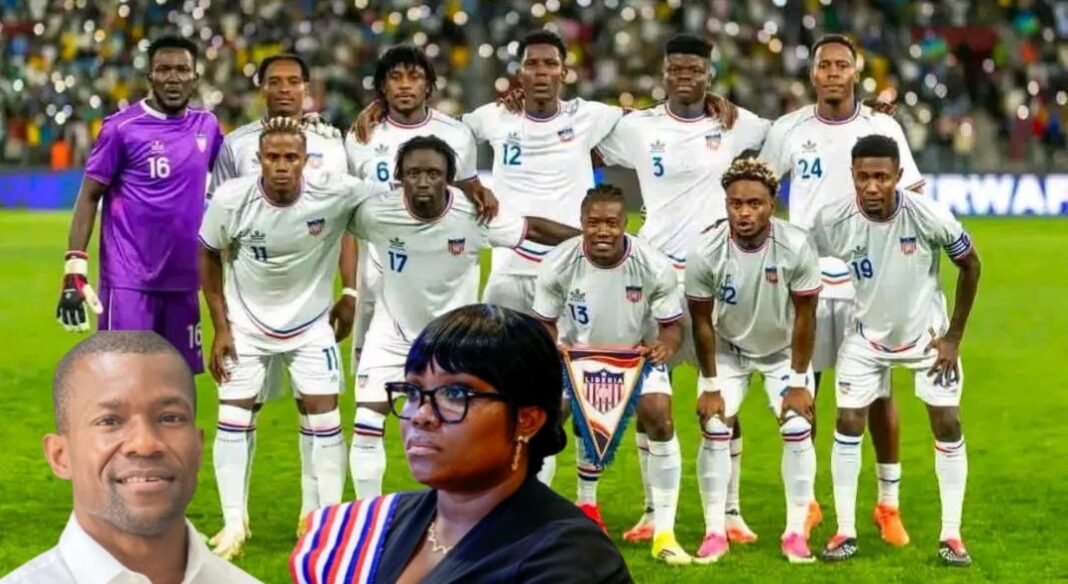
In Kigali, the Lone Star lost on the scoreboard. However, the issues surrounding their treatment before the match cannot simply fade away with the final whistle.
Liberia lost 3-1 to Rwanda in Kigali, and that result is now part of the record. Yet, for Liberian football, the narrative of that night should not end with just the scoreline.
According to a report by French investigative journalist Romain Molina, the Lone Star’s challenges allegedly began long before the referee blew the whistle to start the game.
The report details a late security check at Liberia’s hotel, restrictions on the team’s departure, a challenging journey to Amahoro Stadium, and delays involving the bus carrying the team’s gear.
If this account holds true, Liberia did not simply step onto the pitch and lose a match. They arrived on that field after a preparation that was reportedly disrupted at a time when focus, routine, and readiness were crucial.
This is why this defeat is more than just a 3-1 loss. It raises the question of whether visiting teams deserve predictable, professional, and fair conditions when representing their nations in international competitions.
Liberia must address this issue—not with anger, conspiracy theories, or excuses, but with the facts. What transpired before kickoff? This is the question that should now take center stage in the discussion.
Molina’s report indicates that Rwandan officials arrived at Liberia’s hotel about two hours before the scheduled 6 p.m. kickoff to inspect the delegation’s luggage.
The Liberian team reportedly faced delays before finally departing for the stadium.
Then another issue arose: the report indicated that the team’s bus was not accompanied by the expected escort, and traffic made the situation even more challenging. Even after reaching the stadium, the reported troubles were far from over.
The vehicle carrying Liberia’s football equipment was said to be delayed at the stadium entrance, leaving the players with only minutes to get ready for the match.
These are not trivial administrative issues if they occurred as described. A national team gearing up for an international match follows a strict schedule. Meals, team meetings, travel, arrival, changing, warm-up, tactical briefings, and mental preparation—all of these are crucial. Every minute counts. Disrupting that routine just before kickoff can have repercussions on the field.
Rwanda scored within the first two minutes, and Liberia ended up conceding three goals in the first half. While this doesn’t definitively prove that the reported disruptions led to the defeat, it certainly raises questions that deserve thorough investigation.
Liberia cannot simply brush this aside. Too often, Liberian football has developed a troubling tendency to move on from controversies without seeking a full explanation.
A match is lost, outrage ensues, complaints are made, social media buzzes, and then the next story takes over, leaving unanswered questions behind.
This cannot be the case here. If the Liberia Football Association believes its delegation was treated unfairly, it must take the responsibility to clarify what transpired and present the evidence to the relevant football authorities.
Who initiated the inspection? What was the given security rationale? Why was it conducted so close to the kickoff? How long did the inspection last? Were CAF officials informed? Did the transportation arrangements align with the agreed match protocol? What caused the delay in Liberia’s equipment? Were similar measures enforced on Rwanda? These are valid inquiries that warrant documented responses.
Howbeit, there is another aspect of this situation that should not be overlooked; Liberia must also be truthful about football.
Rwanda triumphed with a score of 3-1. The official CAF match report highlights a strong first-half display from the home team, who took a significant lead before halftime. Liberia’s only goal was scored by Sylvanus Nimely.
This means Liberia should avoid the urge to attribute the entire loss to the circumstances surrounding the match. Football doesn’t operate that way.
While disrupted preparations can impact a team’s readiness, they do not account for every goal conceded, every missed chance, or every tactical error.
The Lone Star must scrutinize itself just as thoroughly as it investigates what transpired in Kigali.
Why was Rwanda able to score so quickly? Why did Liberia have difficulty finding their rhythm? Were the defensive strategies sufficient? Were the tactical plans followed? Did the players react appropriately once the match commenced?
These inquiries are not meant to blame the players. They are the questions that any serious national team should consider after a defeat.
The officiating has also been a point of contention, and the controversy didn’t stop with how the team arrived. Molina’s report highlights the Liberian team’s protests regarding a potential penalty incident and the subsequent red card issued to Kpah Sherman.
However, reports from Rwanda described Sherman’s dismissal as a straight red for a dangerous tackle.
This discrepancy in narratives is exactly why Liberia should focus on presenting evidence rather than jumping to conclusions. Was the penalty appeal valid? Was the red card warranted? Were the officials consistent in their decisions? Were the competition rules applied correctly? These are the issues that the relevant football authorities need to investigate.
Liberia shouldn’t hastily label every disputed call as bias, but it also shouldn’t stay quiet when it feels a decision deserves a formal review.
Notably, CAF must also address the broader implications of this controversy, as it raises questions that go beyond just the match in Rwanda. What protections are in place for visiting national teams during CAF competitions? What are the minimum standards for team movement on match day? What security measures can host authorities enforce, and when? Who ensures these standards are met? And what recourse is available if a visiting federation believes those standards have been violated?
These questions are crucial because fairness in football should extend beyond the 90 minutes seen on screen. It starts before the teams step onto the pitch, with the conditions that allow them to prepare, travel, and compete.
Monrovia must respond with professionalism. The upcoming match against Rwanda should not turn into a chance for retaliation. If Rwanda was treated professionally in Kigali, then Liberia should treat Rwanda professionally in Monrovia. This is the essence of international football. Liberia’s response should focus on organization, hospitality, security, and, most importantly, the game itself. The Lone Star should not seek revenge; instead, it should aim for a strong performance.
However, before that match takes place, the LFA needs to ensure that the events in Kigali are not forgotten. If there was no misconduct, it should be made clear. If any protocols were breached, those should be documented. If there were genuine security issues, they need to be explained. If Liberia’s preparations were disrupted without cause, the reasons should be identified. And if the evidence warrants a formal complaint, it should be pursued through CAF’s established channels.
The scoreline is not the entire narrative. After every loss, there’s a temptation to dismiss it as just a game. But international football is never just a game.
Players represent their nations on the field, coaches bear the hopes of millions, and federations stand for their countries. Competitions like the AFCON qualifiers are governed by rules that ensure nations compete under fair conditions.
That’s why what happened in Kigali matters. Not because Liberia lost or Rwanda triumphed, but because the circumstances surrounding that defeat raise important questions that need to be addressed.
The Lone Star cannot alter the 3-1 score, replay the first half, or regain the time lost before kickoff.
But Liberia has the power to shape its future. It can choose to let the events in Kigali fade into obscurity, becoming just another painful chapter in football history—or it can leverage this situation to push for higher standards, better management, and clearer accountability in African football.
The path forward should be clear: conduct a thorough investigation, uncover the truth, and then take appropriate action.
The Lone Star’s quest for AFCON 2027 is far from over, and Liberia must continue to seek answers regarding what transpired in Kigali. The match may have concluded, but the questions should persist.
The Lone Star’s journey to AFCON 2027 should ultimately be determined by the game itself, and if Liberia wants to make a comeback to Africa’s premier football stage, it must learn to win not just on the field, but also in the boardroom and by following the rules.