Eleven years later, Liberia honors those who lost their lives. Yet, there’s another crucial aspect of the Ebola narrative that must not be overlooked—the day a frightened nation faced the harsh reality, chose not to succumb to despair, and began its journey to recovery.
There are pivotal moments in a nation’s history when time seems to pause. September 24, 2014, marked one of those significant moments.
Liberia was in a state of crisis. Ebola swept through the nation with alarming rapidity, leaving behind a trail of death, fear, and disbelief.
Hospitals were overwhelmed, treatment centers were at capacity, and health workers were losing their lives. Families were being torn apart, and communities grew wary of outsiders, the government, and even those who came to offer assistance.
The everyday customs of Liberian life had turned perilous. A simple handshake could pose a threat. A hug could be dangerous. A funeral could trigger a wave of infections.
Then Ebola struck. Suddenly, Liberia found itself in the midst of another battle. This time, there were no traditional battlefields; instead, there were treatment centers, ambulances, isolation wards, and burial teams. Exhausted nurses, clad in protective gear, stood by, often uncertain if they would make it home alive.
Having endured a brutal civil war, the country was still in the process of rebuilding its institutions, economy, and sense of trust
Then the numbers arrived. On September 23, the United States Centers for Disease Control and Prevention (CDC) unveiled an Ebola modeling tool that forecasted the potential consequences if the epidemic continued without strong intervention.
The projections were alarming. In certain scenarios, the number of Ebola cases in Liberia and Sierra Leone could soar into the hundreds of thousands.
The next day—September 24—the Government of Liberia publicly embraced the CDC’s predictive tool. This moment is significant. Liberia did not view the projections as a predetermined fate; rather, the country saw them as a warning.
There’s a crucial difference here. A prophecy tells you what will happen, while a warning indicates what could happen and offers a chance to alter the outcome.
Thus, September 24 was not the day Liberia triumphed in the Ebola crisis. Instead, it marked the moment the country began to grasp, with stark clarity, how much hinged on the actions taken next.
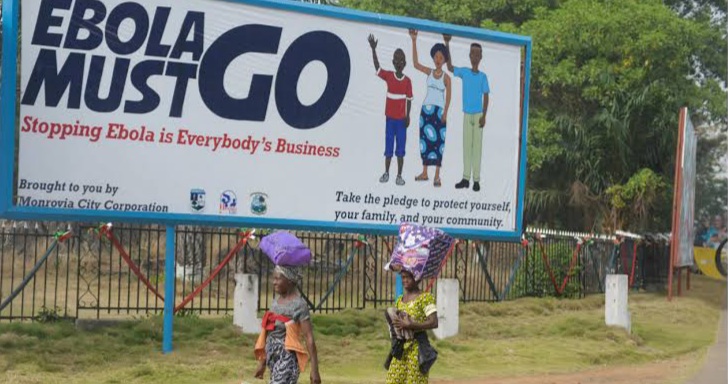
The message from the data was brutally clear: Act now, or face an even steeper cost later. And Liberia took action. Treatment capacity needed to grow. People had to be isolated. Safe burials became essential. Communities required education. Rumors had to be addressed. Health workers needed protection. International support had to be rallied. And everyday Liberians had to adapt behaviors that had shaped social life for generations.
That was perhaps the toughest battle of all. Ebola was not just a medical crisis; it was a cultural one as well. How do you explain to a mother that she can’t hold her dying child? How do you tell a husband he can’t touch his wife? How do you inform a family that they can’t wash, embrace, or bury their loved one according to their traditions? How do you persuade communities that the individuals in protective suits are there to save lives when those suits make them appear as if they come from another planet?
These were the struggles Liberia faced, fought mainly by individuals whose names will never make the news. The nurse, the ambulance driver, the lab technician, the burial worker, the community volunteer, the traditional leader, the teacher, the religious leader, the mother who listened to health advice and changed her family’s care practices, the young man who stopped going to crowded events, and the family that accepted a safe burial even when their hearts wanted something different.
They became warriors in a battle without weapons. Their tools were soap, chlorine, protective gear, isolation, information, discipline, and courage.
Eventually, the statistics began to tell a different story. A later CDC analysis revealed that the increase in Ebola treatment units, community care centers, and other lower-transmission environments between September 23 and October 31, 2014, was estimated to have prevented around 9,100 Ebola cases in Liberia.
That figure is astonishing. But we must never let it become just another statistic. Nine thousand lives are not merely numbers; they represent mothers who returned home, fathers who reunited with their children, children who grew up, families that stayed together, and communities that didn’t have to bury another neighbor. Most importantly, it showed that Liberia was not powerless. The country could shape the course of the epidemic.
The alarming projections were not a death sentence; they were a challenge that Liberia chose to face head-on. By October 31, 2014, a retrospective analysis by the CDC revealed that Liberia had reported 6,525 cases—significantly lower than the nearly 23,000 cases predicted by earlier models, which assumed no further intervention.
This discrepancy tells a powerful story. It highlights the importance of public health interventions, the impact of behavior, the significance of leadership, and the necessity of international solidarity. Most importantly, it underscores the value of ordinary people.
History tends to remember presidents, ministers, ambassadors, and international organizations. However, the narrative of Liberia’s Ebola crisis cannot be told truthfully without acknowledging the everyday Liberians who faced extraordinary dangers and took action when it mattered most.
Some lost their lives, others bore the scars of infection, many spent months away from their families, and some worked in protective gear until exhaustion became a part of their routine.
They buried strangers, fully aware that they could be the next victim at any moment. They often didn’t know if their sacrifices would lead to change, yet they persevered.
This is why September 24 should hold a significant place in Liberia’s national memory. Not because everything improved overnight—far from it. The nightmare persisted, deaths continued, and fear lingered. Liberia still faced a long and arduous journey ahead. But something essential had shifted. Confronted with the terrifying prospect of disaster, Liberia chose not to wait for the grim predictions to come true; instead, it began to fight back.
The part of the Ebola story that we must never forget is the suffering it caused. We need to remember those who lost their lives, the health workers who never made it home, and the families who endured the pain of losing multiple loved ones.
We must also acknowledge the communities that were deeply affected by the epidemic. But alongside this, we should also celebrate the courage that emerged during this time.
If we focus solely on the horror, we overlook a significant part of the narrative; the other side that tells of a nation that, despite its fear, refused to give in.
A nation that faced overwhelming challenges but chose to learn and adapt. A nation that was losing lives yet began to save them. A nation that confronted a daunting future and resolved that it would not be defined by it.
September 24, 2014, symbolizes this turning point. It was not the conclusion of the Ebola crisis, nor was it a moment of triumph. It wasn’t a time for Liberia to celebrate. Instead, it was a quieter, yet profoundly significant moment of choice. It was a decision to either fight or surrender. Liberia chose to fight, and ultimately, the country emerged from the epidemic.
Now, eleven years later, we can reflect on those events with the benefit of hindsight. Those who were in the midst of the crisis didn’t have that privilege. They were unaware that the curve would eventually shift. They didn’t know how many would survive or if the next day would bring another surge in cases. All they knew was that they had to keep pushing forward.
That’s why September 24 should not fade away from our memories. It is a vital part of Liberia’s history, its public health narrative, and the legacy of its health workers.
It is also a tribute to every Liberian who survived Ebola. The deceased must be honored, the sacrifices recognized, but we must also cherish the courage displayed.
Perhaps the most crucial lesson from September 24, 2014, is that Liberia faced an unprecedented disaster and chose to rise above it.
At a time when the statistics seemed most daunting, Liberia realized that numbers didn’t have to dictate fate. The nation had the power to alter those figures. The citizens took action, and they succeeded.
September 24, 2014, marks the day Liberia stood up and fought back. This is a crucial chapter in the Ebola narrative that must always be remembered.