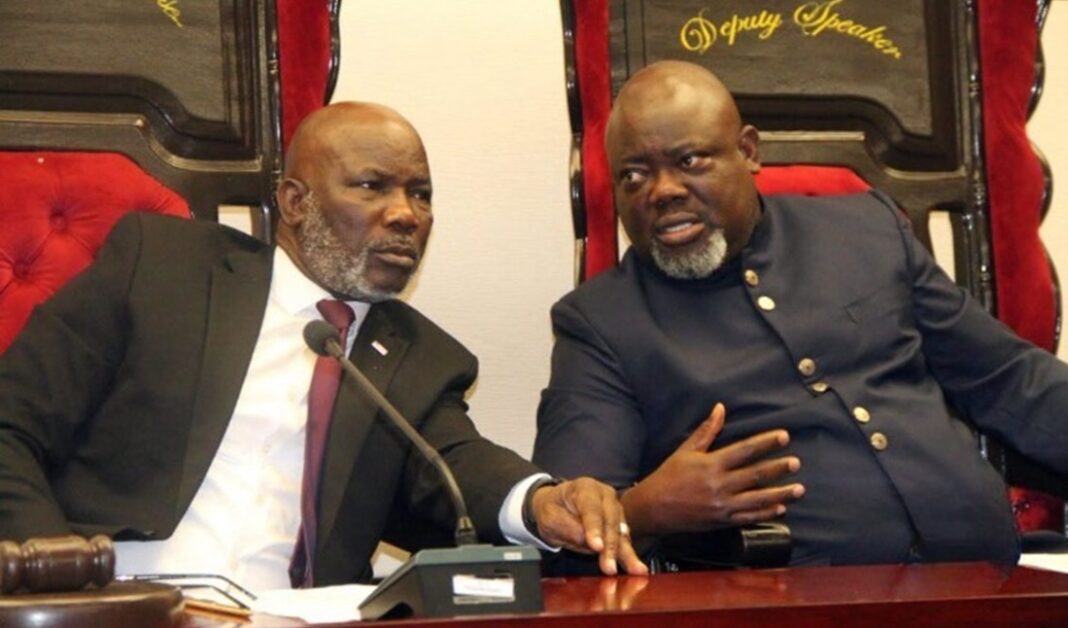
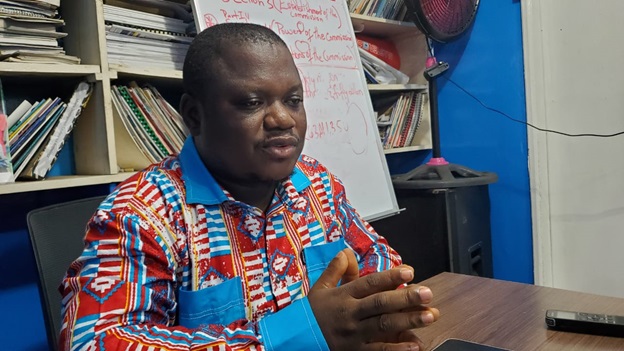
MONROVIA, Liberia — As members of the House of Representatives intensify demands for the payment of their delayed salaries and benefits, governance advocate Anderson Miamen has challenged lawmakers to demonstrate that their performance and commitment to their constituencies justify the public resources they receive.
In a strongly worded commentary, Miamen questioned whether some lawmakers have done enough to deserve the benefits they are currently demanding, accusing several of remaining largely silent on critical national issues while becoming vocal when their personal interests are at stake.
Liberia’s House of Representatives comprises 73 elected members representing constituencies across the country. However, Miamen argued that the contributions of some lawmakers are barely visible, leaving citizens questioning whether their elected representatives are effectively performing their legislative responsibilities.
He stressed that legislative performance should not be measured solely by participation in plenary sessions or public appearances in the media. Nevertheless, he maintained that lawmakers must speak out on issues affecting their constituents and hold the government accountable for its decisions.
“If you cannot speak for your people, who are you then?” Miamen asked, challenging lawmakers who, in his view, have failed to demonstrate sufficient engagement with the concerns of ordinary Liberians.
LAWMAKERS ACCUSED OF PRIORITISING PERSONAL INTERESTS
Miamen argued that some lawmakers become publicly visible primarily during leadership disputes within the House, campaigns for re-election, and efforts to secure their salaries and benefits.
He also questioned whether certain representatives have become disconnected from the communities they were elected to serve, suggesting that some appear more concerned about their personal interests than the welfare of their constituents.
His criticism comes amid tensions within the House over delayed payments, with some lawmakers expressing frustration over benefits they consider legitimate entitlements.
However, Miamen challenged representatives to demonstrate comparable determination when addressing unemployment, poor public-sector salaries, unfavourable concession agreements, and alleged corruption.
He questioned whether lawmakers have done enough to create employment opportunities, hold concession companies accountable, and ensure that the Executive Branch manages public resources transparently.
The commentary did not identify individual lawmakers accused of these shortcomings. Its central argument was that elected representatives should be judged not only by their demands for compensation but also by their legislative performance and public-service record.
‘WORKERS DESERVE TO BE PAID ON TIME’
Despite his criticism, Miamen acknowledged that lawmakers are entitled to receive their salaries and benefits and should not be subjected to unnecessary delays in payment.
He emphasised that his argument was not against lawmakers receiving what is legally due to them, but against what he views as a disparity between their determination to pursue personal entitlements and their response to the hardships confronting other public servants and citizens.
According to Miamen, lawmakers should demonstrate the same urgency in advocating better salaries and working conditions for civil servants, police officers, security personnel, and other public-sector employees who struggle to meet their basic needs.
He argued that the frustration displayed over delayed legislative benefits should also be evident when public workers demand fair compensation and improved conditions of service.
Miamen further questioned why lawmakers do not demonstrate similar collective resolve when communities receive limited benefits from concession agreements or when allegations of corruption involving public officials require investigation.
2027 NATIONAL BUDGET SHOULD BE A TEST OF LEGISLATIVE COMMITMENT
Looking ahead to the 2027 national budget, Miamen called on lawmakers to prioritise the broader interests of the country rather than concentrating predominantly on their own compensation.
He urged representatives to push for improved salaries and benefits for public workers, greater employment opportunities, and stronger accountability across government institutions.
He also called for complaints involving alleged corruption, poor treatment of employees, and unfavourable working conditions at the National Housing Authority and other public institutions to be investigated and addressed promptly.
His appeal places renewed emphasis on the Legislature’s constitutional oversight responsibilities, particularly its role in scrutinising government expenditure, examining public policies, and ensuring that national resources serve the interests of citizens.
The 2027 budget process, he suggested, should provide lawmakers with an opportunity to demonstrate whether their commitment to accountability extends beyond disputes over their own financial entitlements.
‘DO NOT COLLECT THE MONEY AND THEN BECOME SILENT’
In his concluding remarks, Miamen urged lawmakers to continue representing their constituencies actively after receiving their delayed salaries and benefits.
He warned against a situation in which representatives mobilise around financial demands but become less vocal once those demands have been satisfied.
His message was that legislative responsibility must be continuous, not dependent on whether lawmakers’ personal interests are being addressed.
“Go after your unpaid salaries and other benefits; they are your entitlements. However, ensure that you are doing enough to deserve them,” Miamen argued.
He called on representatives to demonstrate even greater determination in advocating improved conditions for civil servants and other public workers during consideration of the 2027 national budget.
ACCOUNTABILITY BEGINS WITH PERFORMANCE
Miamen’s commentary raises a broader question about the relationship between public compensation and public accountability: should lawmakers’ demands for timely payment be accompanied by greater scrutiny of their performance?
Legally, the right to an authorised salary or benefit is distinct from an assessment of an individual lawmaker’s effectiveness. A representative’s entitlement to compensation cannot simply be dismissed because critics consider that representative inactive.
At the same time, lawmakers have a responsibility to account to their constituents for their work, legislative participation, oversight activities, and efforts to address local and national concerns.
The debate therefore extends beyond the payment dispute. It concerns whether representatives are adequately fulfilling their mandate while citizens face unemployment, economic hardship, and demands for better public services.
As the House navigates its internal disagreements and the country approaches the 2027 budget process, Miamen’s challenge is directed at lawmakers across the political divide: demonstrate the same urgency in addressing the needs of ordinary Liberians as they demonstrate when demanding their own financial entitlements.