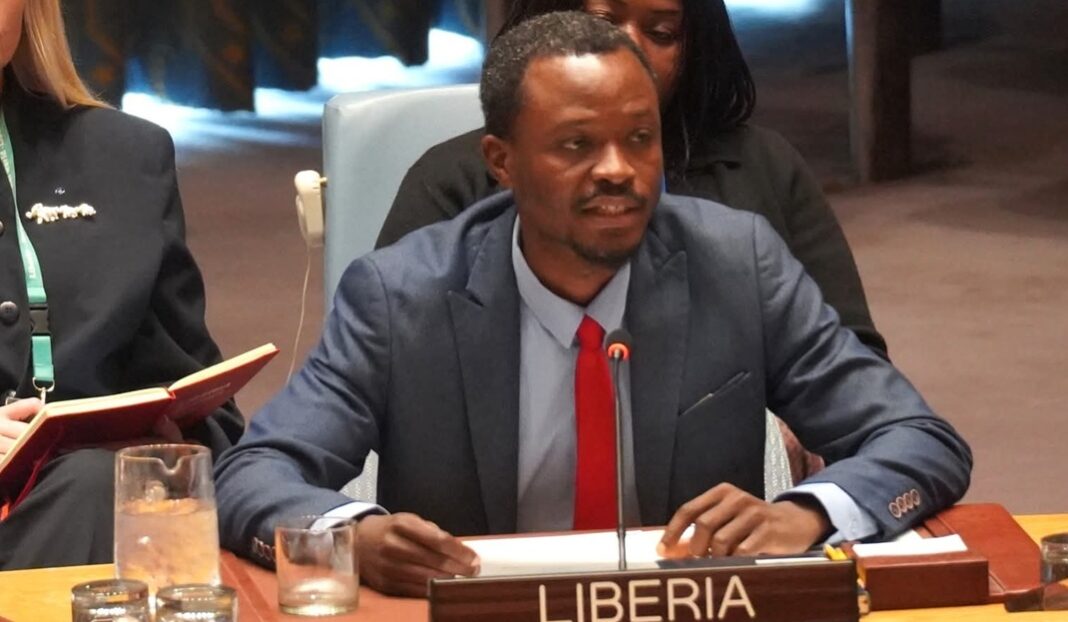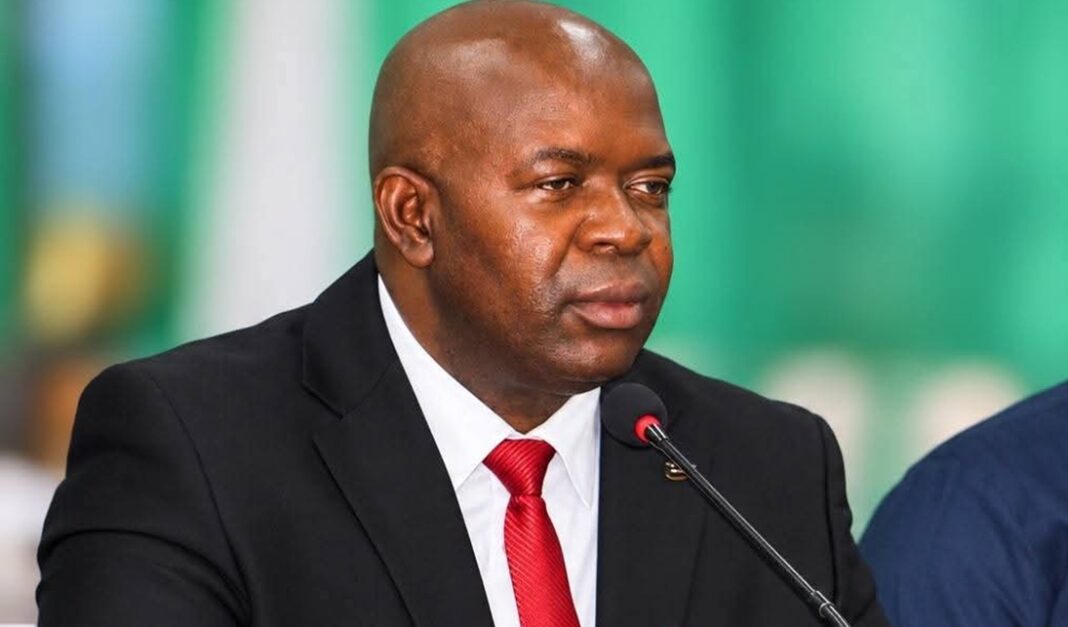

MONROVIA, LIBERIA — Assistant Professor of Law at the University of Liberia’s Louise Arthur Grimes School of Law, Cllr. Kanio Bai Gbala, has defended President Joseph Nyuma Boakai’s governance record while urging the administration to accelerate infrastructure development, improve public services and decentralize government operations to deliver more tangible benefits to Liberians.
Speaking on OK FM, Gbala reaffirmed his support for President Boakai, arguing that the administration should be assessed on its governance performance, institutional reforms and efforts to strengthen international partnerships rather than through continuous comparisons with the previous government.
“I support the government. I support the president, and I want the president to succeed,” Gbala said, emphasizing his position that Liberia’s development requires continuity in governance and a commitment to building on existing national programs.
Despite defending the administration, Gbala acknowledged that the pace of infrastructure development remains a concern, particularly as citizens continue to expect improvements in roads, healthcare, education and other essential public services.
He argued that while establishing governance structures and strengthening international relationships are important, these efforts must produce practical results that citizens can see and experience in their communities.
Gbala’s remarks place renewed attention on the relationship between governance reforms and service delivery, as the Boakai administration faces the challenge of demonstrating that its policies and partnerships can translate into improved living conditions across Liberia.
Gbala said he prefers to assess the administration based on its own performance rather than engage in direct comparisons with its predecessor. He described governance as a continuous process in which successive administrations inherit obligations and responsibilities while working to improve the country’s institutions and development prospects.
In defending the government’s record, he pointed to Liberia’s engagement with international institutions, including the Millennium Challenge Corporation and the International Monetary Fund, as indicators of the administration’s efforts to advance economic reforms and strengthen international cooperation.
According to Gbala, discussions surrounding a proposed Millennium Challenge Corporation compact have identified energy and mining governance as important areas of focus.
He argued that progress in the energy sector could help address Liberia’s longstanding electricity challenges, while improvements in mining governance could strengthen natural resource management, increase public revenue and improve the benefits communities receive from resources extracted from their land.
Gbala also referenced a recent IMF review and the reported release of approximately US$50 million under Liberia’s Extended Credit Facility arrangement, presenting the development as part of the country’s engagement with international financial institutions.
However, the broader significance of such partnerships will depend on how effectively the government translates reform commitments, financing arrangements and technical cooperation into results that improve public services and create economic opportunities.
For Liberia, international partnerships can help provide financing, technical assistance and institutional support. But their value to ordinary citizens will be measured by outcomes such as improved electricity access, better roads, stronger public institutions and greater opportunities for businesses to grow.
Gbala acknowledged the importance of this distinction, arguing that the administration must intensify efforts to ensure that its governance agenda produces more visible development outcomes.
The law professor’s comments highlight a key challenge confronting the Boakai administration: sustaining governance and economic reforms while responding to citizens’ immediate development needs.
Gbala called for faster implementation of projects affecting communities, including roads, hospitals, schools and recreational facilities. He maintained that the government should increase the pace of development during the remainder of its term, warning that its performance will increasingly be judged by its ability to deliver practical improvements.
Road infrastructure remains essential to connecting communities, transporting agricultural products, expanding trade and improving access to hospitals and schools. Similarly, investment in healthcare and education is central to developing the human capital Liberia needs to compete economically and reduce poverty.
The challenge for the administration is to ensure that development planning is accompanied by implementation schedules, adequate funding, effective oversight and transparent reporting on progress.
Gbala’s position suggests that support for the government does not necessarily mean overlooking its shortcomings. Rather, he has combined his defense of the administration’s overall direction with a call for faster delivery, reflecting the expectation that public institutions must continually improve their performance.
For the Boakai administration, the message is that progress in governance should reinforce, rather than substitute for, progress in the daily lives of citizens.
Gbala also urged the government to accelerate decentralization, arguing that the concentration of public services and resources in Monrovia continues to disadvantage citizens in other counties.
He maintained that decentralization should involve transferring appropriate responsibilities, resources and decision-making authority to local institutions so that essential services can be delivered closer to the people who need them.
Under a more effective decentralized system, county-level institutions could be better positioned to identify local priorities, coordinate development initiatives and respond to community needs without requiring every decision to be made in the capital.
Such an approach could help reduce pressure on Monrovia while expanding opportunities for development in rural and underserved communities.
However, meaningful decentralization requires more than establishing local offices or transferring administrative duties. It also requires adequate funding, trained personnel, clear lines of responsibility and mechanisms to ensure that public resources are managed transparently.
The government must therefore ensure that local institutions have the capacity to perform their responsibilities and that county residents can hold local officials accountable for the use of public funds.
If implemented effectively, decentralization could strengthen public participation in development planning and help ensure that national investment is distributed according to the needs of communities across Liberia.