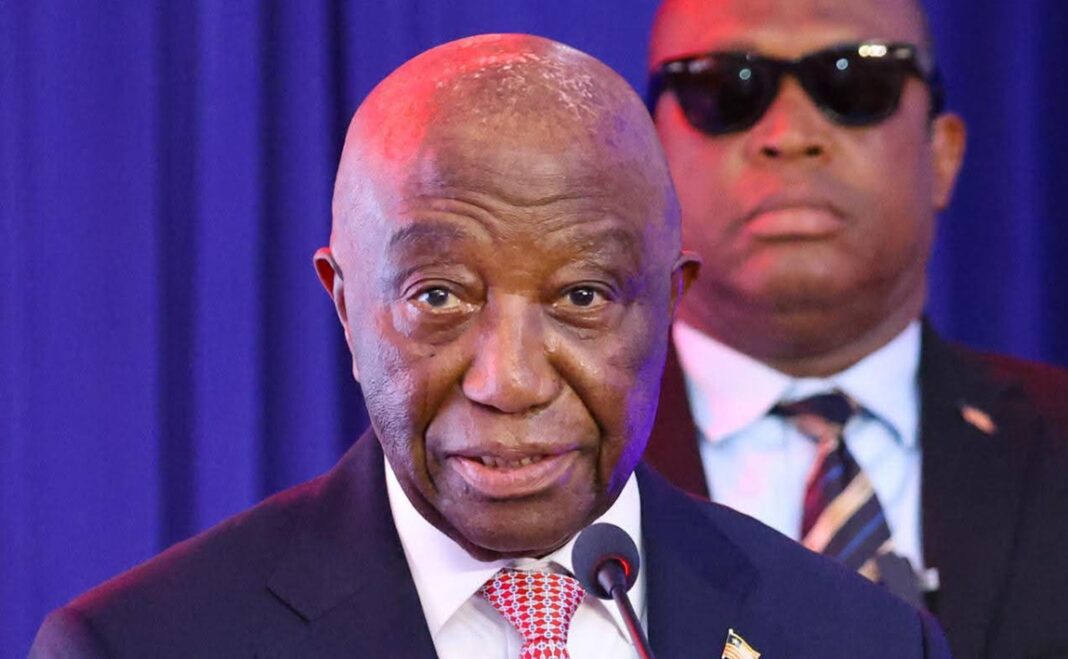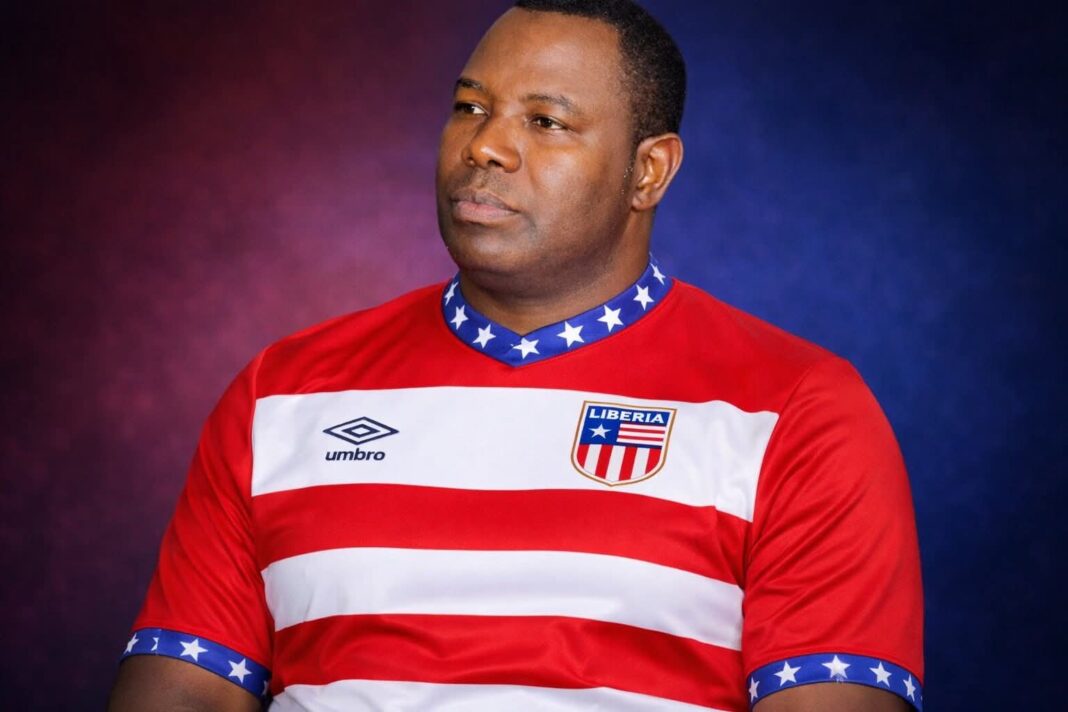

As the ailing Liberian economist appeals for permission to seek medical treatment abroad, questions mount over whether controversy surrounding a citizen should overshadow his health, dignity and fundamental rights.
MONROVIA, Liberia — “I’m dying slowly.”
Those three words, written by Liberian economist Samuel L. Jackson in a distressing Facebook post, have transformed his reported struggle to obtain medical treatment abroad into a deeply human appeal that the government of President Joseph Nyuma Boakai can no longer afford to ignore without providing clarity.
Jackson says he is suffering from worsening lymphedema, a condition associated with the accumulation of lymphatic fluid that causes swelling. In his public statement, he described the condition as ravaging his legs, ankles and thighs, while expressing frustration with those who question the seriousness of his illness.
“For those who say I’m faking are these normal legs, ankles and thighs. The lymphedema is ravaging my legs. Lymph nodes damaged. I’m not looking for sympathy but justice,” Jackson wrote.
His words are more than a plea for sympathy. They are an appeal for dignity, a demand to be heard, and a question about whether a Liberian professional facing a serious health challenge is receiving fair treatment while seeking access to medical care.
The circumstances surrounding his request for overseas treatment, including the precise nature of any government restrictions and the reasons for them, require official clarification. But the humanitarian question is immediate: Should a citizen’s access to necessary medical care become entangled in controversy to the point that he must publicly plead for an opportunity to seek treatment?
WHEN ILLNESS MEETS CONTROVERSY
Jackson is a known Liberian economist whose public life and views have attracted attention and debate. Yet whatever controversies may surround him, his medical condition should be assessed on its own merits.
His Facebook post suggests that he feels disbelieved, misunderstood and increasingly desperate as he describes the physical effects of his illness.
The public cannot independently determine the severity of his condition from a social media statement alone. That requires qualified medical assessment. Nevertheless, his appeal deserves a serious response rather than ridicule, speculation or political hostility.
If Jackson has formally requested permission to travel abroad for specialized treatment, the government should explain whether that request has been received, what legal or administrative requirements apply, and whether any outstanding concerns can be resolved promptly.
If there are legitimate legal reasons for restricting his travel, those reasons should be clearly communicated and handled through the appropriate procedures.
Silence, uncertainty and public speculation cannot substitute for a transparent explanation.
IS A LIBERIAN PROFESSIONAL BEING PUNISHED BEFORE BEING FOUND GUILTY?
Beyond the medical emergency lies a larger question of justice.
In any constitutional democracy, the presumption of innocence is a fundamental principle of criminal justice. A person accused of wrongdoing is not, merely by virtue of an accusation, a convicted criminal. Guilt must be established through the appropriate legal process.
That principle matters regardless of a person’s profession, political connections, public reputation or unpopularity.
If Jackson is facing any legal proceedings or restrictions connected to an alleged offense, the relevant authorities should distinguish clearly between lawful measures imposed under proper legal authority and consequences that would amount to punishment without a finding of guilt.
The available Facebook statement does not establish the legal basis for any restriction on Jackson’s travel, nor does it prove that the government is deliberately punishing him. Those questions require documented facts and an explanation from the authorities.
But the concern deserves examination.
A government committed to the rule of law must not allow accusation to become conviction in the court of public opinion—or permit lawful procedures to be replaced by arbitrary treatment.
If Jackson is entitled under the applicable law to seek medical treatment abroad, his request should be assessed fairly and without unnecessary delay. If restrictions apply, the government should identify their legal basis and explain what avenues are available to address his medical needs.
The issue is not whether Jackson should be exempt from the law. It is whether the law is being applied fairly while his health is deteriorating.
PRESIDENT BOAKAI FACES A HUMANITARIAN QUESTION
President Boakai’s administration now faces a question that extends beyond political disagreement: how should the state respond when a citizen publicly reports a serious illness and appeals for access to treatment outside Liberia?
The answer should begin with facts, medical evidence, respect for due process and a clear explanation of the applicable rules.
The president need not intervene unlawfully in any judicial matter to ensure that the relevant authorities handle a medical request fairly. Nor should a humanitarian appeal be used to prejudge any separate legal proceedings.
What is needed is a timely and transparent assessment of Jackson’s circumstances.
If specialized treatment is medically necessary and cannot adequately be obtained in Liberia, the relevant authorities should explain what lawful arrangements can be made to facilitate access to that treatment.
If the request has been denied, the reasons should be made clear. If it remains pending, the government should explain the process and expected next steps.
A citizen should not be left to rely on social media as the only apparent avenue for drawing attention to a serious medical concern.
THE HUMANITY TEST: JUSTICE MUST NOT LOSE ITS HUMAN FACE
Liberia’s history makes questions of justice, state power and equal treatment especially important. The country has a responsibility to uphold the principle that no individual should be treated as guilty merely because allegations have been made against them.
That principle does not erase accountability. It strengthens it by requiring the state to act through established legal procedures rather than public pressure, personal animosity or political considerations.
The same standard should apply to Jackson.
If there is evidence of wrongdoing, it should be addressed through the appropriate legal process. If restrictions have been lawfully imposed, they should be explained and reviewed through the available channels. But a person’s medical needs should not be dismissed simply because the individual is controversial or faces allegations.
Humanitarian consideration is not an endorsement of anyone’s conduct. It is a recognition that the right to dignity and fair treatment does not depend on public popularity.
Jackson’s statement—“I’m not looking for sympathy but justice”—captures the tension at the centre of this matter.
He is asking to be taken seriously as a person who says he is ill, while insisting that his circumstances be treated fairly.
THE QUESTIONS THE GOVERNMENT SHOULD ANSWER
To move this matter beyond speculation, the relevant authorities should clarify:
- Has Samuel L. Jackson formally requested permission to travel abroad for medical treatment?
- If so, has the request been approved, denied or left pending?
- If travel restrictions apply, what specific legal authority supports them, and what procedures are available to address urgent medical needs?
- Has his medical condition been assessed by qualified professionals, and is the treatment he seeks available locally?
- What steps, consistent with the law, can be taken to ensure that any legal process does not unnecessarily jeopardize his access to necessary medical care?
These questions do not presume that the government has acted unlawfully. They seek the facts necessary to determine whether Jackson’s request is being handled appropriately.
The government deserves an opportunity to explain its position, and the public deserves answers grounded in evidence.
A FINAL APPEAL: LET JUSTICE AND HUMANITY WALK TOGETHER
Samuel Jackson’s public plea should not become another occasion for Liberians to divide themselves along political or personal lines.
It should prompt a more fundamental conversation about how the state treats citizens who are ill, controversial or facing legal scrutiny.
A fair justice system does not abandon accountability. Neither does it abandon humanity.
If Jackson must answer allegations or comply with lawful restrictions, those obligations should be addressed through due process. If he needs specialized medical treatment abroad, that need should receive a prompt and impartial assessment.
No accusation should automatically become a verdict. No controversy should erase a person’s dignity. And no humanitarian appeal should be dismissed without a serious examination of the facts.
President Boakai and the relevant authorities now have an opportunity to clarify the situation, explain the applicable legal position and demonstrate that justice in Liberia can be firm without being indifferent to human suffering.
For a man who says he is “dying slowly,” the passage of time may carry consequences far more serious than a political argument.
The immediate demand is therefore simple: establish the facts, explain the law, protect due process and give his medical appeal the urgent, compassionate consideration it deserves.
Justice must be served—but it must never lose its human face.