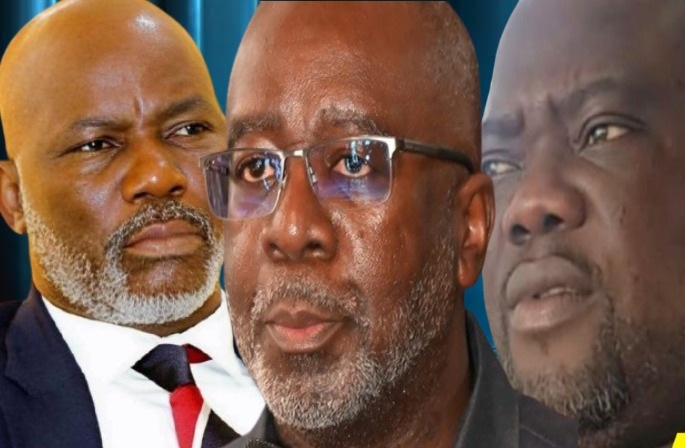
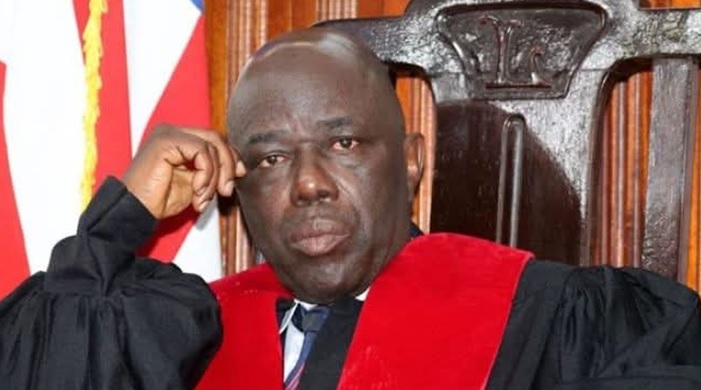
MONROVIA, LIBERIA — Chief Justice Yamie Quiqui Gbeisay Sr. has disclosed that an investigation conducted by Criminal Court “C” Judge Ousman F. Feika into the case involving former Finance Minister Samuel D. Tweah and others established what he described as “gross jury tampering,” raising fresh concerns about the integrity of Liberia’s criminal justice system.
Speaking during the opening of the October Term of the Supreme Court of Liberia, Chief Justice Gbeisay cited the incident among several reported cases of jury interference across the country, warning that the growing practice threatens the credibility of criminal trials and public confidence in the administration of justice.
According to the Chief Justice, allegations of jury tampering and juror misconduct emerged seven days after an acquittal verdict in the case involving Tweah and his co-defendants. The allegations prompted Judge Feika to conduct an investigation, which Gbeisay said established gross jury tampering.
The disclosure has brought renewed attention to concerns about whether Liberia’s jury system is adequately protected against interference, manipulation and other forms of misconduct that could compromise the delivery of justice.
Jury Interference Reported Across Counties
Chief Justice Gbeisay also cited similar incidents in Nimba, Grand Gedeh, Bomi and Margibi counties, suggesting that jury interference is not confined to a single court or judicial district.
He warned that such practices could undermine the successful prosecution of criminal cases, particularly when jurors are influenced by improper external pressure or other unlawful conduct.
Emphasizing the seriousness of the problem, the Chief Justice declared: “A corrupt jury is worse than no jury at all.”
He called on the Liberian people, the Legislature, the Liberian National Bar Association and the Law Reform Commission to consider abolishing the country’s trial jury system.
The proposal signals a potentially far-reaching debate about whether Liberia’s existing jury arrangements remain capable of delivering impartial verdicts or whether substantial reforms are needed to safeguard the judicial process.
Constitutional Questions Over Proposed Abolition
However, the Chief Justice’s proposal raises significant constitutional questions.
Article 21(h) of Liberia’s Constitution protects the right of an accused person to a speedy, fair and impartial trial, including trial by jury in criminal cases, subject to the constitutional provision’s terms and applicable law.
Consequently, any proposal to abolish criminal jury trials would require careful constitutional examination. The question is not simply whether jury tampering exists, but how the country can address the problem without undermining constitutionally protected rights.
Possible areas for examination include stronger safeguards against jury interference, more effective procedures for investigating allegations of juror misconduct, improved juror protection and accountability measures for anyone found to have attempted to influence a verdict unlawfully.
The reported findings in the Tweah case also raise questions about what measures, if any, were taken following Judge Feika’s investigation and whether the alleged interference resulted in further legal proceedings.
A Test for Liberia’s Justice System
The Chief Justice’s disclosure places judicial accountability and the credibility of criminal proceedings at the center of a growing national debate.
If jurors can be improperly influenced, the consequences extend beyond individual defendants. Jury interference can undermine prosecutions, jeopardize the rights of accused persons and weaken public confidence in court judgments.
At the same time, allegations of misconduct must be established through credible evidence and appropriate legal procedures. An acquittal, by itself, does not establish that a jury was corrupt, just as a subsequent investigation must be evaluated according to its findings and the applicable law.
The challenge for Liberia’s judiciary and lawmakers is therefore to determine how best to protect the integrity of criminal trials while preserving the constitutional rights of defendants.
As the Supreme Court begins its October Term, Chief Justice Gbeisay’s remarks have placed the future of Liberia’s jury system under renewed scrutiny, raising a fundamental question: Should Liberia abolish its trial jury system, or should the country strengthen the safeguards needed to make juries more accountable, independent and resistant to interference?